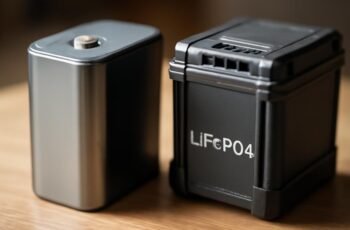
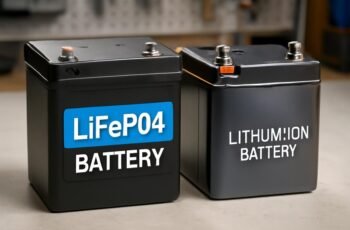
We are comparing the core differences between Lifepo4 and Li-ion batteries—focusing on safety, longevity, and environmental impact—because understanding their distinct chemistries and design features can greatly influence application choices. Both technologies have unique strengths and limitations, which become vital in high-stress or sustainability-focused scenarios. To determine which battery type best fits specific needs, it’s essential to examine their performance metrics and long-term implications closely.
Key Takeaways
- Lifepo4 offers superior thermal stability and safety, reducing risk of thermal runaway compared to Li-ion batteries.
- Li-ion batteries have higher energy density, making them more suitable for compact devices and electric vehicles.
- Lifepo4 provides longer cycle life (over 2000 cycles) versus 500-1000 cycles for most Li-ion batteries.
- Recycling Lifepo4 is more efficient and environmentally friendly due to its stable chemistry and non-toxic materials.
- Li-ion dominates the market with established infrastructure, but Lifepo4 is favored for safety, longevity, and sustainability in specific applications.
What Are Lifepo4 and Li-Ion Batteries? An Overview
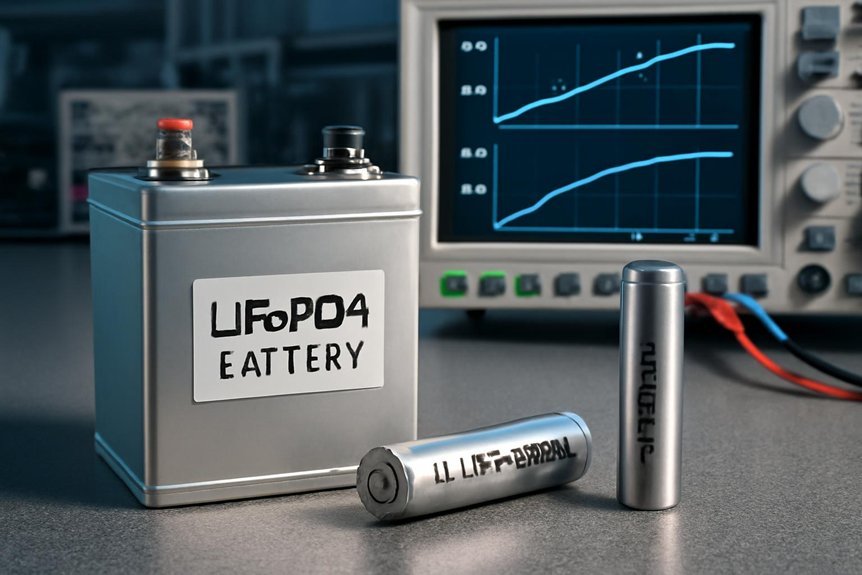
Lifepo4 and Li-ion batteries are two prevalent types of rechargeable energy storage devices, each with distinct chemical compositions and performance characteristics. As battery types, they serve diverse applications based on their specific properties. Lifepo4 batteries utilize lithium iron phosphate chemistry, offering enhanced thermal stability and safety, but generally have lower energy density compared to Li-ion batteries. Li-ion batteries, with their varied chemistries such as cobalt or manganese-based cathodes, provide higher energy density, making them suitable for portable electronics and electric vehicles. While both types support rechargeable functions, their differences influence performance, longevity, and safety. Understanding these fundamental characteristics helps determine the appropriate battery type for specific applications, emphasizing the importance of chemical makeup in shaping energy density and overall performance.
How Do Lifepo4 and Li-Ion Batteries Differ in Chemistry and Design?
While both Lifepo4 and Li-ion batteries are rechargeable, their fundamental differences stem from their distinct chemical compositions and cell architectures. Lifepo4 batteries utilize lithium iron phosphate as electrode material, offering superior thermal stability and a flatter voltage profile throughout discharge. In contrast, Li-ion batteries typically employ cobalt or nickel-based cathodes, which provide higher energy density but lower thermal stability. These differences influence charging efficiency and lifecycle analysis, with Lifepo4 exhibiting longer cycle life and safer operation. Additionally, manufacturing processes vary: Lifepo4 cells are simpler to produce, resulting in lower weight differences and cost. Overall, the chemistry and design choices directly impact performance metrics such as energy density, thermal resilience, and structural stability, defining each battery type’s suitability for specific applications.
Comparing Safety Features of Lifepo4 and Li-Ion Batteries
Because safety is a critical concern in battery technology, understanding the inherent safety features of Lifepo4 and Li-ion batteries is essential. Lifepo4 batteries possess superior safety mechanisms rooted in their stable chemistry, which offers enhanced thermal stability and considerably reduces the risk of thermal runaway. Their robust chemical structure prevents rapid decomposition under stress, making them less prone to fires or explosions. Conversely, Li-ion batteries utilize layered cathode materials that are more susceptible to thermal instability, especially under overcharge or physical damage. While modern Li-ion designs incorporate safety features like protective circuits, their inherent safety mechanisms are generally less resilient than Lifepo4’s. This fundamental difference in thermal stability and safety mechanisms makes Lifepo4 batteries a safer choice for high-stress or critical applications.
Which Battery Type Offers Better Longevity and Cycle Life?
In evaluating battery longevity, cycle life stands out as a key performance indicator, reflecting how many complete charge-discharge cycles a battery can endure before its capacity drops below a set threshold. When comparing Lifepo4 and Li-ion batteries, cycle durability considerably impacts overall battery lifespan. Lifepo4 batteries generally provide superior cycle life due to their stable chemistry, often surpassing 2000 cycles. In contrast, typical Li-ion batteries usually offer around 500-1000 cycles. Factors influencing this include:
- Electrode stability and material composition
- Operating voltage range
- Depth of discharge during cycles
- Thermal management and charging protocols
These elements determine the longevity and reliability of each battery type, making Lifepo4 more advantageous in applications demanding extended cycle durability.
How Do Performance and Power Output Vary Between Lifepo4 and Li-Ion?
How do the performance characteristics and power output of Lifepo4 batteries compare to those of Li-ion batteries? Lifepo4 batteries generally exhibit lower performance metrics, including reduced power density, compared to Li-ion counterparts. This results in a lower maximum current and slower charge/discharge rates, impacting high-demand applications. However, Lifepo4 batteries maintain more stable voltage profiles during discharge, providing consistent power delivery. While Li-ion batteries offer superior power density, enabling rapid bursts of energy, Lifepo4 cells excel in safety and cycle stability, with consistent performance over many cycles. Consequently, for applications requiring sustained, reliable power with enhanced safety, Lifepo4 batteries are advantageous, whereas Li-ion batteries are preferable where higher performance metrics and power density are critical.
Cost Analysis: Are Lifepo4 Batteries More Expensive Than Li-Ion?
Are Lifepo4 batteries more expensive than Li-ion counterparts? The answer depends on the cost comparison context and prevailing market trends. Generally, Lifepo4 cells have higher upfront costs primarily due to their advanced chemistry and manufacturing complexity. Key factors influencing the cost comparison include:
- Raw material expenses, with Lifepo4 utilizing more stable, but less abundant, materials.
- Manufacturing scale, where Li-ion benefits from larger production volumes reducing unit costs.
- Longevity and cycle life, which can offset initial costs through extended service life.
- Market demand and supply dynamics, often favoring Li-ion due to broader applications and established supply chains.
Suitability for Different Applications: Electric Vehicles, Solar Storage, and More
When evaluating suitability for various applications, we consider factors such as electric vehicle performance and range, solar storage efficiency, and overall application flexibility. Lifepo4 batteries generally offer high cycle life and thermal stability, making them well-suited for stationary energy storage, while Li-ion batteries often provide higher energy density advantageous for EVs. Understanding these distinctions helps determine the ideal battery technology for specific use cases.
EV Performance and Range
While LiFePO4 batteries generally offer lower energy densities compared to traditional Li-ion chemistries, their performance traits make them well-suited for electric vehicles and solar storage. Their stable chemistry provides consistent power delivery, enhancing EV performance and reliability. Regarding energy density, LiFePO4’s weight comparison reveals a trade-off: increased weight for similar capacity, but improved thermal stability and cycle life. Specifically:
- Power output remains high, supporting rapid acceleration and deceleration.
- Cycle life exceeds 2,000 cycles, ensuring longevity in vehicle applications.
- Charge/discharge rates are comparable, supporting fast charging protocols.
- Weight considerations impact vehicle design but are offset by safety and durability advantages.
These factors influence EV range and overall efficiency, emphasizing performance over raw energy density.
Solar Storage Efficiency
LiFePO4 batteries demonstrate notable efficiency for solar storage applications due to their stable chemistry, high cycle life, and safety profile. Their superior solar efficiency stems from low self-discharge rates and consistent performance over numerous charge-discharge cycles. Although their energy density is lower than some lithium-ion chemistries, this trade-off enhances safety and longevity, making them ideal for stationary solar systems. The stable voltage profile guarantees efficient energy transfer, reducing losses during storage and retrieval. Their ability to sustain high cycle counts translates into a longer lifespan for solar storage solutions, optimizing overall system cost-effectiveness. Consequently, LiFePO4 batteries are well-suited for grid-scale and residential solar applications, where reliability, safety, and durability are prioritized over maximum energy density.
Application Flexibility
LiFePO4 batteries exhibit a high degree of application flexibility, making them suitable for a wide array of uses beyond stationary solar storage. Their inherent stability and longer cycle life support diverse applications, aligning with evolving market trends and scalability options.
- Electric vehicles benefit from their high power density and thermal stability, enabling safer, more reliable operation.
- Grid-scale energy storage leverages their scalability options to meet increasing demand for renewable integration.
- Portable electronics utilize their compact form and consistent performance under varying conditions.
- Marine and recreational applications exploit their ruggedness and fast charging capabilities.
This versatility positions LiFePO4 as a future-proof technology adaptable to multiple sectors, driven by market trends favoring safety, longevity, and scalability.
Environmental Impact and Recycling of Lifepo4 Versus Li-Ion Batteries
We examine how recycling efficiency and methods differ between Lifepo4 and Li-ion batteries, impacting their environmental footprint. The toxicity levels and potential environmental harm associated with each technology also influence sustainability considerations. Additionally, raw material sustainability plays an essential role in evaluating long-term ecological impacts for both battery types.
Recycling Efficiency and Methods
Although both LiFePO4 and lithium-ion batteries contain valuable materials, their recycling processes differ markedly in efficiency and environmental impact. LiFePO4 batteries typically enable higher material recovery rates due to their stable chemistry and simpler composition. In contrast, lithium-ion batteries with cobalt or nickel involve more complex processes, often resulting in lower recovery efficiency. The key recycling methods include:
- Mechanical separation to extract metals and plastics.
- Hydrometallurgical processes to recover lithium, cobalt, and nickel.
- Pyrometallurgical techniques for smelting and metal extraction.
- Advanced hydrometallurgy for higher purity material recovery.
These methods influence the environmental benefits and end-of-life management strategies, with LiFePO4 batteries generally offering more sustainable recycling options due to their less toxic materials and simpler processing requirements.
Toxicity and Environmental Harm
Is the environmental impact of battery technologies truly different, and if so, how significant is that difference? Lifepo4 batteries generally exhibit lower toxicity levels due to the absence of cobalt and nickel, which are linked to higher environmental risks. This reduces concerns related to waste management and recycling challenges. Conversely, Li-ion batteries contain hazardous materials requiring strict adherence to environmental regulations during disposal. The table below summarizes key differences:
| Aspect | Lifepo4 | Li-ion |
|---|---|---|
| Toxicity Levels | Lower; fewer hazardous materials | Higher; contains cobalt, nickel |
| Recycling Challenges | Simplified; fewer toxic components | Complex; hazardous waste concerns |
| Waste Management | Easier compliance; safer handling | Stricter regulations needed |
These distinctions influence environmental sustainability and regulatory approaches for both battery types.
Raw Material Sustainability
The sustainability of raw materials for battery production hinges on both resource availability and recyclability. Lithium iron phosphate (Lifepo4) and lithium-ion (Li-ion) batteries differ considerably in raw material sourcing and environmental impact.
- Lifepo4 uses abundant, non-toxic materials that facilitate sustainable mining practices, reducing ecological disruption.
- Li-ion batteries rely on scarce elements like cobalt and nickel, often linked to problematic mining practices with high environmental costs.
- Recycling Lifepo4 batteries is more straightforward due to fewer complex components, enhancing resource recovery efficiency.
- Sustainable mining initiatives are increasingly adopted for Lifepo4’s raw materials, reducing supply chain impacts and promoting environmental responsibility.
Which Battery Technology Is More Popular and Why?
Which battery technology currently dominates the market, and what factors drive its popularity? Lithium-ion (Li-ion) batteries lead due to established market trends and extensive manufacturing infrastructure. Their high energy density, compact form factor, and long cycle life align with user preferences for portable and efficient power sources. Market demand for consumer electronics and electric vehicles further sustains their dominance. While Lifepo4 batteries are gaining traction in niche applications due to safety and longer lifespan, Li-ion remains the preferred choice in mainstream markets. The widespread adoption of Li-ion is driven by ongoing technological advances, economies of scale, and consumer familiarity. Consequently, Li-ion batteries maintain a more significant market presence, propelled by broader industry acceptance and robust supply chains.
Factors to Consider When Choosing Between Lifepo4 and Li-Ion Batteries
When selecting between Lifepo4 and Li-ion batteries, understanding the specific application requirements and performance characteristics becomes crucial. Key factors include the battery lifespan comparison, temperature effects, safety, and charging protocols.
- Battery lifespan comparison: Lifepo4 batteries typically offer more charge-discharge cycles, enhancing longevity.
- Temperature effects: Lifepo4 performs better at high temperatures, while Li-ion efficiency declines with heat exposure.
- Safety considerations: Lifepo4’s thermal stability reduces risk of thermal runaway, unlike some Li-ion chemistries.
- Charging and maintenance: Lifepo4 requires specific charging protocols to maximize lifespan and stability.
Evaluating these factors guarantees peak performance, safety, and cost-efficiency tailored to your specific application.
Frequently Asked Questions
How Do Lifepo4 and Li-Ion Batteries Perform in Extreme Temperatures?
We find Lifepo4 batteries offer superior temperature stability and thermal management in extreme conditions, maintaining performance better than Li-ion batteries, which are more prone to degradation and safety risks without proper thermal regulation.
What Are the Charging Time Differences Between Lifepo4 and Li-Ion Batteries?
Time is of the essence, and we find that Lifepo4 batteries generally charge faster, enhancing charging efficiency and cycle longevity, whereas Li-ion batteries take longer but offer slightly higher energy density, making each suitable for different needs.
Are Lifepo4 Batteries More Environmentally Friendly Than Li-Ion Batteries?
We believe Lifepo4 batteries are more environmentally friendly due to simpler recycling processes and safer resource sourcing, reducing toxic waste and material extraction impacts compared to traditional Li-ion batteries, making them a greener energy storage option overall.
How Do Lifepo4 Batteries Handle High Discharge Rates?
Coincidentally, Lifepo4 batteries excel at high discharge rates, maintaining superior discharge efficiency and cycle stability under demanding conditions, making them technically reliable for applications requiring rapid power delivery without compromising longevity or safety.
What Are the Maintenance Requirements for Lifepo4 Versus Li-Ion Batteries?
We find Lifepo4 batteries require minimal maintenance, thanks to their stable chemistry, ensuring longer lifespan and consistent performance. In contrast, Li-ion batteries need regular monitoring and balancing to optimize longevity and prevent capacity loss over time.
Conclusion
To sum up, while Li-ion batteries have dominated the market with their high energy density, LiFePO4 technology’s superior safety, longer cycle life, and environmental benefits make it increasingly attractive for sustainable applications. As we see more solar systems and electric vehicles adopting LiFePO4, it’s clear that choosing the right battery depends on specific needs—safety, longevity, or power. Ultimately, this emerging trend aligns with our shared goal for safer, eco-friendly energy solutions.