Did you know that despite their similar names, LiFePO4 and lithium-ion batteries differ profoundly in chemistry, affecting safety, performance, and lifespan? While lithium-ion batteries dominate for high energy density, LiFePO4 offers superior thermal stability and cycle life, making it a compelling choice for specific applications. Understanding these distinctions is essential for making informed decisions, especially when long-term reliability and safety are priorities. Let’s explore how each technology stacks up across key factors.
Key Takeaways
- LiFePO4 offers higher thermal stability and safety, reducing fire risks compared to traditional lithium-ion batteries.
- Lithium-ion batteries have higher energy density, providing greater range for electric vehicle applications.
- LiFePO4 batteries have a longer cycle life, lasting over 2,000 cycles with better capacity retention.
- Lithium-ion batteries are generally cheaper upfront but require more frequent replacements.
- LiFePO4 is more environmentally friendly due to less toxic materials and easier recycling processes.
How Do LiFePO4 and Lithium-Ion Batteries Differ in Chemistry?
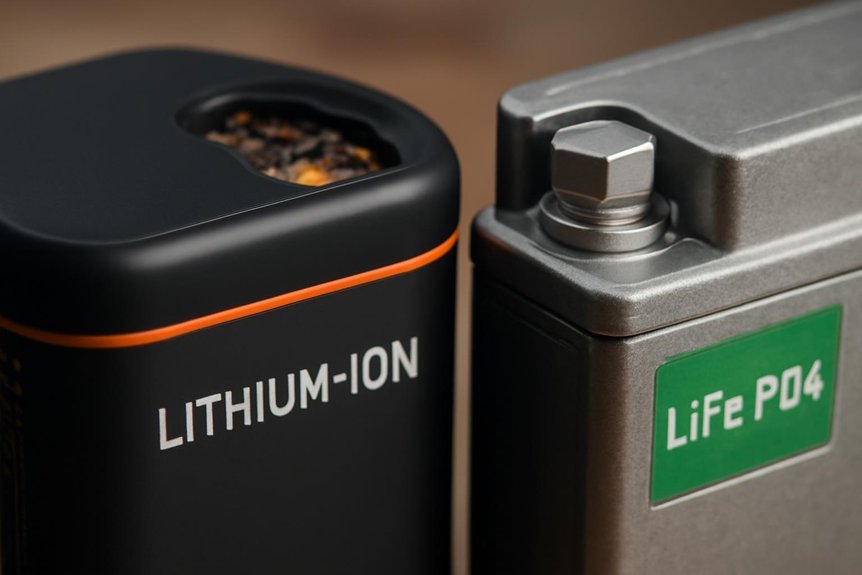
While both LiFePO4 and traditional lithium-ion batteries rely on lithium-based chemistries, their fundamental differences stem from their electrode materials. LiFePO4 uses a lithium iron phosphate cathode, which imparts distinct electrochemical properties, particularly a flat voltage profile and high thermal stability. This stability reduces the risk of thermal runaway and enhances safety. In contrast, typical lithium-ion batteries utilize layered shift metal oxides, resulting in higher energy density but more complex electrochemical behavior. The electrochemical properties of LiFePO4 contribute to its excellent thermal stability, enabling safer operation at elevated temperatures. These differences influence performance characteristics, with LiFePO4 offering more consistent voltage and improved thermal resilience, while traditional lithium-ion chemistries favor higher energy density at the expense of thermal management challenges.
Which Battery Is Safer for Your Applications?
The safety profiles of LiFePO4 and traditional lithium-ion batteries greatly influence their suitability for various applications. LiFePO4 batteries demonstrate superior chemical stability, considerably reducing the risk of battery accidents and thermal runaway, especially under high-stress conditions. Their inherent fire risks are lower, aligning well with strict safety standards and enhancing operational safety. In contrast, lithium-ion batteries with cobalt-based chemistries present higher potential for thermal events, making them less ideal for safety-critical usage scenarios. Application safety depends heavily on chemical stability and how well battery designs mitigate fire risks. As a result, for environments demanding enhanced operational safety and compliance with safety standards, LiFePO4 batteries offer a safer, more reliable choice, minimizing hazards associated with thermal runaway and ensuring safer application outcomes.
How Do Performance and Longevity Compare Between LiFePO4 and Lithium-Ion?
When comparing LiFePO4 and lithium-ion batteries, cycle life and durability are key performance indicators, with LiFePO4 typically offering longer cycle counts. Performance consistency over time also differs, affecting how reliably each chemistry maintains its charge and output. Analyzing these factors allows us to determine which battery type better suits specific application demands.
Cycle Life Durability
Understanding the cycle life and durability of LiFePO4 versus lithium-ion batteries is essential for evaluating their long-term performance. Typically, LiFePO4 batteries demonstrate a higher cycle life, often exceeding 2,000 cycles, compared to lithium-ion’s 500-1,000 cycles. This durability comparison stems from LiFePO4’s stable chemistry, which minimizes capacity degradation over time. The table below summarizes key differences:
| Feature | LiFePO4 | Lithium-Ion |
|---|---|---|
| Average Cycle Life | >2,000 cycles | 500-1,000 cycles |
| Capacity Retention | >80% after 2,000 cycles | ~70% after 1,000 cycles |
| Temperature Stability | High | Moderate |
| Degradation Rate | Slower | Faster |
This analysis highlights LiFePO4’s superior durability for long-term use.
Performance Consistency
Evaluating the performance consistency of LiFePO4 and lithium-ion batteries reveals notable differences in how their capacities and efficiencies sustain over time. LiFePO4 batteries excel in capacity stability, maintaining consistent performance across numerous cycles, and demonstrate superior temperature performance, especially in high-heat environments. In contrast, lithium-ion batteries experience gradual capacity fade, impacting long-term reliability. Specifically:
- LiFePO4 maintains higher capacity stability over extended cycles, reducing capacity loss.
- Temperature performance favors LiFePO4, which resists thermal degradation better.
- Lithium-ion cells are more sensitive to temperature fluctuations, affecting efficiency and lifespan.
These distinctions highlight LiFePO4’s advantage in applications demanding consistent performance and thermal resilience, ensuring more reliable long-term operation.
What Are the Cost Differences and Value Considerations?
Are the higher upfront costs of Lithium Iron Phosphate (LiFePO4) batteries justified by their long-term value? A thorough cost analysis reveals that, although LiFePO4 batteries typically carry a higher initial price, their extended cycle life and enhanced safety features greatly reduce replacement and maintenance expenses over time. When performing a value assessment, these factors contribute to a lower total cost of ownership. Lithium-ion batteries, while cheaper initially, often require more frequent replacements, increasing lifecycle costs. As a result, evaluating cost differences involves not only comparing purchase prices but also considering durability, safety, and operational savings. Ultimately, LiFePO4 batteries may offer superior long-term value, especially in applications demanding longevity and stability, making them a cost-effective choice despite the higher upfront investment.
Which Battery Type Is Better for Electric Vehicles?
When evaluating battery options for electric vehicles, we must consider energy density, cost, safety, and durability. Lithium-ion batteries generally offer higher energy density, but Lifepo4 batteries excel in safety and longevity, often at a lower cost. Analyzing these factors helps determine which type aligns best with performance, economic, and reliability goals.
Energy Density Comparison
While both Lifepo4 and lithium-ion batteries are popular choices for electric vehicles, their energy densities greatly influence their suitability for high-range applications. Lithium-ion batteries typically offer higher energy capacity, resulting in better weight efficiency and extended driving range. In contrast, Lifepo4 batteries have lower energy density but excel in thermal stability and lifecycle performance. Specifically:
- Lithium-ion batteries deliver superior energy capacity and power output, making them ideal for long-range vehicles.
- Lifepo4 batteries, with their lower energy density, trade off some range for enhanced discharge characteristics and charge retention.
- When considering application suitability, lithium-ion’s higher energy density favors performance, while Lifepo4’s thermal stability supports safer, more durable operation in demanding conditions.
Cost and Availability
Cost and availability are critical factors shaping the choice between Lifepo4 and lithium-ion batteries for electric vehicles. Price trends indicate that lithium-ion batteries generally remain more expensive due to higher raw material costs, but market demand influences supply dynamics. Lifepo4 batteries benefit from more stable pricing and easier sourcing, driven by abundant raw materials like iron.
| Battery Type | Cost Factors | Market Demand |
|---|---|---|
| Lifepo4 | Lower raw material costs, stable prices | Growing due to safety and longevity benefits |
| Lithium-ion | Higher raw material costs, price volatility | High demand for energy density applications |
This analysis shows that Lifepo4’s affordability and steady supply make it a compelling choice for cost-conscious EV manufacturers.
Safety and Durability
Safety and durability are critical considerations in selecting batteries for electric vehicles, as they directly impact long-term performance and passenger protection. Lifepo4 batteries excel in thermal stability, reducing the risk of thermal runaway and fires. They also maintain structural integrity under stress, resisting deformation during impacts or high temperatures. Lithium-ion batteries, while offering higher energy density, are more susceptible to thermal instability, which can compromise safety.
- Lifepo4’s superior thermal stability minimizes fire hazards.
- Its structural integrity guarantees resilience against mechanical damage.
- Lithium-ion batteries require advanced management systems to mitigate safety risks.
Ultimately, Lifepo4 batteries provide enhanced safety and durability, making them preferable for applications where long-term reliability and passenger safety are paramount.
How Do Charge and Discharge Rates Impact Battery Choice?
The charge and discharge rates of a battery directly influence its suitability for specific applications, as these rates determine how quickly a battery can be replenished or depleted without compromising its performance or lifespan. Higher discharge rates can deliver increased energy output but may reduce charging efficiency and accelerate thermal management challenges, impacting overall battery lifespan. Conversely, lower rates favor longevity and stability, aligning with applications requiring sustained, steady power. Rapid charging demands robust thermal management to prevent overheating, while slow rates guarantee better energy retention over time. Selecting a battery depends on application requirements—high-demand scenarios favor batteries with higher discharge rates, whereas long-term, stable use benefits from conservative charge and discharge profiles. Understanding these rates helps optimize performance and durability for specific use cases.
What Are the Environmental Impacts of LiFePO4 and Lithium-Ion Batteries?
When evaluating battery technologies for widespread adoption, understanding their environmental impacts becomes essential. Both LiFePO4 and lithium-ion batteries influence ecosystems primarily through manufacturing, usage, and disposal.
- Recycling methods are critical; LiFePO4 batteries contain less toxic materials, simplifying recycling processes and reducing environmental hazards. Lithium-ion batteries often require complex procedures to recover valuable metals like cobalt and nickel, which can pose environmental risks if improperly handled.
- Environmental regulations shape how manufacturers manage disposal and recycling, aiming to minimize soil and water contamination.
- The production phase impacts resource extraction, with lithium mining raising concerns over habitat disruption and water use, while LiFePO4’s manufacturing generally involves fewer harmful chemicals, making it comparatively eco-friendlier.
Both battery types demand responsible lifecycle management to mitigate their environmental footprint.
Which Battery Should You Choose Based on Your Specific Needs?
Choosing the right battery depends heavily on your specific application and performance priorities. For demanding battery applications like electric vehicles or power tools, lithium-ion batteries often provide higher energy density and faster recharge times, aligning with user preferences for efficiency and performance. Conversely, LiFePO₄ batteries excel in applications requiring enhanced safety, longer cycle life, and thermal stability, making them suitable for stationary energy storage and solar systems. Your decision should consider factors such as weight constraints, safety requirements, and budget. If user preferences favor longevity and safety, LiFePO₄ may be preferable. If maximizing energy density and quick recharging are priorities, lithium-ion batteries are typically the better choice. Ultimately, understanding the specific demands of your application guides an ideal selection.
Frequently Asked Questions
How Do Temperature Ranges Affect Lifepo4 and Lithium-Ion Battery Performance?
Temperature effects greatly influence battery performance; Lifepo4 batteries boast superior thermal stability, maintaining efficiency across wider ranges, whereas lithium-ion batteries suffer from reduced capacity and potential safety risks outside ideal temperature zones.
Can Lifepo4 Batteries Be Recycled More Easily Than Lithium-Ion Batteries?
We believe Lifepo4 batteries are easier to recycle due to simpler recycling processes, which reduce environmental impact. This advantage stems from their stable chemistry, making them more environmentally friendly and less hazardous compared to traditional lithium-ion batteries.
What Are the Typical Charging Times for Each Battery Type?
We find that Lifepo4 batteries typically charge faster due to higher charging efficiency, reaching full capacity in about 3-4 hours, while lithium-ion batteries often take 4-5 hours; Lifepo4 also offers superior voltage stability during charging.
How Do Size and Weight Compare Between Lifepo4 and Lithium-Ion Batteries?
Ever wonder how size and weight compare? Lifepo4 batteries are generally bulkier and heavier, but boast higher safety features and capacity density, making them preferable for applications prioritizing safety over compactness.
Are There Specific Applications Where One Battery Type Is Clearly Preferred?
We find Lifepo4 batteries preferred for high-performance metrics like safety and longevity, especially in renewable energy storage, while lithium-ion batteries are favored for their superior energy density and lower initial costs in portable electronics and electric vehicles.
Conclusion
In the end, choosing between LiFePO4 and lithium-ion batteries isn’t just about chemistry—it’s a strategic decision rooted in safety, longevity, and cost. While LiFePO4 may seem like the cautious, environmentally friendly choice, lithium-ion’s higher energy density tempts the tech-savvy. So, whether you prioritize safety or performance, remember: the perfect battery is a myth. Ultimately, it’s about balancing your needs—because, in the world of batteries, no solution is ever truly perfect.