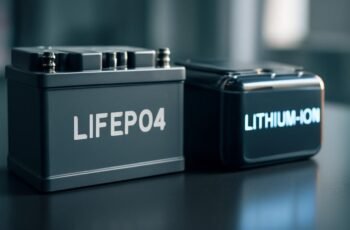
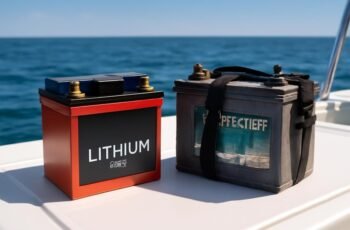
Like the shifting tides of technology, the debate between LiFePO4 and sealed lead acid batteries reflects a fundamental clash of priorities—performance versus affordability. As we analyze their chemistry, design, and application potential, it becomes clear that choosing the right energy storage solution involves more than just initial costs. Understanding these differences can considerably impact your project’s efficiency and longevity, prompting us to explore the nuances that could influence your decision.
Key Takeaways
- LiFePO4 batteries have higher energy density and longer cycle life than SLA batteries.
- SLA batteries are more affordable but offer lower performance and shorter lifespan.
- LiFePO4 is safer with stable chemistry, reducing thermal runaway risks, unlike SLA’s acid leakage hazards.
- LiFePO4 suits high-drain, deep-cycle applications; SLA is better for backup and emergency use.
- SLA recycling is well-established, while LiFePO4 recycling faces logistical and environmental challenges.
What Are LiFePO4 and Sealed Lead Acid Batteries? An Overview
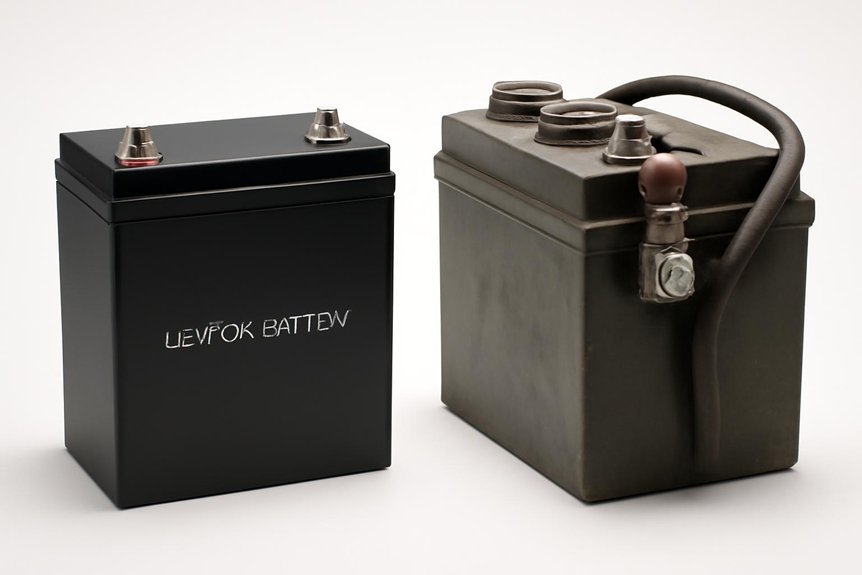
Lithium Iron Phosphate (LiFePO4) and sealed lead acid (SLA) batteries are two prevalent types of rechargeable energy storage systems, each with distinct chemical compositions and performance characteristics. As battery types, they serve critical roles in various applications, from renewable energy systems to portable electronics. LiFePO4 batteries feature a lithium-based chemistry, offering high energy density, longer cycle life, and improved thermal stability, making them suitable for demanding energy storage needs. In contrast, SLA batteries utilize lead-acid chemistry, characterized by simplicity, affordability, and reliability, but with lower energy density and shorter lifespan. Understanding these fundamental differences helps us evaluate their suitability for specific energy storage applications, ensuring peak performance, safety, and longevity in diverse operational environments.
Key Differences in Chemistry and Design Between LiFePO4 and Lead Acid Batteries
The fundamental differences between LiFePO4 and lead acid batteries stem from their distinct chemical compositions and structural designs. LiFePO4 cells utilize a lithium iron phosphate chemistry, enabling a more stable and lighter construction, while lead acid batteries rely on lead plates and sulfuric acid, resulting in heavier, bulkier units. Examining these variations provides insight into their performance characteristics and suitability for various applications.
Chemical Composition Differences
While both LiFePO4 and sealed lead acid batteries serve as energy storage solutions, their fundamental chemical compositions differ greatly, impacting performance, safety, and longevity. The chemical structure of LiFePO4 involves a stable iron phosphate lattice, offering high molecular stability and resistance to thermal runaway. In contrast, lead acid batteries rely on lead plates immersed in sulfuric acid, which are more prone to degradation over time. The molecular stability of LiFePO4 compounds guarantees fewer side reactions and extended cycle life. Conversely, the lead-based chemistry is susceptible to sulfation and capacity loss due to acid stratification. These divergent chemical compositions underpin their distinct performance characteristics, with LiFePO4 providing a safer, more durable energy source, while lead acid batteries emphasize cost-effectiveness despite reduced stability.
Design and Construction Variations
Despite their shared purpose of energy storage, LiFePO4 and sealed lead acid batteries differ considerably in their design and construction, reflecting their distinct chemical properties. LiFePO4 cells feature a modular design with cylindrical or prismatic form factors, emphasizing consistent design aesthetics for thermal management and longevity. Their construction materials include lithium iron phosphate cathodes and graphite anodes, encased in lightweight, thermally stable housings. Conversely, sealed lead acid batteries utilize lead dioxide and sponge lead plates immersed in sulfuric acid, with robust, heavy-duty construction materials optimized for durability and cost efficiency. The design aesthetics of lead acid batteries prioritize ruggedness and ease of maintenance, often resulting in bulky, less refined structures. These fundamental differences influence performance, lifespan, and application suitability.
Comparing Performance: Capacity, Power Output, and Efficiency
When comparing the performance of LiFePO4 and sealed lead acid batteries, capacity, power output, and efficiency stand out as critical metrics. The capacity comparison reveals that LiFePO4 batteries typically offer higher usable capacity due to their deeper discharge capabilities and better energy retention. Regarding power output, LiFePO4 batteries maintain consistent voltage under load, providing superior high-current performance. Our efficiency analysis shows that LiFePO4 batteries generally convert stored energy with less loss, resulting in higher overall efficiency. Sealed lead acid batteries, while reliable, often exhibit voltage sag and lower efficiency during charge-discharge cycles. Overall, LiFePO4 batteries outperform sealed lead acid in capacity, power stability, and efficiency, making them a more effective choice for demanding applications requiring sustained performance.
Lifespan and Durability: Which Battery Lasts Longer?
Understanding the lifespan and durability of batteries is essential for selecting the right technology for long-term applications. When comparing Lifepo4 and sealed lead acid, the lifespan comparison reveals Lifepo4 batteries generally last longer due to superior durability factors. Lifepo4’s cycle life exceeds 2000 cycles, often maintaining capacity better over time, whereas sealed lead acid batteries typically endure 500-1000 cycles. Durability factors influencing longevity include:
- Deep discharge tolerance
- Temperature resilience
- Internal resistance stability
- Charge/discharge rates
- Maintenance requirements
These factors directly affect how well each battery withstands repeated use and environmental stresses. Ultimately, Lifepo4 batteries’ enhanced durability factors contribute to a longer, more reliable lifespan, making them a preferable choice for applications demanding longevity.
Safety Features and Risks: How Do They Stack Up?
We recognize that thermal stability, overcharging risks, and potential fire hazards are critical factors in battery safety assessments. LiFePO4 batteries generally offer superior thermal stability and lower explosion risks compared to sealed lead-acid cells, which are more prone to thermal runaway. Understanding these safety differences helps us evaluate their suitability for various applications and risk environments.
Thermal Stability Differences
Lifepo4 batteries exhibit superior thermal stability compared to sealed lead acid (SLA) batteries, primarily due to their chemical composition and design. This enhanced stability minimizes risks associated with thermal degradation and reduces temperature sensitivity, making them safer under high thermal stress. The chemistry of Lifepo4 cells resists heat-induced breakdown, preventing runaway reactions common in SLA batteries. Key differences include:
- Lower risk of thermal runaway
- Higher tolerance to elevated temperatures
- Reduced propensity for thermal degradation
- Stable performance across temperature fluctuations
- Less likelihood of venting or explosion
These factors highlight Lifepo4’s resilience in thermal management, making it a safer choice where temperature control is challenging. Their ability to withstand temperature extremes without significant degradation underscores their advantage in demanding environments.
Risk of Overcharging
Overcharging poses a significant safety concern for both Lifepo4 and sealed lead acid (SLA) batteries, but their responses to this risk differ markedly due to their design and built-in safety features. Lifepo4 batteries inherently resist overcharging risks because of stable chemistry and voltage regulation, reducing the need for complex battery management systems. In contrast, SLA batteries are more susceptible to overvoltage damage, requiring sophisticated battery management to prevent overcharge scenarios. Proper charge controllers are critical for both types, but Lifepo4 systems often feature integrated safety mechanisms that automatically limit charging voltage. Effective battery management is essential to mitigate overcharging risks, ensuring longevity and safety. The differences in safety features highlight the importance of tailored charging protocols for each battery technology.
Fire and Explosion Hazards
Although both Lifepo4 and sealed lead acid (SLA) batteries are generally considered safe when properly managed, their fire and explosion hazards differ markedly due to their chemical compositions and built-in safety features. Lifepo4 batteries inherently offer superior fire safety and explosion prevention because of their stable chemistry, which resists thermal runaway. In contrast, SLA batteries contain lead and sulfuric acid, increasing risk during abuse or damage.
- Lifepo4’s stable chemistry reduces the likelihood of thermal runaway
- SLA batteries risk acid leaks, which can cause fires
- Overcharging protections are more robust in Lifepo4 systems
- Built-in safety features mitigate explosion risks in Lifepo4 cells
- Proper ventilation and handling are essential for both types
Cost Considerations: Upfront Investment vs. Long-Term Value
When evaluating the cost implications of battery technologies, it’s essential to reflect on not only the initial costs but also the long-term savings they can provide. Lifepo4 batteries typically have higher upfront investment compared to sealed lead-acid (SLA) batteries due to more advanced chemistry and manufacturing processes. However, their superior cycle life, efficiency, and lower maintenance requirements often lead to significant long-term savings. Over time, Lifepo4 batteries tend to require fewer replacements, reducing replacement costs and downtime. Conversely, SLA batteries may appear more affordable initially but incur higher costs through more frequent replacements and maintenance. Consequently, a thorough cost analysis reveals that, despite higher initial costs, Lifepo4 batteries often deliver better long-term value, especially in applications demanding reliability and durability.
Charging and Maintenance: What’s Needed for Proper Care?
Proper charging and maintenance are essential to guarantee the longevity and best performance of both Lifepo4 and sealed lead-acid (SLA) batteries. Effective battery maintenance relies on appropriate charging techniques that prevent overcharging or deep discharging, which can impair capacity and lifespan. Both types require specific voltage and current parameters during charging.
Proper charging and maintenance ensure maximum lifespan and optimal performance of Lifepo4 and SLA batteries.
Key points include:
- Use a charger compatible with each battery chemistry
- Maintain proper voltage levels during charge cycles
- Avoid deep discharges to prolong life
- Regularly monitor battery voltage and temperature
- Implement scheduled capacity checks to detect degradation early
Understanding these charging techniques and adhering to recommended maintenance routines are vital for maximizing efficiency and lifespan of both battery types.
Ideal Use Cases for LiFePO4 and Sealed Lead Acid Batteries
Choosing the right battery type depends heavily on the specific application and operational demands. For ideal applications, LiFePO4 batteries excel in high-drain, deep-cycle environments like solar energy storage, electric vehicles, and off-grid systems due to their superior cycle life and stability. They are preferred by users who value longevity, lightweight design, and fast charging. Conversely, sealed lead acid batteries are well-suited for backup power, emergency lighting, and applications requiring reliable, low-cost energy sources with straightforward maintenance. User preferences also influence choice; some prioritize ease of use and affordability, favoring lead acid, while others prioritize performance and lifespan, making LiFePO4 the best option. Ultimately, understanding the specific demands of the application guides the selection of the most suitable battery type.
Environmental Impact and Recycling Options
Recycling processes and their accessibility greatly influence the environmental footprint of both LiFePO4 and sealed lead-acid batteries. We must consider the toxicity and safety concerns associated with each type, as these factors impact disposal practices and ecological risks. Analyzing these elements helps us understand the broader implications of battery materials and the feasibility of sustainable end-of-life management.
Recycling Processes and Accessibility
The processes involved in recycling lithium iron phosphate (LiFePO4) and sealed lead acid (SLA) batteries differ markedly regarding environmental impact and accessibility. Lithium batteries pose recycling challenges due to complex chemical compositions and safety concerns, while SLA batteries benefit from established disposal methods. Accessibility for recycling varies:
- LiFePO4 requires specialized facilities, often limited geographically
- SLA recycling is well-established with widespread collection points
- Disposal methods for SLA are standardized, reducing environmental risks
- Recycling challenges for LiFePO4 include handling toxic components and economic viability
- Environmental impact is minimized when proper recycling protocols are followed, but gaps persist in infrastructure for lithium batteries.
Understanding these factors helps evaluate the practicality and sustainability of recycling options for each battery type.
Environmental Toxicity and Safety
Environmental toxicity and safety considerations greatly influence the overall impact of LiFePO4 and SLA batteries. LiFePO4 batteries exhibit lower toxicity levels, primarily due to the absence of heavy metals like lead and cadmium, aligning with strict safety standards. In contrast, SLA batteries contain hazardous substances that pose environmental risks if improperly disposed of. These toxicity levels necessitate rigorous safety protocols during manufacturing, use, and disposal. LiFePO4’s stable chemistry enhances safety standards by reducing thermal runaway risks, whereas SLA batteries require careful handling to prevent leaks and exposure to toxic materials. Overall, LiFePO4 batteries offer a safer environmental profile, but proper recycling and disposal processes remain critical to minimizing ecological harm.
Which Battery Is Right for Your Needs? A Quick Decision Guide
Determining the best battery type for your application hinges on understanding key performance factors and operational requirements. When evaluating options, consider how battery applications align with your user preferences, including factors like lifespan, maintenance, and safety. Lifepo4 batteries excel in high-cycle applications, offering longer service life and better thermal stability. Sealed lead acid batteries, however, often suit simpler, cost-sensitive uses with lower initial investment.
Key considerations include:
- Power output and capacity demands
- Space and weight constraints
- Expected lifespan and cycle durability
- Maintenance requirements
- Safety and environmental impact
Matching these factors with your operational needs guarantees an informed choice, whether prioritizing longevity, upfront cost, or safety. This decision process tailors battery selection to optimize performance and user satisfaction.
Frequently Asked Questions
How Do Temperature Variations Affect Lifepo4 and Lead Acid Batteries?
Temperature variations impact battery performance due to their differing temperature sensitivities, causing more performance degradation in lead acid batteries at extreme temperatures, while Lifepo4 batteries maintain stability better, but still experience some decline under harsh conditions.
Can Lifepo4 Batteries Be Safely Used in Portable Devices?
We believe LiFePO4 batteries are safe for portable devices, meeting strict safety standards and offering consistent performance metrics. Their stability and durability make them ideal, provided proper handling and compatibility are maintained for maximum operational safety.
Are There Any Specific Charging Protocols for Sealed Lead Acid Batteries?
We recommend specific charging methods for sealed lead acid batteries, including a constant voltage charge and a limited current, to optimize battery lifespan. Proper protocols prevent overcharging, ensuring safety and maintaining performance over extended use.
How Do Weight and Size Compare Between the Two Battery Types?
Like weighing apples against oranges, Lifepo4 batteries are lighter and more compact, offering superior size efficiency. This weight comparison shows Lifepo4’s advantage in portability and space-saving design, making it ideal for compact, high-performance applications.
What Are the Recycling Processes for Lifepo4 and Lead Acid Batteries?
We analyze recycling efficiency and environmental impact by noting that lead acid batteries have established, efficient recycling processes, minimizing waste. LiFePO4 recycling is developing, with potential environmental benefits, but currently faces challenges in scaling and process optimization for sustainable management.
Conclusion
In conclusion, choosing between LiFePO4 and SLA batteries is like selecting the right tool for a specific task; both have strengths and limitations. LiFePO4 excels in high-performance, long-lasting applications, while SLA offers affordability and simplicity for backup needs. Understanding their distinct chemistry, durability, and safety features allows us to make informed decisions. By aligning these factors with our specific requirements, we guarantee peak battery performance and longevity, much like tuning a precision instrument for the best results.