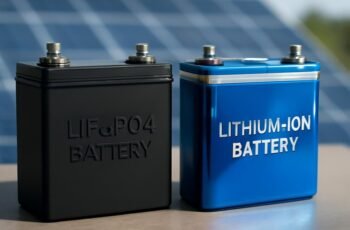
Like the choice between a sturdy bridge and a sleek highway, selecting the best battery chemistry involves weighing safety, performance, and long-term value. Both LiFePO4 and lithium-ion batteries have their unique strengths and limitations, which can greatly impact their suitability for different applications. Understanding these differences is essential for making an informed decision that aligns with your specific needs. As we explore these options, the question remains: which chemistry truly offers the ideal balance of durability, efficiency, and cost?
Key Takeaways
- LiFePO4 offers superior thermal stability and safety compared to lithium-ion batteries.
- Lithium-ion batteries have higher energy density, providing longer range for electric vehicles.
- LiFePO4 has a longer cycle life and lower degradation, reducing long-term maintenance costs.
- Lithium-ion batteries typically have a lower upfront cost but higher lifecycle and replacement expenses.
- Choice depends on application priorities: safety and longevity favor LiFePO4, while energy density favors lithium-ion.
What Are the Main Differences Between LiFePO4 and Lithium-Ion Batteries?
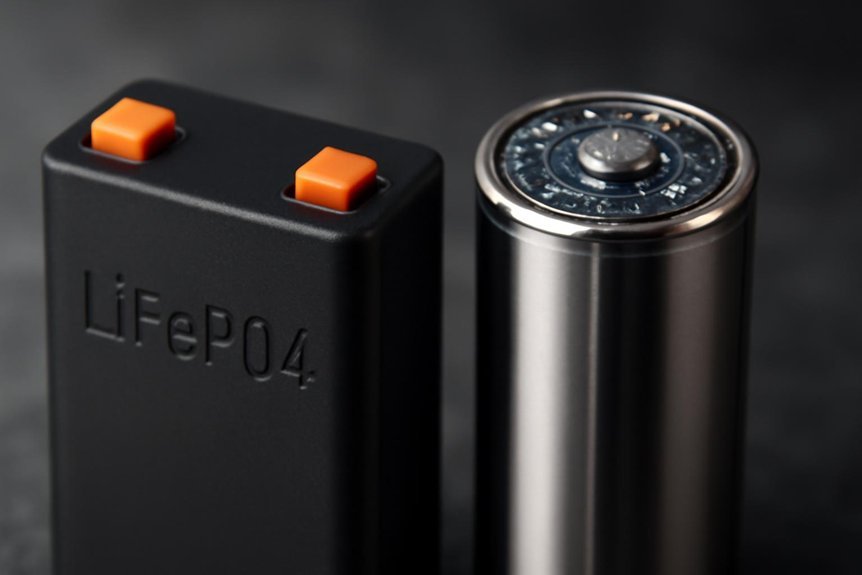
The primary differences between LiFePO4 and traditional lithium-ion batteries lie in their chemistry, performance characteristics, and safety profiles. LiFePO4 advantages include enhanced thermal stability, lower risk of thermal runaway, and a longer cycle life, making them suitable for demanding applications. Conversely, lithium-ion drawbacks involve higher energy density but increased susceptibility to overheating and capacity fade over time. While lithium-ion batteries provide more compact energy storage, they often require complex management systems to mitigate safety risks. In contrast, LiFePO4’s stable chemistry offers a safer, more durable alternative, though with slightly reduced energy density. These fundamental distinctions influence their suitability for various applications, with LiFePO4 excelling in safety and longevity, and lithium-ion favored for high energy density.
How Do Safety and Longevity Compare in Both Chemistries?
Safety and longevity are critical factors when comparing LiFePO4 and lithium-ion batteries, as these attributes directly impact their reliability and lifespan in various applications. LiFePO4 batteries inherently offer enhanced safety profiles due to their stable chemical structure, reducing risks associated with thermal runaway, even under adverse conditions. Implementing rigorous safety protocols further minimizes hazards, making them suitable for stationary and grid storage uses. Regarding longevity factors, LiFePO4 batteries typically demonstrate longer cycle lives, often exceeding 2,000 cycles, due to their stable chemistry and lower degradation rates. Lithium-ion batteries, while offering higher energy density, tend to have shorter lifespans and are more sensitive to operational stresses. Overall, LiFePO4’s safety protocols and durability make them a more reliable choice for long-term applications.
Which Battery Chemistry Offers Better Performance for Electric Vehicles?
When comparing energy density, Lithium-ion batteries generally provide higher power storage capacity than Lifepo4, making them more suitable for longer-range applications. However, Lifepo4’s superior safety profile and durability can lead to more consistent performance over the battery’s lifespan. Evaluating these trade-offs is essential to determine which chemistry effectively balances performance, safety, and longevity for electric vehicles.
Energy Density Comparison
While both LiFePO4 and lithium-ion batteries are prominent choices for electric vehicle (EV) applications, their energy densities greatly influence performance potential. Lithium-ion batteries generally possess higher energy density, enabling longer driving ranges and more compact pack designs. In contrast, LiFePO4 batteries have lower energy density but excel in application suitability where safety and longevity are prioritized.
Key distinctions include:
- Lithium-ion: higher energy density (~150-250 Wh/kg), ideal for extended-range EVs
- LiFePO4: lower energy density (~90-160 Wh/kg), suitable for stability-focused applications
- Weight considerations notably impact vehicle design
- Energy density directly correlates to vehicle range and efficiency
- Application suitability depends on balancing energy density with safety, cost, and lifespan
This comparison highlights that lithium-ion’s superior energy density better serves performance-driven EV applications, while LiFePO4 suits safety-critical uses.
Safety and Durability
Energy density influences not only vehicle range but also how batteries respond under various conditions. When evaluating safety and durability, thermal stability is critical, as it determines a battery’s resistance to overheating and thermal runaway. Lithium-ion batteries, with their complex chemical composition, can pose safety risks if damaged or improperly managed, potentially leading to fires. Conversely, LiFePO₄ (Lifepo4) batteries exhibit superior thermal stability due to their stable chemical composition, making them inherently safer. Durability also favors Lifepo4, which endures more charge cycles with less capacity fade, thanks to its robust chemical structure. While lithium-ion batteries may offer higher energy density, Lifepo4’s safety profile and longevity make it a more reliable choice for electric vehicle applications where safety and long-term performance are paramount.
Is Energy Density or Weight More Important for Your Application?
Determining whether energy density or weight holds greater significance depends largely on the specific requirements of your application. In energy applications, maximizing energy density guarantees longer operation times and compact design, which is vital for portable devices or electric vehicles. Conversely, weight considerations become paramount in applications like drones or aerospace, where reducing weight enhances performance and efficiency.
Key factors include:
- The need for extended runtime versus lightweight design
- Space constraints in compact devices or vehicles
- The impact of weight on overall system efficiency
- The importance of energy density for high-capacity storage
- How weight considerations influence mobility and handling
Ultimately, understanding the balance between energy density and weight helps optimize battery selection for your application’s unique demands.
What Are the Cost Implications of Choosing LiFePO4 vs. Lithium-Ion?
Evaluating the cost implications of selecting LiFePO4 versus lithium-ion batteries involves analyzing both initial investment and long-term expenses. Our cost analysis indicates that LiFePO4 batteries generally have a higher upfront price due to their advanced chemistry and manufacturing costs. However, recent price trends show that LiFePO4 prices are decreasing, narrowing the gap with traditional lithium-ion batteries. In the long run, LiFePO4 offers lower total cost of ownership because of its superior cycle life, enhanced thermal stability, and reduced maintenance requirements. Lithium-ion batteries, while initially less expensive, tend to incur higher replacement and maintenance costs over time. As a result, a thorough cost assessment favors LiFePO4 when evaluating total lifecycle costs, despite its higher initial price point.
How Do Maintenance and Lifecycle Expectations Vary?
We observe that Lifepo4 batteries generally require less frequent maintenance compared to traditional lithium-ion chemistries, due to their stable chemistry and lower degradation rates. Regarding lifecycle durability, Lifepo4 cells typically outperform lithium-ion counterparts, offering longer service life under similar operating conditions. Analyzing these differences helps determine the long-term reliability and total cost of ownership for each chemistry.
Maintenance Frequency Differences
Battery maintenance requirements and lifecycle expectations vary considerably between LiFePO4 and lithium-ion chemistries, primarily due to differences in their chemical stability and design. LiFePO4 batteries generally demand less frequent maintenance, thanks to their stable chemistry and lower degradation rates. In contrast, lithium-ion batteries require more regular attention to maximize lifespan, particularly concerning voltage and temperature management. To guarantee ideal battery care and performance, consider these maintenance tips:
- Regularly check for voltage imbalances
- Avoid deep discharges
- Maintain proper temperature ranges
- Use compatible chargers
- Schedule periodic capacity testing
These practices help extend battery longevity and guarantee consistent performance, highlighting the importance of tailored maintenance routines based on chemistry.
Lifecycle Durability Comparison
While maintenance routines influence overall battery longevity, inherent chemical stability markedly shapes the expected lifecycle of LiFePO4 and lithium-ion batteries. Lifecycle analysis reveals that LiFePO4 batteries typically sustain around 2,000 to 3,000 charge cycles before capacity drops below 80%, reflecting their robust chemistry. Lithium-ion batteries, however, generally offer 500 to 1,500 cycles, influenced by design and usage conditions. Performance metrics such as cycle life, capacity retention, and thermal stability are critical in this comparison. LiFePO4’s stable chemistry results in less capacity fade over time and better tolerance to deep discharges, enhancing lifecycle durability. Conversely, lithium-ion batteries may exhibit higher initial performance but tend to degrade faster due to their more reactive chemistry, impacting long-term reliability.
Which Battery Chemistry Is Best Suited for Solar Energy Storage?
Deciding which chemistry is best for solar energy storage hinges on evaluating key performance factors like energy density, lifespan, safety, and cost. Lithium-ion batteries generally offer higher energy density, enhancing solar efficiency by maximizing stored energy in limited space. Lifepo4 batteries excel in battery lifespan and thermal stability, reducing safety risks and maintenance costs. When considering solar applications, choosing the right chemistry depends on balancing these factors against project requirements. Lithium-ion batteries provide superior energy density, ideal for space-constrained setups, but Lifepo4’s durability and safety make it advantageous for long-term, off-grid, or high-demand systems. Ultimately, the best choice aligns with the intended application, emphasizing solar efficiency and longevity for sustainable energy storage solutions.
- Energy density and solar efficiency
- Battery lifespan and durability
- Safety and thermal stability
- Cost-effectiveness
- Maintenance and replacement frequency
Frequently Asked Questions
Are Lifepo4 Batteries More Environmentally Friendly Than Lithium-Ion?
We believe LiFePO4 batteries are more environmentally friendly than lithium-ion, thanks to their lower toxicity, longer lifespan, and more efficient recycling processes, which reduce their overall sustainability impact and promote safer, eco-conscious disposal.
How Do Temperature Ranges Affect Lifepo4 and Lithium-Ion Batteries?
We find that Lifepo4 batteries operate effectively within -20°C to 60°C, maintaining better temperature stability than lithium-ion, which suffers performance impacts outside 0°C to 45°C, emphasizing Lifepo4’s robustness in diverse environmental conditions.
Can Lifepo4 Batteries Be Recycled Easily?
We find that LiFePO4 batteries can be recycled through established processes that recover valuable materials, enhancing sustainability. Their longer battery lifespan also facilitates efficient recycling, reducing environmental impact and supporting a circular economy in energy storage systems.
Which Chemistry Is Better for High-Drain Applications?
Think of batteries as engines: Lithium-ion engines excel in high-drain performance with superior energy density, powering demanding applications efficiently. Lifepo4 engines prioritize stability and safety, but lag slightly in high-drain scenarios.
How Do Charging Times Compare Between the Two Chemistries?
We find Lifepo4 batteries generally charge more efficiently and maintain voltage stability better than Lithium-ion, leading to slightly longer charging times but enhanced safety and longevity, making them preferable for high-drain, high-performance applications.
Conclusion
In weighing LiFePO4 against lithium-ion, we see a clear trade-off: safety, longevity, and cost-effectiveness versus higher energy density and weight considerations. Ultimately, the choice hinges on your application’s priorities—whether it’s the enduring stability of LiFePO4 or the performance edge of lithium-ion. Like a finely balanced scale, selecting the right chemistry depends on aligning these characteristics with your specific needs, ensuring peak efficiency and safety for your energy solutions.