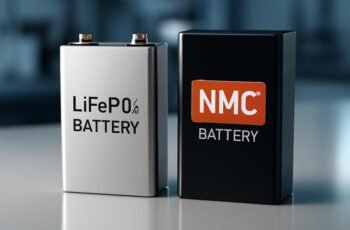
When comparing Lifepo4 and lithium-ion batteries, safety considerations are paramount, especially in critical applications. Their distinct chemistries influence how each handles thermal stress, internal faults, and external conditions. Understanding these differences is essential for making informed choices, but the nuances behind their safety profiles can be complex. Exploring how each type responds under various scenarios reveals the true implications for safety—an area that warrants closer examination.
Key Takeaways
- Lifepo4 batteries have a more stable chemistry, reducing the risk of thermal runaway and fire compared to lithium-ion batteries.
- Lithium-ion batteries possess higher energy density but pose greater safety concerns due to increased overheating and explosion risks.
- Lifepo4’s superior thermal stability limits oxygen release during overheating, enhancing safety in temperature-variable environments.
- Proper handling, safety certifications, and correct charging practices are crucial for both battery types to minimize safety risks.
- Lifepo4’s robust structure and chemistry make it safer for high-temperature applications and mechanical damage scenarios.
How Do Lifepo4 and Lithium-Ion Batteries Differ in Safety Features?
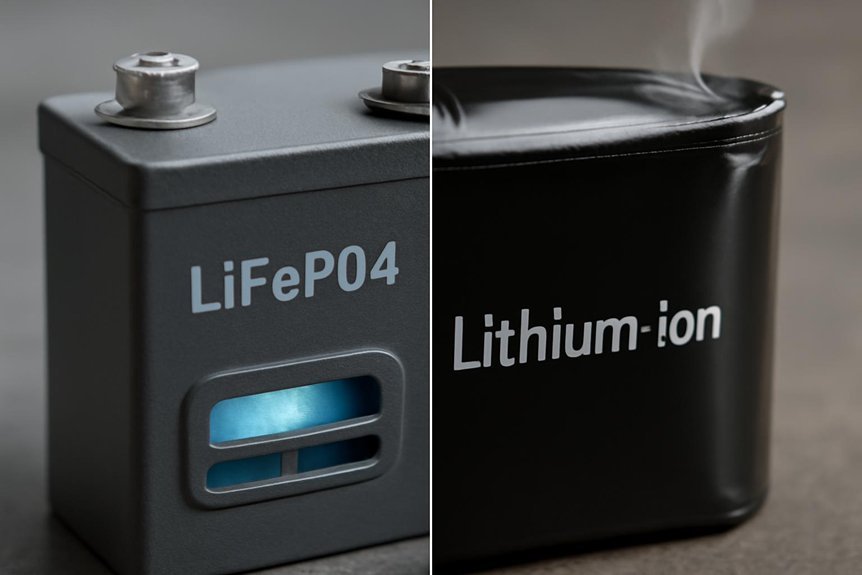
While both Lifepo4 and lithium-ion batteries are widely used in portable and stationary applications, their safety features differ considerably due to their distinct chemical compositions. Lifepo4 batteries exhibit a more stable chemistry, reducing the risk of thermal runaway, which enhances overall safety. Although they have lower energy density compared to traditional lithium-ion cells, Lifepo4’s weight efficiency allows for safer, durable designs without greatly sacrificing performance. This chemical stability minimizes the potential for overheating and fires, making Lifepo4 a preferred choice in high-demand or safety-critical environments. Conversely, lithium-ion batteries with higher energy density pose greater safety concerns due to their more volatile electrolyte chemistry. Understanding these differences helps in selecting batteries aligned with specific safety requirements and application needs.
What Are the Common Safety Risks of Lithium-Ion Batteries?
Lithium-ion batteries, despite their widespread use, pose several inherent safety risks primarily due to their volatile electrolyte chemistry. These risks include the potential for battery failures caused by internal short circuits, thermal runaway, or mechanical damage. Such failures can lead to rapid overheating, fires, or explosions. Chemical leaks are also a concern, especially if the electrolyte escapes through a damaged casing, exposing users to toxic and flammable substances. The high energy density of lithium-ion cells amplifies these hazards, making proper thermal management and protective circuitry essential. Additionally, manufacturing defects and improper handling can increase the likelihood of safety incidents. Overall, understanding these risks emphasizes the importance of rigorous safety measures in lithium-ion battery design, manufacturing, and usage.
Why Is Lifepo4 Considered Safer in High-Temperature Conditions?
Lifepo4 batteries demonstrate superior thermal stability, which considerably reduces the risk of thermal runaway under high-temperature conditions. This inherent heat tolerance minimizes the chances of fire or explosion compared to traditional lithium-ion chemistries. Consequently, Lifepo4’s ability to maintain safety integrity at elevated temperatures makes it a more reliable choice for demanding applications.
Thermal Stability Advantage
Because of its inherent chemical stability, Lifepo4 (lithium iron phosphate) batteries exhibit superior thermal stability compared to other lithium-ion chemistries, making them less prone to thermal runaway under high-temperature conditions. This stability stems from the robust crystal structure of Lifepo4, which resists thermal degradation even when exposed to elevated temperatures. Unlike other chemistries, its chemical stability limits the release of oxygen during overheating, reducing the risk of combustion. This inherent resistance to thermal degradation guarantees that Lifepo4 batteries maintain their integrity longer under heat stress, preventing unsafe reactions. Consequently, their predictable thermal behavior enhances safety by minimizing the potential for rapid temperature escalation, making Lifepo4 a more reliable choice in environments where temperature fluctuations are a concern.
Reduced Risk of Fire
While high temperatures typically increase the risk of thermal runaway in many lithium-ion chemistries, Lifepo4 batteries inherently mitigate this danger due to their stable chemical composition. Their robust structure reduces the likelihood of fire during thermal events, making fire prevention more effective under elevated temperatures. Lifepo4’s thermal stability minimizes unsafe reactions, even without advanced thermal management systems. To illustrate, consider the following:
| Battery Type | Fire Risk at High Temp | Thermal Stability | Ideal for Fire Prevention |
|---|---|---|---|
| Lithium-ion | High | Moderate | Limited |
| Lifepo4 | Low | High | Superior |
This stability underscores Lifepo4’s safety advantage, especially in high-temperature scenarios where thermal management is critical.
Better Heat Tolerance
The inherent thermal stability of Lifepo4 batteries greatly enhances their ability to withstand high temperatures without degrading or risking safety. Their robust chemical structure allows for superior heat dissipation, reducing the risk of thermal runaway during thermal cycling. Lifepo4’s stable chemistry minimizes internal heat buildup, even under sustained high-temperature conditions. This improves safety in environments with fluctuating or elevated temperatures. Additionally, Lifepo4 batteries are less prone to temperature-induced degradation, maintaining performance over time. Their design also supports better heat management, which prevents hotspots that could lead to failure. Overall, Lifepo4’s resistance to thermal stress makes them safer and more reliable in high-temperature applications.
- Better heat dissipation prevents internal overheating
- Resistance to thermal cycling reduces wear
- Minimized risk of thermal runaway
- Enhanced stability under sustained heat
How Do Battery Chemistry and Structure Impact Safety?
Battery chemistry and structure fundamentally influence safety by determining how cells respond under stress or failure conditions. Electrolyte composition plays a vital role, as some formulations are more prone to thermal runaway or leakage, affecting overall stability. Cathode materials also impact safety; for example, lithium cobalt oxide can release oxygen at high temperatures, increasing fire risk, whereas LiFePO₄’s stable structure minimizes such hazards. Additionally, the internal architecture, including separator design, influences how heat and pressure are managed during abuse scenarios. These factors collectively determine a battery’s resilience to overcharge, short circuits, and mechanical damage. Understanding the interplay between electrolyte composition and cathode materials helps us evaluate inherent safety risks and guides us toward safer, more reliable energy storage solutions.
What Safety Certifications and Standards Should You Look For?
When evaluating lithium-based batteries, recognizing specific safety certifications and standards is essential to confirm reliability and risk mitigation. These certifications guarantee that batteries meet rigorous testing standards, confirming their safety under various conditions. Look for certifications such as UL 2054, IEC 62133, and UN 38.3, which validate compliance with international safety protocols. These standards address aspects like thermal stability, short-circuit prevention, and mechanical integrity. Additionally, certifications like CE or RoHS demonstrate adherence to regional safety and environmental regulations. Confirming a battery has undergone these testing standards helps identify products designed with safety in mind, reducing risks of failure, overheating, or fire. Always verify that the manufacturer provides transparent documentation of these safety certifications before making a purchase.
Verify safety certifications like UL 2054, IEC 62133, and UN 38.3 for reliable, safe lithium batteries.
- UL 2054 and IEC 62133 compliance
- UN 38.3 transportation safety standards
- Regional certifications like CE or RoHS
- Evidence of rigorous testing standards
How Can Proper Usage and Handling Minimize Battery Risks?
Proper usage and handling are critical in minimizing risks associated with lithium-based batteries, as improper practices can lead to thermal runaway, fires, or device failure. Effective battery handling involves adhering to manufacturer guidelines, avoiding physical damage, and preventing exposure to extreme temperatures. Risk reduction hinges on understanding the battery’s limits and implementing safeguards during operation and storage. Proper handling minimizes the chance of short circuits, overcharging, or deep discharging, which are primary contributors to safety hazards. Consistent inspection for damage or swelling is essential, as compromised batteries are more prone to failure. By maintaining strict control over how batteries are managed, we can considerably reduce safety risks, ensuring safer operation and prolonging battery lifespan.
What Are Best Practices for Safe Installation and Maintenance?
Ensuring safe installation and maintenance requires strict adherence to ventilation standards, as proper airflow minimizes heat buildup and reduces risk. Using the correct charging equipment is essential to prevent overcharging or thermal runaway, which can compromise battery integrity. Regular inspections and diligent care help identify potential issues early, maintaining peak safety and performance over the battery’s lifespan.
Proper Ventilation Requirements
Adequate ventilation is essential for the safe installation and ongoing maintenance of LiFePO4 and lithium-ion batteries, as it helps dissipate heat and prevent the accumulation of potentially hazardous gases. Proper airflow management reduces thermal buildup and minimizes the risk of gas buildup during charging or malfunction. Implementing effective ventilation systems involves ensuring continuous, unobstructed air exchange and controlling temperature levels.
Key practices include:
- Using exhaust fans or ventilation ducts to promote effective airflow
- Positioning batteries in well-ventilated, open spaces
- Avoiding confined enclosures that trap heat and gases
- Regularly inspecting ventilation pathways for blockages or corrosion
Use Correct Charging Equipment
Selecting the correct charging equipment is essential for the safe installation and maintenance of LiFePO4 and lithium-ion batteries. Verifying charging compatibility prevents overcharging, undercharging, and thermal runaway risks. High-quality equipment provides accurate voltage regulation, current control, and protection features tailored to each battery chemistry. Using substandard or incompatible chargers can cause irreversible damage, safety hazards, or reduced lifespan. It’s vital to confirm that chargers are specifically rated for the battery’s chemistry, capacity, and voltage requirements. Properly matched equipment minimizes the risk of electrical faults and enhances overall safety. Maintaining rigorous standards for equipment quality and compatibility is fundamental to safeguarding both personnel and equipment during charging operations. This proactive approach guarantees reliable performance and longevity of the battery systems.
Regular Inspection and Care
Regular inspection and maintenance are critical components of safe battery system operation, as they help identify potential issues before they escalate into safety hazards. Consistent battery maintenance involves monitoring for signs of swelling, corrosion, or loose connections, which can compromise safety. Establishing an appropriate inspection frequency is crucial—monthly or quarterly checks are recommended depending on usage and environment. Proper care also includes verifying voltage levels and inspecting protective enclosures to prevent damage. Neglecting these practices can lead to undetected faults, increasing the risk of thermal runaway or fires. Prioritizing systematic inspections and maintenance promotes early detection of abnormalities, prolongs battery life, and maintains safety standards. Adopting a structured approach to battery maintenance is essential for safe, reliable operation.
How Do Fire and Thermal Runaway Risks Compare?
While both LiFePO4 and lithium-ion batteries pose fire and thermal runaway risks, their propensity for such events differs markedly. LiFePO4 batteries exhibit considerably lower rates of fire incidents and thermal runaway, largely due to their stable chemical composition. Their robust thermal management requirements reduce the likelihood of catastrophic failures, even under stress. In contrast, conventional lithium-ion batteries are more susceptible to thermal runaway, especially when subjected to overcharging or physical damage, increasing fire risks. The internal chemistry of LiFePO4 inherently resists decomposition at high temperatures, whereas lithium-ion cells tend to generate heat rapidly during failure. Consequently, LiFePO4 batteries present a safer profile, with diminished risk of uncontrolled thermal escalation, affirming their superior safety margin in applications demanding rigorous thermal management.
Which Battery Type Is Better Suited for High-Risk Environments?
When considering batteries for high-risk environments, safety becomes the paramount concern. Lithium Iron Phosphate (LiFePO4) batteries generally excel in these settings due to their stable chemistry, reducing risks of thermal runaway and fire. They also offer a longer battery lifecycle, which is essential for high-risk applications requiring durability and reliability. Lithium-ion batteries, while offering higher energy density, pose greater safety challenges in such environments due to potential thermal instability.
Key factors include:
- LiFePO4’s inherent thermal stability minimizes fire risk
- Longer battery lifecycle reduces replacement frequency
- Lithium-ion’s higher energy density may increase hazards
- Suitability depends on balancing safety and performance needs
Ultimately, LiFePO4 is better suited for high-risk applications, prioritizing safety and longevity.
Frequently Asked Questions
Are Lifepo4 Batteries More Environmentally Friendly Than Lithium-Ion Batteries?
We believe LiFePO4 batteries are more environmentally friendly due to superior sustainability practices, longer lifespan, and lower toxicity. While they have lower energy density, their safer chemistry reduces ecological risks, making them a more sustainable choice overall.
How Do Lifepo4 and Lithium-Ion Batteries Perform in Cold Weather Conditions?
We find Lifepo4 batteries perform better in cold weather due to stable temperature effects, maintaining capacity and safety, while lithium-ion batteries experience significant performance drops, with reduced efficiency and increased risk of thermal issues in low temperatures.
What Is the Typical Lifespan Difference Between Lifepo4 and Lithium-Ion Batteries?
Think of batteries as race cars; lifepo4 advantages include longer lifespan, often exceeding 10 years, while lithium ion disadvantages involve quicker capacity fade. Consequently, lifepo4 batteries typically last longer, making them a more durable investment over time.
Can Lifepo4 Batteries Be Safely Recycled or Disposed Of?
We can safely recycle Lifepo4 batteries through specialized recycling processes that recover valuable materials, minimizing environmental impact. Proper disposal methods are essential; avoiding landfilling prevents potential hazards, ensuring safe, environmentally responsible handling of used Lifepo4 batteries.
How Does Charging Speed Impact the Safety of Each Battery Type?
Charging speed impacts safety like a tightrope walk; faster charging increases heat generation, risking thermal runaway. Both battery types require strict charging protocols to manage heat, ensuring safe, efficient power delivery without compromising structural integrity or safety.
Conclusion
In our analysis, it’s clear that Lifepo4 batteries offer notable safety advantages, especially in high-risk scenarios, thanks to their stable chemistry. However, understanding the nuances of each battery type’s design and proper handling is essential. As technology advances and standards evolve, the question remains: which battery will truly keep our environments safest under unpredictable conditions? The answer depends on careful evaluation—are you prepared to choose the safer, more reliable option amid the growing complexities of energy storage?