Consider the widespread use of electric vehicles, where battery choice directly impacts performance and safety. Both LiFePO4 and lithium-ion batteries are popular options, yet they differ markedly in chemistry and overall design. Understanding these distinctions is essential for making an informed decision. As we analyze their safety, longevity, and application suitability, you’ll discover why selecting the right battery involves more than just initial costs—it’s about long-term reliability and sustainability.
Key Takeaways
- LiFePO4 batteries have higher thermal stability and safety due to their stable phosphate chemistry.
- They support more charge-discharge cycles (2000-5000) compared to lithium-ion (500-1000), offering longer lifespan.
- LiFePO4 offers lower energy density but better longevity and safety for stationary and backup applications.
- Lithium-ion batteries have higher energy density, making them suitable for weight-sensitive uses like electric vehicles.
- LiFePO4 is more environmentally friendly and cost-effective long-term despite higher initial costs.
How Do LiFePO4 and Lithium-Ion Batteries Differ in Chemistry and Construction
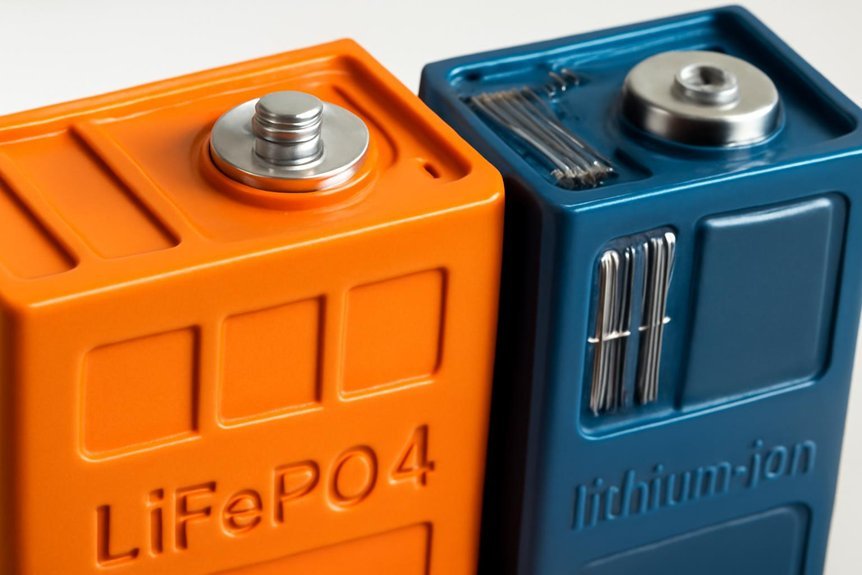
Although both LiFePO4 and lithium-ion batteries are lithium-based chemistries, they differ markedly in their chemical composition and construction. LiFePO4 batteries utilize lithium iron phosphate as their cathode material, offering a stable crystal structure that enhances thermal management and reduces degradation. In contrast, typical lithium-ion batteries often employ layered metal oxides, which can pose higher thermal stability risks. The electrode materials greatly influence the battery’s performance, lifespan, and safety. LiFePO4’s electrode materials facilitate a more robust thermal management profile, preventing overheating and thermal runaway. This structural stability contributes to improved cycle life and safety. Understanding these differences in electrode materials and their impact on thermal management underpins the distinct characteristics of each battery type.
Which Battery Offers Better Safety and Thermal Stability?
When comparing safety and thermal stability, LiFePO4 batteries clearly stand out due to their inherent chemical and structural properties. Their stable phosphate chemistry reduces the risk of thermal runaway, enhancing overall safety. The robust crystal lattice structure provides excellent thermal management, preventing overheating during operation. Additionally, LiFePO4 batteries incorporate advanced safety features such as built-in venting mechanisms and thermal cut-offs, which further mitigate safety concerns. Unlike lithium-ion batteries with more volatile cathode materials, LiFePO4’s thermal stability minimizes fire hazards and degradation, even under extreme conditions. These attributes make LiFePO4 batteries particularly suitable for applications where safety is paramount, offering a safer, more reliable option with superior thermal management capabilities.
How Do Cost and Longevity Compare Between LiFePO4 and Lithium-Ion Batteries
Cost and longevity are key factors in evaluating the practicality of LiFePO4 versus lithium-ion batteries for various applications. A thorough cost analysis reveals that LiFePO4 batteries typically have a higher upfront cost but lower maintenance expenses over time. Their longevity comparison indicates they often last 2-3 times longer, primarily due to deeper cycle life and thermal stability. The table below summarizes these differences:
| Aspect | LiFePO4 | Lithium-Ion |
|---|---|---|
| Initial Cost | Higher | Lower |
| Cycle Life | 2000-5000 cycles | 500-1000 cycles |
| Maintenance | Lower | Higher |
| Longevity | Up to 10 years or more | 3-5 years |
This analysis emphasizes long-term cost savings and durability advantages of LiFePO4 batteries.
What Are the Performance and Energy Density Differences?
We observe that LiFePO4 batteries generally have lower energy storage capacity compared to lithium-ion variants, impacting their overall runtime in high-demand applications. However, their power delivery efficiency often surpasses that of other chemistries, supporting rapid charge and discharge cycles. Analyzing these differences helps determine ideal configurations for specific performance requirements.
Energy Storage Capacity
Energy storage capacity is a vital factor in evaluating LiFePO4 batteries, as it directly influences their performance and suitability for various applications. LiFePO4 batteries typically offer lower energy density compared to traditional lithium-ion chemistries, but they excel in capacity retention over time. This results in consistent energy efficiency and prolonged cycle life, essential for long-term use. The inherent stability of LiFePO4 chemistry guarantees minimal capacity fade, maintaining reliable energy storage even after numerous charge-discharge cycles. While their specific energy may be less than other lithium-ion types, their predictable capacity retention and high safety margins often compensate, making them ideal for applications where longevity and safety outweigh maximum energy density.
Power Delivery Efficiency
While LiFePO4 batteries excel in maintaining capacity over numerous cycles, their ability to deliver power efficiently sets them apart from other lithium-ion chemistries. The key metric here is power output, which influences how quickly and effectively a battery can supply energy during high-demand situations. LiFePO4 cells generally provide a stable and consistent power delivery, enabling higher peak power outputs without significant voltage drops. Additionally, their charging speed remains favorable, allowing for rapid replenishment without compromising longevity. These attributes make LiFePO4 suitable for applications requiring reliable power bursts, such as electric vehicles and grid storage. In contrast, some lithium-ion chemistries may offer higher energy density but often at the expense of power delivery efficiency and charging speed, limiting their performance in demanding scenarios.
Which Battery Is More Suitable for Specific Applications (EVs, Solar, Backup Power)?
To determine which Lifepo4 battery best suits specific applications, we evaluate key factors such as energy density, cost and longevity, and safety considerations. These points directly influence performance and reliability in EVs, solar systems, and backup power solutions. Analyzing these variables allows for selecting the most appropriate battery type for each use case.
Energy Density Differences
Have you considered how the energy density of LiFePO4 batteries impacts their suitability across various applications? Lithium-ion batteries generally offer higher energy density, enhancing energy efficiency and enabling longer runtimes or travel distances. In contrast, LiFePO4’s lower energy density results in a higher weight comparison for the same capacity, which can be a disadvantage in weight-sensitive applications like electric vehicles (EVs). However, this trade-off often benefits stability and lifespan. For solar or backup power systems, where weight is less critical, LiFePO4’s safety and durability make it an attractive choice despite its lower energy density. Ultimately, understanding these energy density differences helps determine which battery type aligns best with specific application needs, balancing energy efficiency against weight considerations.
Cost and Longevity
Evaluating cost and longevity is essential when selecting batteries for specific applications, as these factors directly influence long-term performance and total ownership costs. A thorough cost analysis reveals Lifepo4 batteries generally have a higher upfront cost compared to lithium-ion, but their extended lifespan offers better value over time. The longevity comparison shows Lifepo4 typically endures 2,000 to 5,000 cycles, surpassing standard lithium-ion batteries. The table below summarizes key metrics:
| Aspect | Lifepo4 | Lithium-ion | Application Suitability |
|---|---|---|---|
| Initial Cost | Moderate to High | Lower | EVs, Solar |
| Cycle Life | 2,000–5,000 cycles | 500–1,500 cycles | Backup Power |
| Maintenance | Low | Moderate | Long-term use |
This analysis indicates Lifepo4 excels in longevity, making it suitable where durability outweighs initial expense.
Safety and Maintenance
While both Lifepo4 and lithium-ion batteries exhibit robust safety profiles, their maintenance requirements and risk factors vary considerably depending on the application. Lifepo4 batteries generally have a longer battery lifecycle, reducing the frequency of maintenance practices needed for replacement. They are less prone to thermal runaway, making them safer for applications like EVs, solar energy systems, and backup power. Lithium-ion batteries, however, demand strict maintenance practices to monitor voltage levels and prevent overcharging or deep discharging, which can shorten their lifecycle and increase safety risks. For high-demand, long-term applications, Lifepo4’s stability and low maintenance needs make it more suitable. Conversely, lithium-ion batteries may require more vigilant management but can offer higher energy density in specific use cases.
What Factors Should You Consider When Choosing Between LiFePO4 and Lithium-Ion Batteries
When choosing between LiFePO4 and lithium-ion batteries, it’s essential to evaluate several critical factors that directly impact performance, safety, and longevity. Battery lifecycle is a key consideration, as LiFePO4 batteries generally offer longer cycle life, reducing replacement frequency and total cost of ownership. Environmental impact also plays an important role; LiFePO4 batteries are considered more environmentally friendly due to their non-toxic materials and lower disposal concerns. Additionally, temperature tolerance, charge/discharge efficiency, and energy density influence suitability for specific applications. Safety features, such as thermal stability, must be weighed alongside these factors. Ultimately, understanding these technical distinctions enables informed decisions aligned with operational demands, sustainability goals, and long-term reliability.
Frequently Asked Questions
How Do Charging Protocols Differ Between Lifepo4 and Lithium-Ion Batteries?
We find that Lifepo4 batteries benefit from precise charging protocols emphasizing voltage stability and charging efficiency, preventing overcharge and enhancing lifespan. Lithium-ion batteries require more complex protocols to manage voltage fluctuations and optimize overall performance and longevity.
What Environmental Factors Impact the Lifespan of Each Battery Type?
Imagine a LiFePO4 battery stored in high humidity, where moisture causes corrosion, versus a lithium-ion cell exposed to extreme temperatures, accelerating degradation. Temperature effects and humidity impact both, but LiFePO4 generally offers better resilience in harsh environments.
Are There Specific Maintenance Requirements for Lifepo4 Compared to Lithium-Ion?
We find Lifepo4 advantages include minimal maintenance, unlike lithium-ion drawbacks, which require regular balancing and temperature monitoring. Lifepo4 batteries demand less oversight, making them more reliable and easier to manage over their lifespan.
How Do Recycling and Disposal Processes Vary for These Batteries?
We find that recycling methods for Lifepo4 batteries are more environmentally friendly, involving less hazardous waste, while disposal regulations are stricter for lithium-ion batteries due to their flammable electrolyte, necessitating specialized handling and safety precautions.
Which Battery Type Performs Better in Extreme Temperature Conditions?
Did you know Lifepo4 batteries excel in extreme temperatures, maintaining over 80% of their performance metrics in harsh conditions? Their superior temperature resilience makes them ideal for demanding environments, unlike lithium-ion batteries, which degrade faster under such conditions.
Conclusion
In our journey through battery choices, LiFePO4 stands as a steadfast lighthouse—offering safety, longevity, and environmental harmony—while lithium-ion acts as a swift river, delivering high energy density for weight-sensitive needs. Choosing between them depends on your specific voyage—whether it’s long-term sustainability or immediate performance. Ultimately, understanding their unique chemistry and purpose helps us navigate toward the most fitting energy source, steering us safely into a more efficient and resilient energy future.