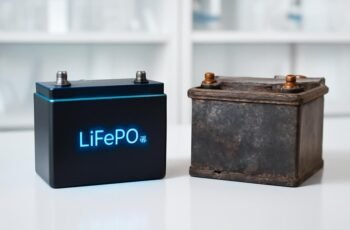
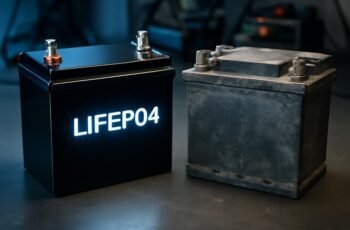
Maneuvering the landscape of deep cycle batteries is like charting a course through shifting tides—each option offers advantages and trade-offs. As we compare Lithium-ion and LiFePO4 chemistries, it becomes clear that their performance, longevity, and safety profiles influence long-term reliability differently. Understanding these nuances is essential for making an informed choice that aligns with your energy demands. Let’s explore how these technologies stand up under real-world conditions and what factors should guide your decision.
Key Takeaways
- LiFePO4 tolerates deeper discharges (up to 80-90%) with minimal capacity loss, ideal for deep cycle applications.
- Lithium-ion batteries generally have a lower depth of discharge and may degrade faster under frequent deep cycling.
- LiFePO4 offers longer cycle life and better capacity retention over time in demanding deep cycle use.
- Lithium-ion batteries may require more careful maintenance and shorter lifespan under repeated deep discharges.
- LiFePO4 provides enhanced thermal stability and safety during deep cycling compared to standard lithium-ion batteries.
Understanding the Basics of Lithium-Ion and LiFePO4 Batteries for Deep Cycle Use
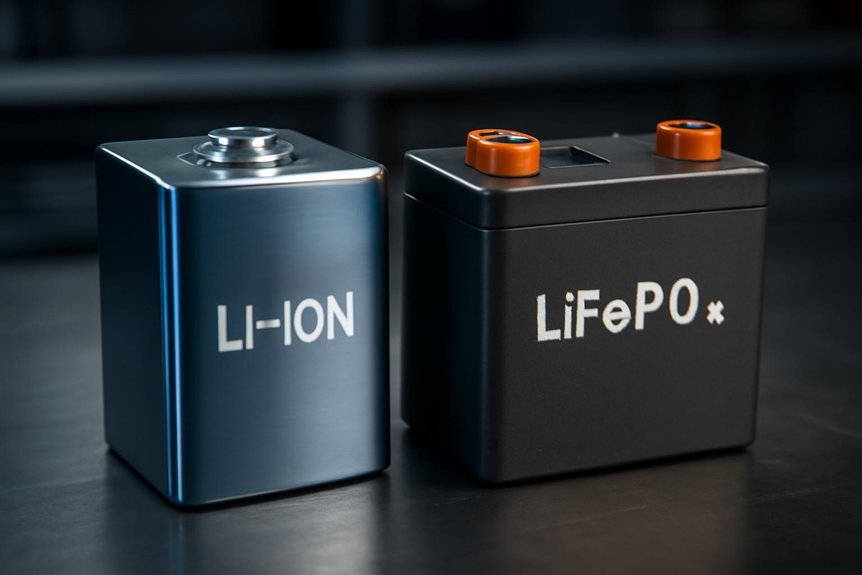
Understanding the fundamental differences between lithium-ion and LiFePO4 batteries is essential for selecting the right option for deep cycle applications. Lithium-ion batteries utilize a layered oxide battery chemistry that offers high energy density, making them suitable for compact, high-capacity needs. LiFePO4 batteries, based on lithium iron phosphate chemistry, provide enhanced thermal management and stability, resulting in better performance under repeated charge cycles. When evaluating lifecycle assessment and performance metrics, LiFePO4 generally exhibits longer cycle life, lower environmental impact, and improved safety. Application suitability varies: lithium-ion excels in lightweight, high-energy scenarios, while LiFePO4 is better suited for demanding deep cycle use due to its robustness. Careful analysis of these core aspects guides ideal battery selection for specific deep cycle applications.
Comparing Performance: Which Battery Provides Better Longevity and Reliability?
When it comes to longevity and reliability, which battery chemistry truly outperforms the other in demanding deep cycle applications? Analyzing performance metrics reveals that LiFePO4 batteries generally exhibit superior longevity, with deeper cycle life and better retention of capacity over time. Reliability factors such as thermal stability and resistance to capacity fade are also more favorable in LiFePO4, making them more consistent under high-demand conditions. Lithium-ion batteries, while offering high energy density, tend to have shorter cycle lives and are more susceptible to degradation caused by stress and temperature fluctuations. Overall, LiFePO4’s consistent performance metrics and resilience position it as the more dependable choice for long-term, demanding deep cycle use.
Safety Considerations and Charging Requirements for Lithium-Ion vs LiFePO4?
While both Lithium-ion and LiFePO4 batteries require careful handling, LiFePO4 is generally considered safer due to its thermal stability and lower risk of thermal runaway. Its material composition enhances safety standards, reducing concerns during high discharge rates. LiFePO4 batteries benefit from more forgiving charging protocols and stable voltage regulation, minimizing overcharge risks. Proper battery management guarantees peak performance and safety, especially in lifecycle analysis, where thermal stability extends lifespan. Conversely, Lithium-ion batteries demand more precise charging control to prevent overheating and potential failure. Adhering to manufacturer-recommended charging protocols and safety standards is essential for both chemistries, but LiFePO4’s inherent stability offers a significant safety advantage in deep cycle applications, making it a more resilient choice.
Cost Analysis: Which Battery Offers Better Value Over Its Lifespan?
Evaluating the long-term value of lithium-ion versus LiFePO4 batteries involves analyzing their total cost of ownership, which includes initial purchase price, maintenance, and lifespan. Our cost comparison reveals that while lithium-ion batteries often have a lower upfront cost, LiFePO4 batteries excel in durability, offering a longer cycle life.
The key points in this value analysis include:
The main highlights focus on initial costs, durability, maintenance, and long-term value of LiFePO4 batteries.
- Higher initial investment for LiFePO4 but reduced replacement frequency.
- Lower maintenance costs due to enhanced stability and fewer safety concerns.
- Extended lifespan of LiFePO4, decreasing total ownership costs over time.
- Greater overall value, making LiFePO4 a more economical choice for long-term deep cycle applications.
This cost comparison indicates that LiFePO4 batteries provide better value over their lifespan, despite higher initial costs.
Weight and Size Differences That Matter for Portable and Space-Constrained Applications
Have you considered how the weight and size of a battery impact portability and space efficiency in constrained environments? Lithium-ion batteries generally offer superior weight efficiency, meaning they provide higher energy density relative to their size. This translates into smaller, lighter units ideal for portable applications. In contrast, LiFePO4 batteries tend to be larger and heavier, which can hinder size effectiveness where space is limited. For devices requiring compact design or frequent mobility, lithium-ion’s compact form factor delivers clear advantages. However, LiFePO4’s larger size might be acceptable in stationary setups where weight is less critical. Understanding these differences helps in selecting the best battery based on weight and size constraints, ensuring maximum efficiency without compromising space or portability.
How Each Battery Type Handles Deep Discharges and Repeated Cycles?
When evaluating deep discharge capabilities, we focus on each battery type’s tolerance to high depth-of-discharge levels, which directly impacts cycle life. Lithium-ion and LiFePO4 chemistries differ in their durability under repeated cycling, affecting long-term performance and cost-effectiveness. Additionally, their recharge recovery efficiency determines how quickly and reliably each can restore capacity after deep discharges.
Discharge Depth Tolerance
Lithium-ion and LiFePO4 batteries exhibit distinct differences in their ability to handle deep discharges and frequent cycling. LiFePO4’s discharge characteristics allow for higher depth performance without compromising thermal stability or cycle efficiency, unlike standard lithium-ion batteries, which risk capacity fade with repeated deep discharges.
Key distinctions include:
- Discharge tolerance: LiFePO4 tolerates deeper discharges (up to 80-90%) without significant capacity loss, whereas lithium-ion batteries typically limit to 50-70%.
- Cycle efficiency: LiFePO4 maintains superior cycle life under deep cycling conditions due to its stable battery chemistry.
- Charge retention: Both types hold charge well, but LiFePO4’s lifespan expectations remain more consistent after repeated deep discharges.
- Energy density trade-offs: Lithium-ion offers higher energy density but at the expense of reduced depth performance and thermal stability.
Cycle Life Durability
LiFePO4 batteries demonstrate a notable advantage in cycle life durability, especially under conditions of repeated deep discharges. Their chemical stability allows for more charge-discharge cycles without significant capacity loss, directly impacting overall battery longevity. In contrast, traditional lithium-ion batteries tend to experience faster capacity fade when subjected to frequent deep cycles, reducing their useful lifespan. The robust chemistry of LiFePO4 minimizes degradation mechanisms such as electrode wear and electrolyte decomposition, enabling these batteries to sustain higher cycle counts over time. Consequently, for applications requiring frequent deep cycling, LiFePO4 offers superior cycle life, translating into extended battery longevity and reduced replacement costs. This durability makes LiFePO4 particularly suitable for long-term, high-demand energy storage scenarios.
Recharge Recovery Efficiency
Recharge recovery efficiency critically influences how well each battery type maintains performance after deep discharges and repeated cycling. This metric reflects a battery’s ability to restore its capacity following significant drain, impacting overall longevity. When analyzing efficiency metrics, we observe that:
- Lithium-ion batteries often experience some capacity loss after extensive charge cycles, but recoverability remains relatively high.
- Lifepo4 batteries generally exhibit superior recharge recovery, with minimal capacity fade even after many deep discharges.
- Deep cycling tests reveal Lifepo4’s ability to sustain charge retention across numerous cycles, enhancing long-term reliability.
- The difference in recharge recovery efficiency underscores Lifepo4’s advantage for applications demanding frequent deep discharges, ensuring consistent performance over time.
Key Factors to Consider When Choosing Between Lithium-Ion and LiFePO4 for Your Setup
When selecting between lithium-ion and LiFePO₄ batteries, we must consider cost implications, cycle life durability, and safety profiles. These factors directly influence long-term performance and overall system stability. Analyzing these key points helps optimize our choice for specific deep cycle applications.
Cost and Budget
Cost is often the primary factor influencing battery selection, especially for those with tight budget constraints or large-scale setups. When evaluating options, consider these key points:
- Initial investment: LiFePO4 batteries typically have a higher upfront cost but offer longer-term savings.
- Lifecycle costs: Though lithium-ion batteries may be cheaper initially, shorter cycle life can lead to more frequent replacements.
- Financing options: Many manufacturers offer financing plans, easing the burden of high initial expenses for either type.
- Total cost of ownership: Factor in maintenance, replacement frequency, and efficiency to determine true affordability.
Cycle Life Durability
While initial capacity may seem like a straightforward factor, the durability of a battery’s cycle life ultimately determines long-term performance and value. Lithium-ion and LiFePO4 batteries differ considerably in their cycle life and durability factors. LiFePO4 generally offers a higher cycle count—up to 2000-5000 cycles—compared to lithium-ion, which typically endures 500-1000 cycles. Key durability factors include temperature stability, charge/discharge rates, and depth of discharge. The following table summarizes these aspects:
| Battery Type | Typical Cycle Life | Main Durability Factors |
|---|---|---|
| Lithium-Ion | 500-1000 cycles | Thermal sensitivity, voltage fluctuations |
| LiFePO4 | 2000-5000 cycles | Stable chemistry, lower degradation rate |
| Both | Varies with use | Proper maintenance, charge protocols |
Safety and Stability
Choosing between lithium-ion and LiFePO₄ batteries requires careful consideration of their safety and stability profiles, as these factors directly impact system reliability and user safety. LiFePO₄ offers superior thermal stability due to its stable chemical composition, reducing fire risk during faults or overcharge. In contrast, lithium-ion batteries may exhibit voltage instability under high stress, increasing safety concerns. When evaluating these options:
- LiFePO₄’s chemical composition enhances overcharge protection and minimizes fire risk.
- Thermal stability in LiFePO₄ reduces potential thermal runaway incidents.
- Lithium-ion batteries may pose higher environmental impacts due to material toxicity.
- Both chemistries require proper management systems to guarantee safety, but LiFePO₄ inherently offers more stability under demanding conditions.
Final Verdict: Which Deep Cycle Battery Is Right for Your Energy Needs?
Determining the ideal deep cycle battery hinges on understanding the specific energy demands and operational conditions of your application. For diverse battery applications, Lifepo4 offers superior energy efficiency, longer lifespan, and lower environmental impact, making it suitable for sustainable setups. Lithium-ion batteries excel in performance metrics like faster charging technologies and higher temperature tolerance, which benefit high-demand or variable environments. Maintenance requirements are minimal for Lifepo4, reducing user effort and operational costs. User experiences often highlight Lifepo4’s stability and safety, while lithium-ion batteries provide consistent power delivery. Ultimately, selecting the right battery depends on balancing these factors against your energy needs, budget, and environmental considerations. Both options serve well, but Lifepo4’s durability and eco-friendliness often make it the preferred choice for long-term, reliable deep cycle use.
Frequently Asked Questions
How Do Environmental Conditions Affect Lithium-Ion and Lifepo4 Battery Performance?
Environmental conditions impact battery chemistry, affecting performance metrics like capacity and lifespan. Both lithium-ion and Lifepo4 batteries perform best within specific temperature ranges; extreme heat or cold can reduce efficiency and accelerate degradation, emphasizing the need for proper management.
Can Lithium-Ion and Lifepo4 Batteries Be Safely Mixed in the Same System?
Notably, mixing lithium-ion and LiFePO4 batteries isn’t recommended due to compatibility and safety considerations. Their differing chemistries can cause imbalance, risking system failure or safety hazards, so we advise against combining these technologies in a single setup.
What Are the Long-Term Maintenance Requirements for Each Battery Type?
We monitor charging cycles diligently, store batteries properly, and use monitoring systems to track performance, minimizing maintenance costs. Lifepo4 batteries generally require less upkeep, while lithium-ion systems demand regular checks for ideal long-term performance.
How Do Temperature Extremes Impact Battery Lifespan and Efficiency?
Ironically, extreme temperatures act like enemies to battery longevity, with cold reducing efficiency and heat accelerating degradation. Temperature effects are critical, demanding careful thermal management to optimize performance and lifespan in deep cycle batteries.
Are There Specific Applications Where One Battery Type Is Clearly Preferable?
We find LiFePO4 preferable for solar, marine, and backup power due to its thermal stability and longevity, whereas lithium-ion batteries excel in electric vehicle applications with higher energy density, despite requiring careful thermal management.
Conclusion
In weighing lithium-ion against LiFePO4, the choice hinges on longevity and reliability—like selecting a marathon runner over a sprinter. While lithium-ion might seem cost-effective initially, LiFePO4’s superior cycle life and resilience make it a smarter, more enduring investment. Ultimately, understanding your energy demands and usage patterns guarantees you pick the best match—because in the race of deep cycle batteries, endurance often wins over speed.