Imagine comparing two vehicles—one with a high initial cost but lower maintenance, and another cheaper upfront but requiring more frequent repairs. Similarly, when evaluating LiFePO4 versus lithium-ion batteries, the upfront costs tell only part of the story. We find that analyzing raw material costs, manufacturing differences, and lifespan impacts is essential to understanding true long-term value. As we examine these factors, you’ll see why the initial price is just the beginning of a more complex financial picture.
Key Takeaways
- LiFePO4 batteries have lower raw material and manufacturing costs due to abundant materials and simplified production processes.
- They offer longer cycle life (2,000-3,000 cycles) which reduces replacement and maintenance expenses over time.
- LiFePO4’s enhanced safety features lead to lower long-term repair and safety-related costs.
- Market price stability for LiFePO4 results from consistent raw material supply, unlike more volatile lithium-ion prices.
- Although initial costs for lithium-ion batteries may be lower, LiFePO4’s durability and lifecycle benefits often make it more cost-effective long-term.
How Do LiFePO4 and Lithium-Ion Batteries Differ in Raw Material Costs?
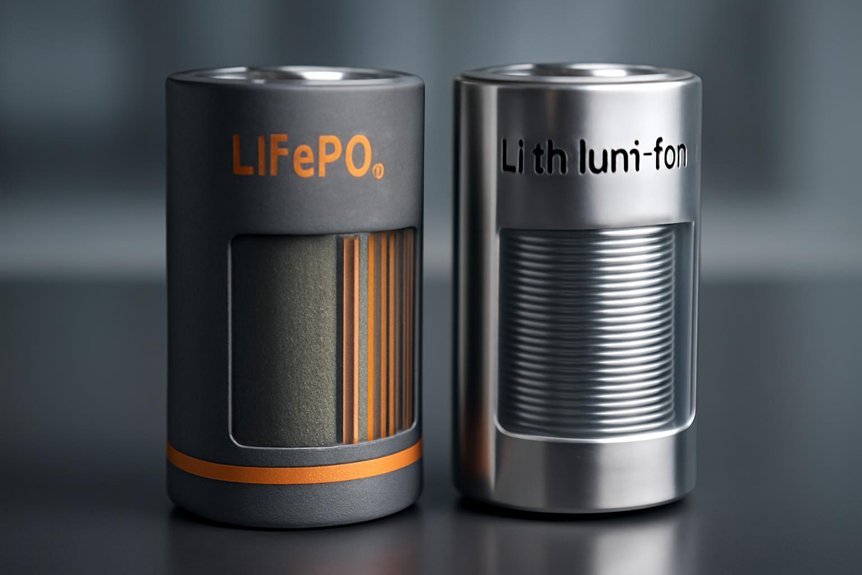
Although both LiFePO4 (lithium iron phosphate) and traditional lithium-ion batteries rely on lithium as a core component, their raw material costs differ considerably due to their distinct chemical compositions. LiFePO4 batteries incorporate iron, phosphate, and carbon, which are more abundant and less expensive raw materials compared to cobalt and nickel used in conventional lithium-ion variants. This composition results in a notable difference in the overall price comparison of raw materials. The cost of lithium remains relatively similar in both, but the inclusion of costly metals like cobalt greatly increases traditional lithium-ion battery costs. Consequently, LiFePO4 batteries benefit from lower raw material expenses, making them more cost-effective regarding raw material sourcing, especially when considering supply chain stability and material scarcity.
What Are the Manufacturing and Production Cost Impacts?
Manufacturing and production costs for LiFePO4 batteries are generally lower than those for traditional lithium-ion batteries, primarily due to differences in cell design, material processing, and assembly complexity. LiFePO4 cells benefit from simplified manufacturing processes, which enhance manufacturing efficiency and support higher production scalability. Their cathode material, lithium iron phosphate, is less costly to produce than cobalt or nickel-based cathodes, reducing raw material expenses. Additionally, the uniformity of LiFePO4 cells allows for streamlined manufacturing lines, decreasing assembly time and defect rates.
| Feature | Lithium-Ion Batteries | LiFePO4 Batteries | Impact on Costs |
|---|---|---|---|
| Material Complexity | Higher cobalt/nickel processing | Simpler iron phosphate synthesis | Lower raw material costs |
| Manufacturing Efficiency | Moderate, complex assembly | Higher, streamlined production | Reduced labor and time expenses |
| Production Scalability | Limited by raw material supply chain | Easier to scale with stable materials | Lower overall production costs |
How Do Charging Cycles and Longevity Affect Total Cost of Ownership?
Charging cycles and overall longevity greatly influence the total cost of ownership for lithium-based batteries, as these factors determine how often a battery must be replaced or maintained over its lifespan. Higher charging efficiency minimizes energy loss during each cycle, effectively extending usable capacity and reducing operational costs. Lifespan comparison reveals that Lifepo4 batteries typically endure more charge cycles—often 2,000 to 3,000—compared to lithium-ion variants, which average around 1,000 to 2,000 cycles. This increased cycle life translates to fewer replacements, lowering long-term expenses. Additionally, longer-lasting batteries reduce maintenance costs and minimize downtime. Ultimately, understanding how charging efficiency and lifespan impact the total cost of ownership helps in selecting batteries that optimize both upfront investment and ongoing operational savings.
Which Battery Type Is More Affordable Over Its Lifecycle?
When evaluating the long-term affordability of Lifepo4 versus lithium-ion batteries, the total cost of ownership hinges on more than just initial purchase price; it also depends on operational expenses, replacement frequency, and maintenance costs. Lifepo4 batteries typically offer lower maintenance and longer cycle life, reducing replacement frequency and associated costs. Although lithium-ion batteries often have higher energy density, making them advantageous in space-constrained applications, their shorter lifespan can increase lifecycle costs. Recycling options also influence total expense: Lifepo4 batteries generally have more established recycling processes, potentially decreasing disposal costs over time. Ultimately, Lifepo4 batteries tend to be more cost-effective over their lifecycle due to durability, lower maintenance needs, and established recycling infrastructure, despite a slightly higher initial investment.
How Do Safety Features Influence Battery Cost and Value?
Safety features play a significant role in determining both the cost and overall value of lithium-based batteries. Implementing advanced safety standards, such as thermal management systems and fire-resistant separators, increases manufacturing complexity and expense but enhances reliability. Battery certifications, like UL or IEC standards, validate compliance with safety benchmarks, often requiring rigorous testing and quality controls. These certifications can raise initial costs but provide assurance of safer operation, reducing the risk of hazards like thermal runaway and explosions. Consequently, batteries with extensive safety features and certifications tend to command higher prices in the market. While they add to upfront costs, these safety measures improve the battery’s long-term value by minimizing potential failure, liability, and maintenance expenses, ultimately delivering greater peace of mind and durability for end-users.
What Are the Maintenance and Replacement Expenses for Each Battery?
We examine the differing replacement frequencies and maintenance requirements of Lifepo4 and lithium-ion batteries to assess their long-term costs. Lifepo4 batteries generally demand less frequent replacement and lower maintenance, while lithium-ion batteries often require more regular upkeep due to faster capacity degradation. Understanding these distinctions enables precise cost analysis over the batteries’ operational lifespan.
Replacement Frequency Differences
Lithium iron phosphate (LiFePO4) batteries generally require fewer replacements over their lifespan compared to traditional lithium-ion batteries, primarily due to their enhanced cycle stability and lower degradation rates. Their longer replacement intervals result in reduced operational costs and less frequent downtime. Lifespan comparisons show LiFePO4 batteries often exceed 2,000 to 3,000 cycles, whereas typical lithium-ion batteries average around 500 to 1,500 cycles before capacity diminishment. This translates into fewer replacements over time. To clarify, here’s a comparison:
| Battery Type | Average Replacement Interval | Typical Cycles | Expected Lifespan |
|---|---|---|---|
| Lithium Iron Phosphate | Longer (up to 10 years) | 2,000-3,000 | 8-10 years or more |
| Lithium-ion | Shorter (5-7 years) | 500-1,500 | 3-7 years |
This data underscores the significant lifespan advantage of LiFePO4 batteries.
Maintenance Requirements and Costs
Although both LiFePO4 and traditional lithium-ion batteries require regular maintenance, their specific needs and associated costs differ considerably. LiFePO4 batteries generally demand less frequent battery upkeep, thanks to their stable chemistry and reduced risk of thermal runaway, which minimizes repair costs. They typically require monitoring of voltage and temperature, but are more resistant to capacity loss over time. Conversely, lithium-ion batteries often need more intensive maintenance, including balancing cells and managing electrolyte degradation, which can lead to higher repair costs. While lithium-ion systems may require more frequent checks and replacements of components like separators or electrolyte solutions, LiFePO4 batteries usually have a longer lifespan with fewer repair interventions. Overall, the lower maintenance demands of LiFePO4 translate into reduced long-term expenses.
How Do Market Prices Fluctuate for Lithium-Ion vs. LiFePO4 Batteries?
How do market prices for Lithium-Ion and LiFePO4 batteries fluctuate over time? Market trends reveal that Lithium-Ion prices are highly sensitive to raw material costs, technological advancements, and supply chain stability, leading to periodic volatility. Conversely, LiFePO4 prices tend to be more stable due to their more abundant raw materials and mature manufacturing processes. Price forecasts suggest that Lithium-Ion batteries may experience downward pressure as recycling and alternative sources develop, but geopolitical factors and resource scarcity could cause sporadic increases. In contrast, LiFePO4’s cost trajectory remains relatively steady, with gradual reductions driven by economies of scale. Understanding these fluctuations helps consumers and industries anticipate cost changes and plan for market developments effectively.
Which Battery Offers Better Long-Term Cost Savings for Your Needs?
Determining which battery offers better long-term cost savings requires a thorough analysis of initial investment, lifespan, maintenance, and overall performance efficiencies. A detailed cost analysis reveals that while lithium-ion batteries typically have lower upfront costs, LiFePO₄ batteries excel in longevity, reducing replacement frequency. Performance comparison shows LiFePO₄’s higher thermal stability and safety, impacting maintenance costs positively. Environmental impact considerations favor LiFePO₄ due to its lower toxicity and longer lifecycle, aligning with sustainable practices. Energy density differences influence application suitability, with lithium-ion batteries preferred for portable devices, while LiFePO₄ suits stationary energy storage. Market trends and technological advancements are making LiFePO₄ increasingly attractive, aligning with consumer preferences for durability and safety. Ultimately, the best choice hinges on specific application needs and long-term financial considerations.
Frequently Asked Questions
How Do Environmental Regulations Impact the Overall Costs of Lifepo4 and Lithium-Ion Batteries?
Environmental regulations increase costs for both Lifepo4 and lithium-ion batteries by necessitating regulatory compliance measures, reducing environmental impact, and managing hazardous materials, ultimately leading to higher manufacturing expenses and influencing the overall economic viability of these battery technologies.
Are There Regional Cost Differences Between Lifepo4 and Lithium-Ion Battery Options?
Regional pricing differences are significant, driven by market demand, supply chain intricacies, and production costs, with Lifepo4 often cheaper in Asia due to local manufacturing, while lithium-ion batteries tend to be more expensive globally because of raw material scarcity.
How Do Recycling and Disposal Costs Influence the Total Battery Lifecycle Expenses?
Recycling processes and disposal methods substantially impact lifecycle costs, as LiFePO4 batteries are easier and safer to recycle, reducing expenses, whereas lithium-ion batteries often involve more complex disposal procedures, increasing overall environmental and financial costs.
What Are the Initial Installation Costs for Each Battery Type in Various Applications?
We find initial setup costs vary considerably; Lifepo4 batteries typically require more robust safety systems, increasing costs in industrial applications, while lithium-ion setups are more streamlined but may need additional thermal management, especially in high-capacity or portable applications.
How Do Technological Advancements Affect Future Pricing Trends for Both Batteries?
Technological innovations and increased market demand boost battery efficiency and production scalability, likely driving prices down. We anticipate that ongoing advancements will make both Lifepo4 and lithium-ion batteries more affordable and accessible, shaping future energy solutions.
Conclusion
To sum up, choosing between LiFePO4 and lithium-ion batteries isn’t just about initial price tags; it’s a calculated decision rooted in lifecycle costs, safety features, and long-term reliability. While lithium-ion batteries may seem cheaper upfront, their higher replacement and maintenance costs often outweigh initial savings. For those who value durability, safety, and overall cost efficiency, LiFePO4 emerges as the smart, economically sound choice—proving that sometimes, a little iron really does make all the difference.