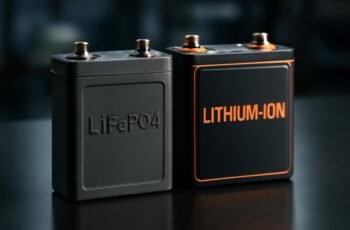
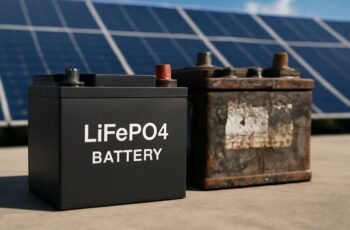
When evaluating energy storage options, understanding the fundamental differences between LiFePO4 and lithium-ion batteries is essential. These differences impact performance, safety, lifespan, and application suitability. While both are lithium-based, their chemical compositions lead to distinct behavior under various conditions. Recognizing these nuances can influence your choice considerably, especially when considering long-term reliability and safety. Exploring these aspects thoroughly reveals the practical implications for diverse uses and future-proofing your investments.
Key Takeaways
- LiFePO₄ batteries have higher thermal stability and safety due to a stable crystal structure, reducing risk of thermal runaway.
- Lithium-ion batteries generally offer higher energy density and are more compact, suitable for portable devices.
- Lifepo₄ batteries have a longer cycle life (over 2,000 cycles) compared to typical lithium-ion batteries (500-1,000 cycles).
- Lithium-ion batteries are more sensitive to temperature variations, with reduced performance at low temperatures.
- Lifepo₄ batteries tend to be more environmentally friendly and easier to recycle due to their stable chemical composition.
What Are LiFePO4 and Lithium-Ion Batteries? An Overview
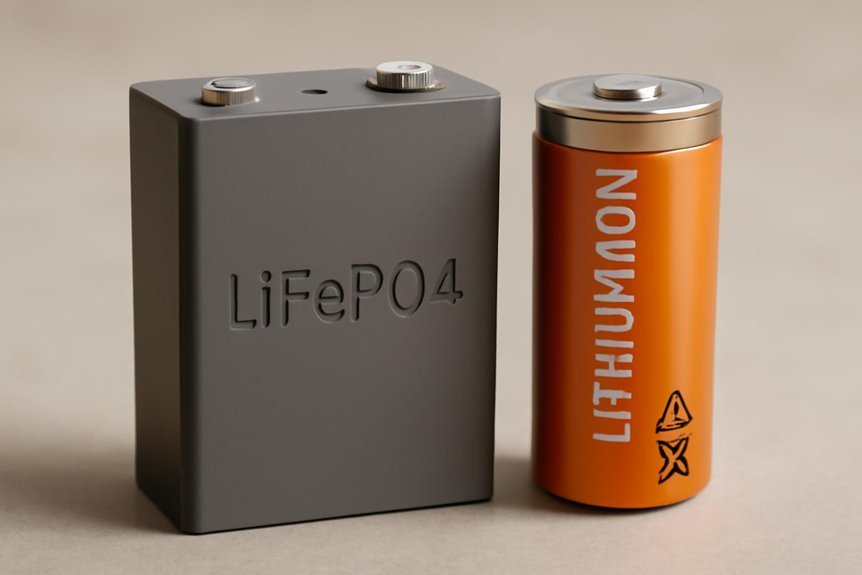
LiFePO4 (Lithium Iron Phosphate) and lithium-ion batteries are two prevalent types of rechargeable energy storage devices, each with distinct chemical compositions and performance characteristics. These battery types are widely used in various applications, from electric vehicles to grid storage, due to their high energy density and reliability. Lithium-ion batteries utilize layered metal oxide cathodes, offering high voltage and energy density, but often at the expense of thermal stability. Conversely, LiFePO4 batteries employ phosphate-based cathodes, providing enhanced thermal stability, safety, and long cycle life, though with slightly lower energy density. Understanding these fundamental differences is essential for selecting the appropriate energy storage solution, as each battery type’s performance attributes directly impact efficiency, safety, and lifespan in different applications.
How Do Lithium Iron Phosphate (LiFePO4) Batteries Work?
To understand how LiFePO4 batteries operate, we examine their chemical composition and structural stability, which influence their electrochemical behavior. The charging and discharging processes involve lithium-ion movement between the cathode and anode, dictating performance and lifespan. Additionally, their safety and thermal stability stem from their unique chemistry, reducing risks associated with overheating and thermal runaway.
Chemical Composition and Structure
Understanding how lithium iron phosphate batteries operate requires examining their chemical composition and internal structure. LiFePO₄’s chemistry is characterized by its stable chemical bonding within the crystal lattice, which contributes to its safety and longevity. The crystal structure is orthorhombic, featuring a distinct arrangement of Fe, P, and O atoms that create a robust framework. This structure facilitates the insertion and extraction of lithium ions during charge and discharge cycles, maintaining structural integrity. Unlike other lithium-ion chemistries, the strong covalent bonds in LiFePO₄ help prevent degradation. The phosphate groups form a stable matrix, ensuring consistent electrochemical performance. Overall, the specific chemical bonding and crystal structure are fundamental to LiFePO₄’s high stability, safety, and long cycle life.
Charging and Discharging Process
When a lithium iron phosphate battery charges or discharges, lithium ions migrate between the cathode and anode through the electrolyte, driving the flow of electrons in the external circuit. This process’s efficiency depends on factors like charging efficiency and discharge rates, which influence performance and lifespan. Higher discharge rates can reduce efficiency due to increased internal resistance, impacting energy transfer. The electrochemical reactions are governed by the lattice stability of the LiFePO4 structure, ensuring consistent ion flow.
| Parameter | Effect on Battery Performance |
|---|---|
| Charging Efficiency | Determines how well energy is stored during charge |
| Discharge Rates | Affects the rate of energy release and heat generation |
| Internal Resistance | Influences efficiency at high discharge rates |
| Electrolyte Conductivity | Impacts ion migration speed |
| Voltage Stability | Maintains consistent power output |
Safety and Thermal Stability
Lithium iron phosphate (LiFePO₄) batteries are renowned for their exceptional safety profile and thermal stability, which stem from their unique crystal structure and chemical properties. Unlike other lithium-ion chemistries, LiFePO₄’s stable lattice prevents significant structural changes during operation, reducing the risk of thermal runaway. Their inherent thermal stability guarantees they resist overheating and maintain safety standards even under abuse conditions. This stability minimizes the likelihood of catastrophic failures, making them safer for various applications. Additionally, LiFePO₄ batteries exhibit a high thermal threshold, which helps prevent overheating-induced fires. Overall, their robust chemical makeup and adherence to safety standards make them a reliable choice, especially in scenarios demanding rigorous thermal management and safety assurances.
Key Safety Differences Between LiFePO4 and Lithium-Ion Batteries
LiFePO4 batteries exhibit superior thermal stability compared to traditional lithium-ion cells, which enhances safety during high-temperature conditions. This stability greatly reduces the risk of thermal runaway and fires, even under abuse scenarios. Additionally, their structural design incorporates safety features that further mitigate potential hazards, making them inherently safer for various applications.
Thermal Stability Advantages
Thermal stability is a critical safety characteristic that greatly differentiates LiFePO4 batteries from traditional lithium-ion variants. These batteries exhibit superior thermal management due to their stable chemistry, which minimizes heat generation during operation. Enhanced heat dissipation capabilities allow LiFePO4 cells to maintain safer operating temperatures and resist thermal runaway. Unlike conventional lithium-ion batteries, which can experience rapid temperature increases under stress, LiFePO4’s robust structure provides better resistance to overheating and thermal degradation. This intrinsic stability reduces the risk of catastrophic failures and guarantees consistent performance across a wide temperature range. Overall, the thermal stability advantages of LiFePO4 batteries contribute considerably to their safety profile, making them a preferred choice for applications demanding reliable heat dissipation and thermal management.
Risk of Fire Reduction
Because of their chemically stable composition, LiFePO4 batteries greatly reduce the risk of fire compared to traditional lithium-ion cells. This inherent stability enhances fire safety by minimizing thermal runaway potential, a critical factor in risk management. Lithium-ion batteries with cobalt or nickel cathodes are more prone to overheating and catastrophic failure under fault conditions. In contrast, LiFePO4’s stable crystal structure resists decomposition at elevated temperatures, decreasing the likelihood of combustion. This safety profile makes LiFePO4 a preferred choice for applications demanding stringent fire safety standards, especially where risk mitigation is paramount. Overall, the lower propensity for thermal runaway in LiFePO4 batteries greatly advances risk control strategies, allowing safer operation and reducing the probability of hazardous incidents.
Structural Safety Features
The structural safety features of lithium-ion batteries greatly influence their overall safety profile, particularly in how they respond to physical stress and manufacturing defects. Lifepo4 batteries are known for their superior structural integrity, which minimizes risks of internal short circuits and thermal runaway. They typically undergo rigorous safety certifications that verify their resilience under mechanical impact, puncture, and overcharge conditions. In contrast, traditional lithium-ion batteries often require additional safety measures due to their more vulnerable electrode chemistry. The inherent stability of Lifepo4’s structure makes it less prone to catastrophic failure, even when damaged. This robustness underscores the importance of safety certifications in ensuring consistent structural safety standards across different battery types, ultimately enhancing reliability and safety in various applications.
Comparing Lifespan and Durability: Which Battery Lasts Longer?
When evaluating battery longevity, Lifepo4 and lithium-ion batteries exhibit notable differences in durability that greatly impact their practical applications. Our durability analysis reveals that Lifepo4 batteries generally offer a longer lifespan compared to traditional lithium-ion cells. This lifespan comparison is primarily due to Lifepo4’s deeper cycle life, often exceeding 2,000 cycles, whereas lithium-ion batteries typically last around 500-1,000 cycles before capacity diminishes considerably. The chemical stability of Lifepo4 contributes to its enhanced durability, reducing degradation over time. Consequently, Lifepo4 batteries are better suited for high-cycle, long-term use scenarios, making them more cost-effective over their lifespan. Overall, the durability analysis confirms that Lifepo4 batteries last longer, providing more reliable performance over extended periods.
Performance in Different Conditions: Temperature and Power Output
Lifepo4 and lithium-ion batteries respond differently to varying environmental conditions, affecting their overall performance. Temperature effects greatly influence their efficiency and longevity. Lifepo4 batteries maintain more stable performance across a broader temperature range, with less capacity loss in cold conditions, whereas lithium-ion batteries experience notable reductions in power output at low temperatures due to increased internal resistance. Conversely, high temperatures accelerate degradation in both types, but lithium-ion batteries are more susceptible to thermal runaway, risking safety. Regarding power output, Lifepo4 batteries deliver consistent performance, even under thermal stress, while lithium-ion batteries tend to exhibit higher initial power but decline more rapidly with temperature fluctuations. Understanding these differences is essential for optimizing performance in specific environmental conditions.
Cost and Budget Considerations for Choosing the Right Battery
Cost considerations play an essential role in selecting the appropriate battery type for specific applications, as initial investment and long-term expenses can markedly impact overall value. Conducting a thorough cost analysis helps identify the most economical choice, balancing upfront costs against lifecycle performance. Lifepo4 batteries generally have a higher initial purchase price compared to lithium-ion counterparts but often deliver lower maintenance and replacement costs over time. Conversely, lithium-ion batteries may be more budget-friendly initially but could incur higher replacement or repair expenses due to shorter lifespan or increased degradation. Effective budget planning involves evaluating these factors alongside expected usage, recharge cycles, and longevity, ensuring that the selected battery aligns with both short-term financial constraints and long-term operational goals.
Charging Efficiency and Maintenance Needs of Both Battery Types
Understanding the charging efficiency and maintenance requirements of different battery types is key to enhancing their performance and lifecycle. Lifepo4 batteries generally exhibit higher charging efficiency, enabling more charge cycles before capacity diminishes, thanks to their stable chemistry. They also require less maintenance, with lower maintenance frequency due to reduced risk of electrolyte degradation and thermal issues. Lithium-ion batteries, while efficient, often experience slightly lower charging efficiency over time, leading to a reduced number of effective charging cycles. Their maintenance needs can be higher, especially in managing thermal stability and preventing capacity loss from overcharging or deep discharges. Overall, Lifepo4’s superior charge retention and lower maintenance frequency make it more durable, whereas lithium-ion batteries demand more vigilant management to sustain peak performance.
Best Use Cases for LiFePO4 Batteries vs. Lithium-Ion Batteries
When selecting the ideal battery type for a specific application, it’s essential to evaluate the distinct strengths of LiFePO4 and lithium-ion batteries. LiFePO4 batteries excel in best applications requiring high thermal stability, long cycle life, and enhanced safety, making them ideal for stationary energy storage, solar systems, and electric vehicles operating in demanding environments. Conversely, lithium-ion batteries are better suited for portable electronics and applications demanding higher energy density and compact form factors. The ideal environments for LiFePO4 include settings with extreme temperatures or where safety and longevity are priorities. Lithium-ion batteries perform efficiently in controlled environments with stable temperatures and space constraints. Understanding these differences helps determine the most effective battery choice for specific use cases, balancing performance, safety, and environmental considerations.
Environmental Impact and Recycling of Lithium-Based Batteries
Recycling processes for lithium-based batteries face technical and economic challenges that impact their efficiency and viability. We compare the environmental footprints of LiFePO4 and other lithium-ion chemistries, considering resource extraction and disposal effects. Understanding these factors is essential for developing sustainable battery technologies and effective recycling strategies.
Recycling Processes and Challenges
Recycling lithium-based batteries presents significant environmental challenges due to the complex chemistry and hazardous materials involved. The recycling methods, such as pyrometallurgical, hydrometallurgical, and direct recycling, each have distinct technical limitations and environmental impacts. Pyrometallurgical processes involve high-temperature smelting, which can generate toxic emissions and require substantial energy input. Hydrometallurgical techniques utilize chemical leaching to recover valuable metals but pose risks of chemical waste and water contamination. Direct recycling aims to preserve battery components for reuse, yet remains limited by the variability in battery designs and degradation levels. These environmental challenges complicate sustainable recycling efforts, requiring advanced technology and stringent regulations to mitigate ecological harm and guarantee efficient recovery of critical materials.
Environmental Footprint Comparison
The environmental footprint of lithium-based batteries varies considerably depending on the chemistry and recycling methods employed. Lithium iron phosphate (LiFePO4) batteries generally have a lower ecological impact due to their stable chemistry, reduced toxicity, and more straightforward recycling processes. In contrast, traditional lithium-ion batteries with cobalt or nickel components pose greater environmental challenges, including resource depletion and higher emissions during manufacturing. Implementing sustainability practices, such as improved recycling technologies and responsible sourcing, can greatly mitigate these impacts. Recycling efficiency directly influences the ecological footprint, emphasizing the need for advancements in collection and processing. Overall, LiFePO4 batteries tend to align better with sustainable development goals, but continuous improvements in lithium-ion recycling are essential for minimizing their environmental impact.
Which Battery Should You Choose? Factors to Consider for Your Application
Selecting the appropriate battery type hinges on a thorough understanding of your application’s specific requirements and operational demands. When evaluating battery applications, consider key performance metrics such as energy density, charge/discharge rates, lifespan, and safety. Lifepo4 batteries excel in thermal stability, making them suitable for high-demand environments requiring longevity and safety, while lithium-ion batteries often offer higher energy density for compact, lightweight applications. Assess your performance metrics against these factors to determine the best fit. For example, if your application demands rapid charging and high cycle life, Lifepo4 may be preferable. Conversely, if space constraints are critical, lithium-ion batteries could be advantageous. Ultimately, aligning your application’s technical needs with the battery’s performance characteristics guarantees ideal efficiency and durability.
Frequently Asked Questions
Are Lifepo4 Batteries More Environmentally Friendly Than Lithium-Ion Batteries?
We believe LiFePO4 batteries are more environmentally friendly, thanks to cleaner recycling processes and lower lifecycle emissions. Their stability reduces hazardous waste, making them a more sustainable choice compared to traditional lithium-ion batteries over their entire lifespan.
Can Lifepo4 Batteries Be Used in High-Temperature Environments?
We find LiFePO4 batteries excel in high-temperature environments thanks to their superior thermal stability, ensuring reliable high temperature performance; their structure minimizes degradation, making them suitable for demanding conditions without sacrificing safety or longevity.
How Do Charging Times Compare Between Lifepo4 and Lithium-Ion Batteries?
Charging times for Lifepo4 batteries are generally shorter due to higher charging efficiency, and their cycle longevity remains superior, enabling faster recharge cycles over more extended periods, making them more suitable for demanding, high-frequency applications.
Are There Weight Differences Impacting Portability Between These Batteries?
In our portability analysis, LiFePO4 batteries tend to be slightly heavier than lithium-ion counterparts, affecting weight comparison. Despite this, their robustness often outweighs weight concerns, making them suitable for applications prioritizing safety and longevity over minimal weight.
What Are the Warranty Differences Offered by Manufacturers for Each Battery Type?
We find that Lifepo4 batteries often come with longer warranty coverage, reflecting their durability, while lithium-ion warranties vary more widely, dictated by manufacturer policies; understanding these differences helps us assess long-term reliability and service support.
Conclusion
To conclude, LiFePO4 batteries offer remarkable safety and longevity, with over 2,000 cycles—double that of traditional lithium-ion options. Their thermal stability reduces risks of thermal runaway, making them ideal for high-demand, safety-critical applications. While initial costs are higher, their durability and environmental benefits often outweigh the expense. For long-term reliability and safety, LiFePO4 provides a compelling choice, especially considering the growing emphasis on sustainable energy storage solutions.