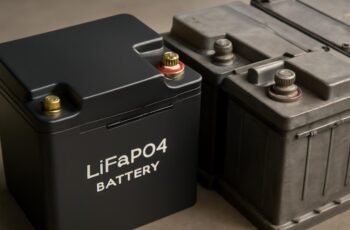
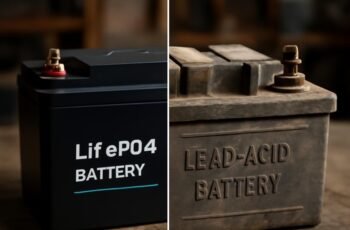
When selecting batteries for solar applications, understanding the key differences between LiFePO4 and lead-acid options is essential for making an informed decision. Both have unique advantages and limitations that impact performance, lifespan, and environmental considerations. As we analyze their technical aspects and long-term benefits, it becomes clear that choosing the right type depends on specific system needs and sustainability goals. Exploring these factors further can considerably influence your overall system efficiency and investment.
Key Takeaways
- LiFePO4 batteries offer higher energy density, lighter weight, and better safety for solar applications.
- They have a longer lifespan (~2000-5000 cycles) compared to lead-acid, reducing replacement costs.
- LiFePO4 supports deeper discharges and frequent cycling with minimal performance loss.
- They provide superior efficiency in solar charging and maintain consistent voltage levels under load.
- LiFePO4 is more environmentally friendly, with safer disposal and higher recycling potential.
What Are the Main Differences Between LiFePO4 and Lead-Acid Batteries?
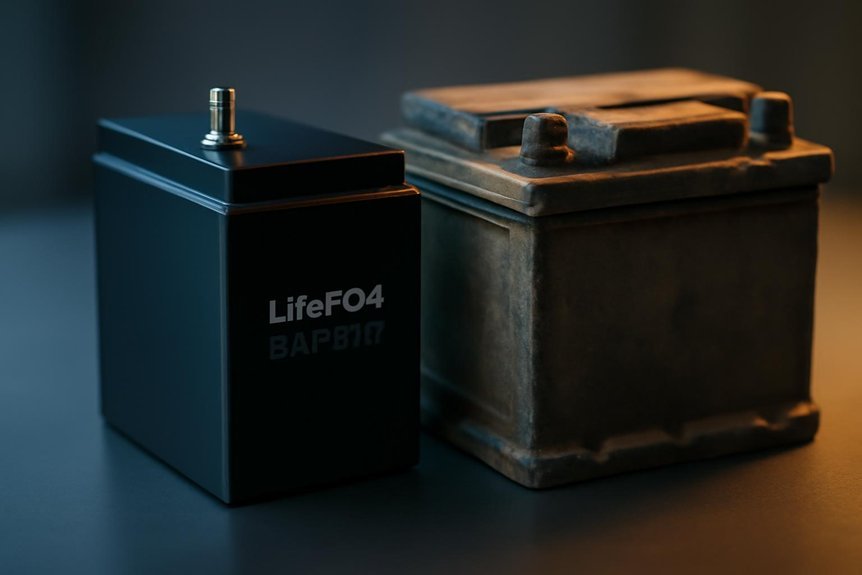
While both LiFePO4 and lead-acid batteries serve as reliable energy storage solutions for solar systems, they differ significantly in chemistry, performance, and lifespan. LiFePO4 batteries utilize lithium iron phosphate chemistry, offering higher energy density and stability, whereas lead-acid batteries rely on lead plates and sulfuric acid. A significant distinction lies in weight differences; LiFePO4 batteries are substantially lighter, making installation and system design more flexible. This reduced weight results from their higher specific energy, allowing more energy storage in a smaller, lighter package. Additionally, the chemical stability of LiFePO4 enhances safety and longevity, contrasting with the more corrosive and maintenance-intensive nature of lead-acid chemistry. These fundamental differences influence overall system efficiency, durability, and suitability for various solar applications.
How Do Cost and Initial Investment Compare?
When comparing upfront costs, LiFePO4 batteries typically have a higher initial price than lead-acid options, but this difference is often offset by their longer lifespan and better performance. Evaluating long-term investment value requires analyzing not just purchase price but also factors like cycle life, efficiency, and maintenance costs. Ultimately, a thorough cost-benefit assessment clarifies which system offers more economic advantage over its operational lifetime.
Upfront Cost Differences
Understanding the upfront costs of LiFePO4 and lead acid batteries is vital for making an informed investment in solar energy systems. Upfront pricing for LiFePO4 batteries is generally higher, often two to three times the initial expenses of comparable lead acid systems. While lead acid batteries have lower initial costs, their shorter lifespan and lower cycle count translate into higher replacement frequency, increasing total long-term costs. Conversely, LiFePO4 batteries, despite higher initial expenses, offer better efficiency and durability, which can balance out initial investment over time. When evaluating these options, it’s important to take into account not only the initial expenses but also the financial implications of replacement cycles and system longevity, ensuring a thorough understanding of total cost of ownership.
Long-Term Investment Value
Although LiFePO4 batteries require a higher initial investment, their superior lifespan and greater cycle capacity often result in lower total ownership costs over time. When analyzing long-term investment value, current trends suggest that the reduced replacement frequency and improved efficiency of LiFePO4 batteries contribute to better cost savings. Market predictions indicate a shift toward adoption driven by decreasing prices and technological advancements. Consider these key points:
- Lifecycle Cost: LiFePO4 batteries often last 2-3 times longer than lead-acid, reducing replacement costs.
- Efficiency: Higher charge-discharge efficiency minimizes energy losses, saving money over time.
- Maintenance: Lower maintenance requirements decrease operational expenses.
- Market Trends: Growing adoption and decreasing prices are expected to enhance the financial viability of LiFePO4 systems.
These factors highlight a promising outlook for long-term investment, aligning with evolving market dynamics.
Which Battery Type Offers Greater Longevity and Durability?
When comparing longevity and durability, we consider cycle life, resistance to deep discharges, and temperature tolerance, as these factors directly impact battery lifespan. Lifepo4 batteries generally withstand more charge-discharge cycles and tolerate deeper discharges without degradation, unlike lead-acid batteries. Additionally, Lifepo4’s superior temperature resilience guarantees more consistent performance across varying environmental conditions.
Battery Cycle Life
Lifepo4 batteries generally outperform lead-acid counterparts with respect to cycle life, making them a more durable choice for long-term solar energy storage. When comparing cycle longevity, Lifepo4 batteries typically sustain 2,000 to 5,000 cycles, whereas lead-acid batteries average around 500 to 1,000 cycles. This significant difference impacts lifespan comparison and overall durability. Key factors include:
- Depth of Discharge (DoD): Lifepo4 tolerates higher DoD without compromising cycle life.
- Charge/Discharge Efficiency: Lifepo4 maintains consistent performance over more cycles.
- Temperature Tolerance: Lifepo4’s cycle life remains stable across a broader temperature range.
- Degradation Rate: Lead-acid batteries degrade faster, reducing effective lifespan.
This analysis highlights Lifepo4’s superior cycle longevity for sustainable solar energy solutions.
Resistance to Deep Discharges
Lifepo4 batteries exhibit a higher resilience to deep discharges compared to lead-acid counterparts, which directly impacts their overall longevity and durability in solar energy systems. Their chemical composition allows them to withstand frequent and significant deep discharge cycles without compromising performance. Unlike lead-acid batteries, which experience rapid capacity loss when regularly discharged below 50%, Lifepo4 cells maintain structural integrity and resist degradation under deep discharge conditions. This superior battery resilience results from their stable chemistry and robust internal architecture, enabling longer service life even with aggressive cycling. Consequently, Lifepo4 batteries are better suited for applications requiring frequent deep discharges, ensuring sustained performance, reduced replacement costs, and increased system reliability over time.
Temperature Tolerance
Although both battery types have their own thermal characteristics, Lifepo4 batteries generally demonstrate superior temperature tolerance compared to lead-acid batteries. They maintain better thermal stability across temperature extremes, enhancing longevity and durability. This resilience results from their chemical composition, which withstands fluctuations without significant degradation. Specifically:
- Lifepo4 batteries tolerate higher ambient temperatures without thermal runaway.
- They resist low-temperature performance loss more effectively.
- Their stable chemistry reduces capacity fade caused by temperature swings.
- They experience less thermal stress during charge/discharge cycles, prolonging lifespan.
This superior temperature tolerance makes Lifepo4 batteries more reliable in varying climates, ensuring consistent performance and extended service life where temperature extremes are common.
What Are the Safety Considerations for Each Battery Type?
Safety considerations are critical when evaluating battery options for solar systems, as each type presents distinct risks that must be managed effectively. Lifepo4 batteries generally meet rigorous safety standards, with built-in thermal stability reducing fire hazards. Their solid-state chemistry minimizes the risk of thermal runaway, making them inherently safer. Conversely, lead acid batteries pose higher fire hazards due to the potential for acid leaks and pressure buildup during overcharging or damage. Proper venting and protective measures are essential to mitigate these risks. Both battery types require adherence to safety standards, including correct installation, ventilation, and monitoring. Ultimately, understanding these safety distinctions helps guarantee safe, reliable operation within solar systems and reduces the likelihood of accidents or damage caused by safety failures.
How Do Maintenance and Usage Requirements Differ?
While both Lifepo4 and lead acid batteries require regular maintenance to guarantee peak performance, their specific needs differ considerably. Lifepo4 batteries demand minimal battery upkeep, primarily involving periodic voltage checks and ensuring proper thermal management. Lead acid batteries, however, require more intensive maintenance, including fluid level monitoring and equalization charging. Regarding usage frequency, Lifepo4 batteries tolerate deep cycles without significant degradation, making them suitable for frequent cycling. Conversely, lead acid batteries are more sensitive to deep discharges, necessitating careful cycle management. To summarize:
- Lifepo4 batteries need less frequent maintenance and have higher tolerance for deep cycling.
- Lead acid batteries require consistent fluid checks and equalization.
- Lifepo4’s resilience allows for higher usage frequency with less performance decline.
- Lead acid batteries’ maintenance demands increase with more frequent use, affecting longevity.
Which Batteries Provide Better Performance in Solar Applications?
When evaluating battery performance for solar applications, the key considerations are efficiency, lifespan, and reliability under varying load conditions. Lithium iron phosphate (LiFePO4) batteries excel in solar efficiency due to their high charge and discharge efficiencies, ensuring minimal energy loss during energy storage. They maintain consistent voltage levels under fluctuating loads, providing reliable power delivery. Lead-acid batteries, while cost-effective upfront, exhibit lower solar efficiency because of higher internal resistance and longer charge times. They also experience deeper capacity fade over time, reducing overall lifespan. Regarding performance, LiFePO4 batteries deliver superior energy storage capabilities, supporting longer system runtimes and optimized energy utilization in solar setups. Overall, LiFePO4 batteries outperform lead-acid in efficiency, lifespan, and consistent energy storage.
Are There Any Environmental Impacts or Recycling Benefits?
Lithium iron phosphate (LiFePO4) batteries offer notable environmental advantages over traditional lead-acid batteries, primarily due to their design and chemical stability. Their recycling processes are less hazardous, reducing the risk of toxic leaks and pollution. Additionally, LiFePO4 batteries generate fewer harmful emissions during manufacturing and disposal. Environmental regulations increasingly favor these batteries because they contain fewer toxic materials. Specifically:
- Recycling processes for LiFePO4 are more efficient and environmentally friendly.
- They produce less hazardous waste, simplifying disposal.
- Recycling yield of valuable materials like lithium and phosphate is higher.
- Regulations often incentivize the use of batteries with lower environmental impact.
Which Battery Is the Best Fit for Your Solar System and Budget?
Determining the best battery for your solar system hinges on balancing technical performance with budget considerations. Battery selection involves evaluating capacity, longevity, safety, and upfront costs. Lifepo4 batteries excel in cycle life and safety but come at a higher initial investment, whereas lead-acid batteries are more affordable but require more maintenance and have shorter lifespans. To aid decision-making, consider this comparison:
| Aspect | Lifepo4 | Lead Acid |
|---|---|---|
| Cost | Higher upfront | Lower upfront |
| Cycle Life | 2000+ cycles | 500-1000 cycles |
| Maintenance | Low | Regular watering needed |
| Safety | Stable, less risk of fire | Less stable |
This table highlights key distinctions, guiding you toward a superior choice based on your budget and system demands.
Frequently Asked Questions
How Does Temperature Affect Battery Performance and Lifespan?
Temperature effects greatly influence battery chemistry, where high temperatures accelerate degradation, reducing lifespan, while low temperatures impair performance by decreasing capacity. We analyze these temperature impacts to optimize battery longevity and efficiency in solar applications.
Can Lifepo4 Batteries Be Safely Used in Portable Solar Setups?
We believe Lifepo4 batteries are safe for portable solar setups due to their stable chemistry, excellent energy efficiency, and high charging cycle count, which enhances battery safety and longevity during portable usage, ensuring reliable performance and minimal risk.
What Are the Charging Time Differences Between the Two Battery Types?
Lifepo4 batteries typically charge faster due to higher charging efficiency, which also enhances battery longevity, whereas lead-acid batteries take longer, risking reduced lifespan from overcharging or deep discharges, making Lifepo4 more efficient for solar applications.
Are There Any Differences in Warranty Coverage?
Warranty coverage varies like a complex blueprint; Lifepo4 batteries often boast longer warranties with extensive coverage specifics, typically around 10 years, while Lead Acid warranties tend to be shorter, emphasizing maintenance and replacement policies.
How Do Weight and Size Impact Installation Options?
Weight considerations and size limitations greatly impact installation options, as they determine mounting flexibility and space requirements. We analyze these factors to optimize battery placement, ensuring safe, efficient integration within existing infrastructure constraints for reliable solar energy storage.
Conclusion
In weighing LiFePO4 against lead-acid batteries, it’s clear that LiFePO4 is the lighthouse guiding us toward more sustainable, durable, and efficient solar energy storage. While the initial investment may seem higher, its extended lifespan and superior performance make it a smarter choice in the long run—like planting a seed that grows into a resilient oak. Ultimately, selecting the right battery depends on balancing upfront costs with projected longevity and environmental benefits.