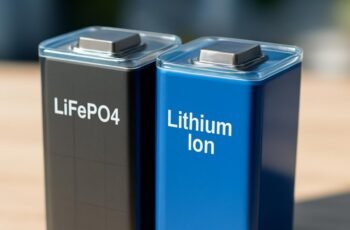
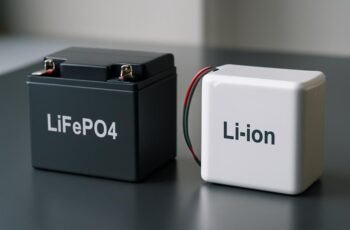
Nearly 70% of solar energy storage systems now consider Lithium Iron Phosphate (LiFePO4) due to its safety and longevity advantages, yet many still evaluate lithium-ion alternatives. While LiFePO4 batteries excel in thermal stability and lifespan, lithium-ion variants offer higher energy density and faster charging. Understanding these differences is essential for optimizing system performance and safety, but choosing the right battery requires a closer look at their technical distinctions and long-term implications.
Key Takeaways
- Lifepo4 offers superior safety, thermal stability, and longer cycle life compared to lithium-ion batteries.
- Lithium-ion batteries provide higher energy density and faster charging capabilities.
- Lifepo4 is more cost-effective long-term due to lower maintenance and longer lifespan.
- Lithium-ion batteries are more suitable for applications requiring compact size and quick energy replenishment.
- Choice depends on energy needs, safety priorities, budget, and long-term performance goals.
What Are Lifepo4 and Lithium-Ion Batteries? A Basic Comparison
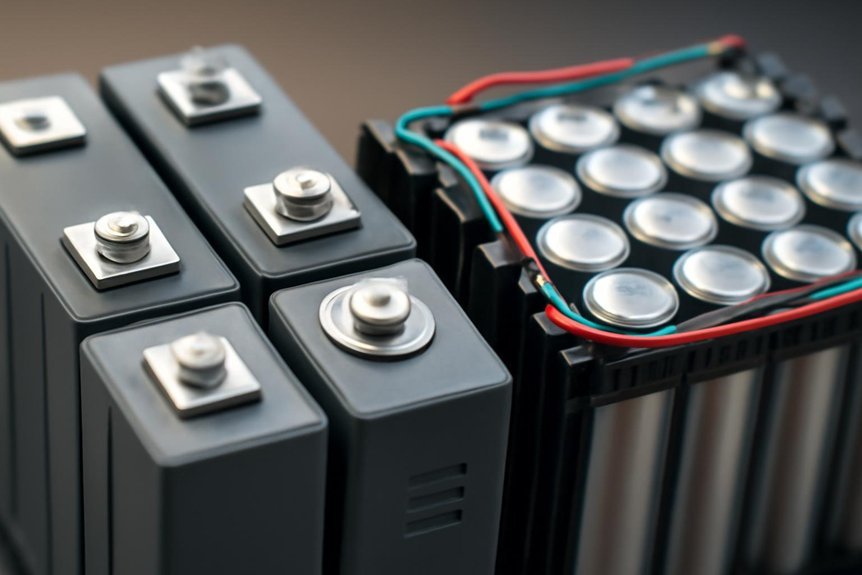
Lifepo4 (lithium iron phosphate) and lithium-ion batteries are two prominent chemistries used in energy storage, each with distinct characteristics that influence their performance and applications. The fundamental difference lies in their battery chemistry, which affects parameters like energy density and safety. Lifepo4 batteries typically have lower energy density compared to lithium-ion, meaning they store less energy per unit volume or weight. However, they excel in thermal stability and cycle life, making them highly reliable for long-term use. Lithium-ion batteries, with their higher energy density, deliver more power in a compact form but may require additional safety measures due to thermal sensitivity. Understanding these core differences helps in selecting the appropriate chemistry for various solar energy storage applications.
How Do Lifepo4 and Lithium-Ion Batteries Perform in Solar Systems?
When evaluating their performance in solar energy systems, both Lifepo4 and lithium-ion batteries demonstrate distinct operational characteristics that influence their suitability for different applications. Lifepo4 batteries typically excel in stability and long cycle life, reflected in favorable performance metrics like higher cycle counts and consistent efficiency ratings over time. They maintain stable voltage levels, enhancing overall system efficiency. Lithium-ion batteries generally provide higher energy density and faster charge/discharge rates, yielding superior efficiency ratings in dynamic applications. However, their performance metrics can vary with temperature fluctuations and usage patterns. While lithium-ion batteries often deliver higher initial efficiency, Lifepo4’s stability guarantees predictable performance across prolonged periods. Ultimately, the choice hinges on specific system requirements, balancing efficiency ratings, cycle durability, and operational stability.
Which Battery Is Safer for Solar Energy Storage?
When evaluating safety for solar energy storage, thermal stability and the risk of fire or explosion are critical factors. LiFePO4 batteries generally offer superior thermal stability compared to traditional lithium-ion chemistries, reducing the likelihood of thermal runaway. Understanding these safety profiles helps determine which battery type provides a more secure solution for solar applications.
Thermal Stability and Safety
Thermal stability and safety are critical considerations when selecting batteries for solar energy storage, as they directly impact the risk of thermal runaway and potential hazards. Lifepo4 batteries consistently demonstrate superior thermal performance due to stable chemistry and low heat generation, aligning with strict safety standards. Lithium-ion batteries, however, can experience higher temperatures during operation, increasing the risk of instability if safety protocols aren’t meticulously followed. Key factors include:
- Lifepo4’s inherent thermal stability reduces the likelihood of overheating.
- Lithium-ion batteries require advanced thermal management systems to meet safety standards.
- Both types must adhere to rigorous safety standards to mitigate hazards, but Lifepo4’s chemistry offers a safer baseline.
This analysis highlights Lifepo4’s advantage in safety due to better thermal stability.
Risk of Fire or Explosion
Although both Lifepo4 and lithium-ion batteries are used for solar energy storage, their relative safety profiles differ considerably when it comes to the risk of fire or explosion. Lifepo4 batteries inherently exhibit lower fire hazards due to their stable chemical composition, which resists thermal runaway and reduces explosion risks. In contrast, conventional lithium-ion batteries, especially those with cobalt-based cathodes, are more prone to thermal instability under abuse or damage, increasing fire hazards. This stability difference stems from Lifepo4’s robust electrode chemistry, which limits rapid oxidation and violent reactions. Consequently, Lifepo4 batteries present a safer profile for solar storage, with a markedly reduced likelihood of catastrophic failure. Analyzing fire hazards and explosion risks underscores the importance of chemistry in determining overall safety for energy storage systems.
Cost Differences Between Lifepo4 and Lithium-Ion Batteries
Cost remains a significant factor when comparing Lifepo4 and lithium-ion batteries for solar applications, as initial purchase price and long-term expenses directly influence project viability. The cost comparison reveals that Lifepo4 batteries typically have a higher upfront cost but offer lower maintenance and replacement costs over time. Conversely, lithium-ion batteries often present more attractive initial prices, though price fluctuations can impact long-term affordability.
- Lifepo4’s higher initial investment is offset by greater stability in pricing and longer lifespan.
- Lithium-ion batteries are more sensitive to market fluctuations, affecting budget planning.
- Cost differences are also influenced by technological advancements and supply chain factors, impacting future pricing trends.
Durability and Lifespan: Which Battery Lasts Longer?
When evaluating the longevity of Lifepo4 versus lithium-ion batteries, it becomes clear that durability hinges on several technical factors, including chemical stability and cycle life. Lifepo4’s battery chemistry offers superior chemical stability, resulting in a longer cycle lifespan—often exceeding 2000 cycles—compared to typical lithium-ion batteries. This enhanced durability translates into a longer overall lifespan, making Lifepo4 more resilient to repeated charging cycles. Additionally, Lifepo4 batteries generally exhibit better thermal stability, reducing degradation over time. From an environmental impact perspective, Lifepo4’s stable chemistry produces fewer hazardous materials and generates less waste, further supporting its longer-term sustainability. Overall, Lifepo4 batteries tend to last longer and have a lower environmental footprint, making them a more durable choice for solar energy storage.
Charging and Discharging: What Are the Key Considerations?
Understanding charging voltage limits, discharge depth strategies, and effective battery management systems is critical for optimizing battery performance. These factors influence not only lifespan but also safety and efficiency during operation. Analyzing these considerations helps us select the appropriate battery type for solar applications.
Charging Voltage Limits
Charging voltage limits are critical parameters that directly influence the lifespan, safety, and performance of lithium-based batteries, including Lifepo4 and traditional lithium-ion types. Proper voltage regulation guarantees batteries operate within their ideal charging profiles, preventing overvoltage that can cause thermal runaway or capacity loss. For Lifepo4, the typical charging limit is around 3.65V per cell, whereas lithium-ion batteries usually tolerate up to 4.2V per cell. Adhering to these limits is crucial for longevity and safety. Key considerations include:
- Precise voltage regulation during charging cycles
- Compatibility of chargers with specific battery chemistries
- Impact of voltage spikes on battery health and cycle life
Understanding these factors helps enhance performance and avoid damaging the cells through improper voltage management.
Discharge Depth Strategies
Effective management of discharge depth is crucial for optimizing battery performance and longevity in solar energy systems. By controlling how deeply batteries are discharged, we can greatly influence discharge efficiency and extend cycle life. Shallow discharges preserve battery health, resulting in higher discharge efficiency and reducing stress on the cells. Conversely, deep discharges increase energy extraction per cycle but accelerate capacity fade, diminishing cycle life over time. Both LiFePO4 and lithium-ion chemistries respond differently to discharge depths; LiFePO4 tolerates deeper discharges better, maintaining cycle stability. Careful strategy balancing discharge depth maximizes energy availability while minimizing degradation, ensuring reliable, long-term operation within solar applications. This approach is crucial for optimizing overall system performance and battery lifespan.
Battery Management Systems
Battery management systems (BMS) are critical components that regulate charging and discharging processes to secure safety, efficiency, and longevity of solar energy storage. Proper BMS design guarantees peak performance by monitoring voltage, current, and temperature, directly impacting battery lifespan and efficiency ratings. Key considerations include balancing cells to prevent overcharging or deep discharging, which can damage the battery or diminish its capacity over time. Additionally, BMS algorithms enhance charge cycles, prolonging durability.
- Precise voltage and temperature regulation to prevent thermal runaway
- Cell balancing mechanisms to maintain uniform capacity
- Real-time monitoring for early fault detection and efficiency enhancement
How Do Maintenance and Warranty Support Differ?
While both Lifepo4 and lithium-ion batteries require ongoing maintenance and warranty support, their approaches differ considerably due to their distinct chemistry and manufacturing standards. Lifepo4 batteries typically offer more extensive warranty coverage, often around 8-10 years, reflecting their stability and lower degradation rates. Their maintenance frequency is generally lower, as they are more resistant to thermal runaway and require less regular monitoring. In contrast, lithium-ion batteries may have shorter warranties, usually 3-5 years, and demand more frequent maintenance to prevent capacity loss and guarantee safety. This difference stems from their chemical stability and manufacturing processes. Overall, Lifepo4’s robust warranty and reduced maintenance needs make it more suitable for long-term solar energy applications.
Which Battery Type Is Better for Your Specific Solar Setup?
Choosing the right energy storage solution depends heavily on the specifics of your solar setup, including your energy needs, budget, and long-term goals. For maximizing solar efficiency and achieving energy independence, selecting the best battery type is essential. Lithium-ion batteries generally offer higher energy density, faster charging, and longer cycle life, making them suitable for compact, high-demand systems. Conversely, Lifepo4 batteries provide enhanced safety, stable performance, and lower long-term costs, ideal for larger or off-grid applications. Your choice should also consider factors like maintenance requirements and warranty support.
Choosing the right battery depends on your energy needs, budget, and long-term goals for optimal solar efficiency.
- Consider your daily energy consumption and peak load demands
- Evaluate the total cost of ownership and longevity
- Align battery characteristics with your long-term energy goals
Frequently Asked Questions
Which Battery Type Performs Better in Cold Weather Conditions?
We find Lifepo4 batteries excel in cold performance and temperature resilience, maintaining efficiency at lower temperatures better than lithium-ion batteries. Their stable chemistry guarantees reliable operation, making them the preferred choice for cold-weather solar energy storage.
How Do Recycling and Environmental Impacts Differ Between the Two Batteries?
Did you know LiFePO4 batteries are about 100% recyclable, unlike many lithium-ion types? Their recycling processes are simpler and more environmentally friendly, thanks to stricter regulations, reducing harmful waste and promoting sustainable energy storage solutions.
Are There Any Compatibility Issues With Existing Solar System Components?
Compatibility concerns primarily involve voltage and communication protocols, affecting system integration. We carefully analyze existing solar components to guarantee Lifepo4 or lithium-ion batteries seamlessly connect, minimizing risks of incompatibility and optimizing overall system performance.
What Are the Weight Differences Between Lifepo4 and Lithium-Ion Batteries?
We find Lifepo4 batteries are considerably heavier than lithium-ion ones, due to lower energy density, resulting in larger size comparisons. This weight difference impacts system design, emphasizing the importance of considering energy density and size when choosing the ideal battery type.
How Do Warranty Durations and Coverage Compare for Each Battery Type?
We find Lifepo4 batteries typically offer longer warranty durations, often around 10 years with extensive coverage, whereas lithium-ion warranties range from 5 to 8 years, with coverage specifics varying considerably, affecting long-term reliability assessments.
Conclusion
To sum up, choosing between Lifepo4 and lithium-ion batteries hinges on aligning their strengths with your solar needs. Lifepo4’s stability and longevity often outweigh the higher energy density of lithium-ion, especially in large or off-grid setups. As we’ve seen, safety, cost, and lifespan are interconnected factors — like a well-balanced circuit. Ultimately, understanding these nuances helps us optimize our solar energy storage, ensuring reliable, long-term performance akin to a steady, dependable current powering our systems.