LiFePO4 batteries and lithium-ion batteries differ markedly in safety, lifespan, and application suitability. They each present unique advantages and limitations that influence their performance in real-world scenarios. Understanding these distinctions is essential for making informed decisions aligned with specific energy needs and long-term costs. As we explore these differences, we’ll identify which battery type best fits various applications and what factors should guide your choice. The key insights may surprise you.
Key Takeaways
- LiFePO4 has lower energy density but offers longer cycle life and enhanced safety due to stable chemistry.
- Lithium-ion batteries provide higher energy density, making them suitable for portable electronics and space-constrained applications.
- LiFePO4 excels in thermal stability and safety, reducing risks of overheating and thermal runaway.
- Lithium-ion batteries typically have shorter lifespan and higher degradation, but faster charging capabilities.
- Long-term cost-effectiveness favors LiFePO4 due to durability and lower maintenance despite higher initial costs.
What Are the Main Differences Between LiFePO4 and Lithium-Ion Batteries?
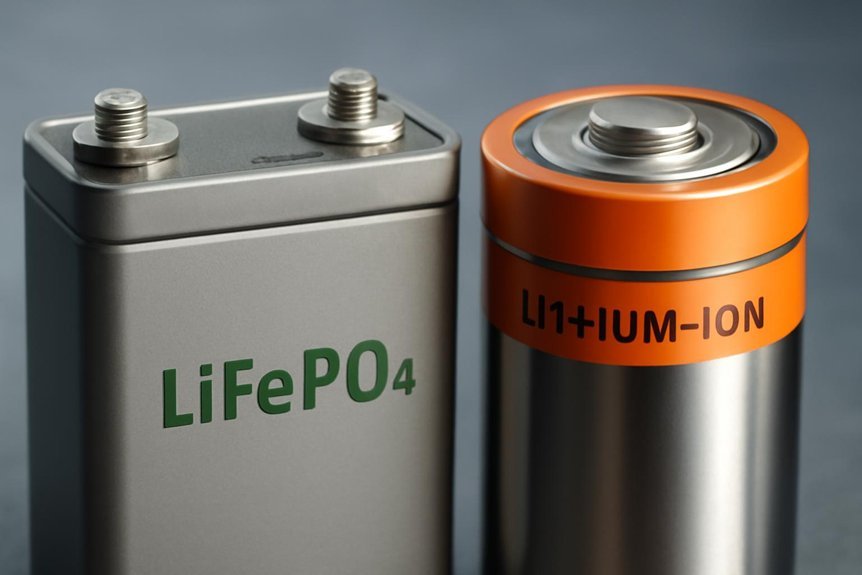
While both LiFePO4 and lithium-ion batteries are popular energy storage options, they differ markedly in chemistry, performance, and safety characteristics. With regard to energy density, lithium-ion batteries generally outperform LiFePO4, offering higher specific energy, which allows for more compact designs. However, LiFePO4 batteries excel in discharge rates, providing consistent current delivery without significant voltage drop, making them suitable for high-power applications. The chemical composition of LiFePO4 results in a more stable structure, contributing to longer cycle life and improved safety. Conversely, lithium-ion batteries with other cathode chemistries tend to have faster charge and discharge capabilities but often at the expense of thermal stability. These fundamental differences influence their suitability for various energy storage needs and operational contexts.
Comparing Safety and Thermal Stability in Both Battery Types
Safety and thermal stability are critical factors when evaluating battery performance, and LiFePO4 batteries generally demonstrate superior characteristics in these areas compared to other lithium-ion chemistries. Their inherent chemical stability reduces risk of thermal runaway, enhancing safety features. LiFePO4’s robust thermal management limits temperature spikes, preventing overheating. This results in a lower likelihood of fires or explosions. Conversely, traditional lithium-ion batteries with cobalt or manganese chemistries are more susceptible to thermal instability under stress.
- Enhanced safety features due to stable chemistry
- Lower risk of thermal runaway
- Superior thermal management capabilities
- Resistance to overcharging and overheating
- Reduced need for complex cooling systems
These factors make LiFePO4 a preferred choice where safety and thermal stability are paramount.
How Do LiFePO4 and Lithium-Ion Batteries Perform in Real-World Applications?
How do LiFePO4 and lithium-ion batteries compare in practical applications? Their performance hinges on application suitability, with each excelling in different scenarios. LiFePO4 batteries demonstrate superior stability, thermal management, and safety, making them highly effective in off-grid systems, solar energy storage, and electric vehicles requiring robust reliability. Conversely, lithium-ion batteries often outperform in high energy density, providing longer run times where space and weight are critical, such as portable electronics and certain EV models. Regarding real-world performance, LiFePO4 batteries typically exhibit longer cycle life and consistent capacity retention under demanding conditions. Ultimately, the choice depends on specific application needs, balancing factors like safety, power demands, and longevity to optimize overall system efficiency.
Which Battery Offers a Longer Lifespan and Better Cost-Effectiveness?
When comparing lifespan and cost efficiency, Lifepo4 batteries generally outperform lithium-ion variants due to their higher cycle life and stability. Analyzing total cost over the battery’s operational life reveals that Lifepo4 often provides better value despite higher initial costs. This discussion focuses on quantifying these factors to determine which battery type offers superior long-term performance and economic advantages.
Longevity Comparison
While both Lifepo4 and lithium-ion batteries have proven capable of delivering reliable energy storage, their longevity and cost-effectiveness differ considerably over their operational lifespan. Lifepo4 batteries typically have a longer cycle life, often exceeding 2,000 cycles, due to lower degradation rates. In contrast, lithium-ion batteries generally offer around 500 to 1,000 cycles before significant capacity loss. The lower degradation rates of Lifepo4 result in sustained performance over time, translating into a longer lifespan. Key factors include:
- Lifepo4’s higher cycle count extends operational life
- Lithium-ion’s faster capacity fade shortens usable years
- Degradation rates influence total lifecycle costs
- Temperature stability impacts longevity
- Battery management systems also affect cycle performance
These differences make Lifepo4 more suitable for applications demanding durability and longevity.
Cost Efficiency Analysis
Evaluating cost efficiency requires examining both upfront expenses and long-term operational costs. Our cost analysis reveals that Lifepo4 batteries tend to have a higher initial price compared to lithium-ion options, but their extended lifespan greatly reduces replacement frequency. This results in a better overall price comparison over time. Lithium-ion batteries generally feature lower upfront costs but degrade faster, leading to higher long-term expenses. When analyzing total cost of ownership, Lifepo4’s superior cycle life and stability contribute to lower maintenance and replacement costs, making it more cost-effective in the long run. Ultimately, although the initial investment is higher, Lifepo4 batteries provide better value through enhanced durability, which outweighs the upfront price difference and delivers superior cost efficiency over the battery’s lifespan.
What Factors Should You Consider When Choosing Between LiFePO4 and Lithium-Ion?
Deciding between LiFePO4 and lithium-ion batteries requires a careful assessment of several key factors that influence performance, safety, and long-term cost. Charging cycles are critical; LiFePO4 batteries typically withstand more cycles, making them ideal for long-term use. Weight differences are also significant, as LiFePO4 batteries tend to be heavier but more stable. Safety considerations include thermal stability and risk of thermal runaway, which favor LiFePO4. Additionally, the overall energy density impacts space and weight constraints. Cost should be evaluated over the lifespan, considering maintenance and replacement frequency. Environmental factors, such as temperature tolerance, also influence suitability depending on application needs.
- Charging cycles longevity
- Weight differences and portability
- Safety profiles and thermal stability
- Energy density and space constraints
- Long-term cost and maintenance
Are There Any Environmental or Maintenance Considerations for Each Battery Type?
Environmental and maintenance considerations play an essential role in selecting a battery type, as they directly impact sustainability and operational costs. Lithium Iron Phosphate (LiFePO4) batteries generally exhibit a lower environmental impact due to their stable chemistry and longer lifespan, reducing the frequency of recycling practices needed. They also produce fewer toxic emissions during manufacturing and disposal. Conversely, traditional lithium-ion batteries contain materials like cobalt and nickel, which pose environmental challenges and require more rigorous recycling practices to mitigate harmful waste. Maintenance for LiFePO4 batteries tends to be straightforward, with minimal performance degradation over time, whereas lithium-ion batteries may need more frequent monitoring and balancing to guarantee safety and longevity. Overall, considering environmental impact and maintenance needs is essential for making an informed, sustainable choice.
Frequently Asked Questions
Can Lifepo4 Batteries Be Recycled More Easily Than Lithium-Ion Batteries?
We believe Lifepo4 batteries are easier to recycle because their recycling processes generate less environmental impact, thanks to simpler chemistry and fewer hazardous materials, making them a more sustainable option compared to traditional lithium-ion batteries.
How Do Charging Times Compare Between Lifepo4 and Lithium-Ion Batteries?
When it comes to charging times, we find that Lifepo4 batteries generally support faster charging and maintain battery longevity better than lithium-ion, making them a case of hitting two birds with one stone in efficient, reliable energy storage.
Are There Specific Brands That Specialize in Lifepo4 Technology?
We identify brands like Battle Born and Reich Battery as specialists in Lifepo4 technology, leveraging Lifepo4 advantages like safety and longevity, especially in applications such as renewable energy storage and EVs. Their expertise guarantees peak performance and reliability.
What Are the Weight Differences for Similar Capacities?
We find that Lifepo4 batteries typically weigh 20-30% less than lithium-ion counterparts at similar capacities, based on our capacity analysis and weight comparison, making Lifepo4 a more efficient choice for weight-sensitive applications.
How Do Temperature Ranges Affect Battery Performance and Lifespan?
Sure, extreme temperatures really spice up battery performance—hot environments boost efficiency temporarily but harm thermal stability long-term, while cold drastically reduces efficiency. We analyze how these factors influence lifespan, emphasizing temperature’s critical role in maintaining battery health and stability.
Conclusion
In conclusion, selecting between LiFePO4 and lithium-ion batteries hinges on your specific needs. With over 2,000 charge cycles, LiFePO4 batteries demonstrate remarkable longevity, reducing replacement costs over time. Although lithium-ion batteries offer higher energy density, their shorter lifespan and safety concerns make them less ideal for long-term, high-demand applications. Understanding these technical distinctions enables us to make informed decisions that optimize performance, safety, and cost-efficiency in various energy storage scenarios.