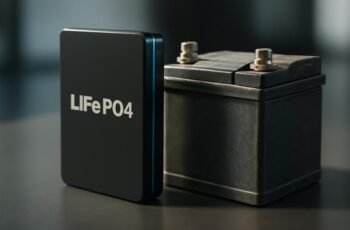
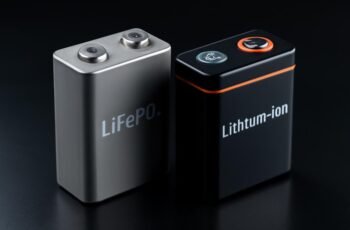
When comparing Lifepo4 and Li-ion batteries, we recognize that each offers distinct technical advantages and limitations, influencing their suitability for different applications. Their differing chemistries impact safety, longevity, energy density, and environmental considerations, making the choice far from straightforward. To make an informed decision, it’s essential to analyze these factors systematically, understanding the trade-offs involved. Let’s examine how these batteries stack up across key performance metrics and practical uses.
Key Takeaways
- Lifepo4 offers superior thermal stability and safety, reducing risk of thermal runaway compared to Li-ion batteries.
- Li-ion batteries have higher energy density, making them ideal for portable electronics and devices requiring compact design.
- Lifepo4 batteries have a longer lifespan, often exceeding 2,000 cycles, while Li-ion typically last 500-1,000 cycles.
- Lifepo4 is more environmentally friendly with easier, safer recycling processes; Li-ion contains toxic materials like cobalt and nickel.
- Li-ion batteries are lighter and more compact, providing better performance for mobile and space-constrained applications.
How Do Lifepo4 and Li-Ion Batteries Differ in Composition?
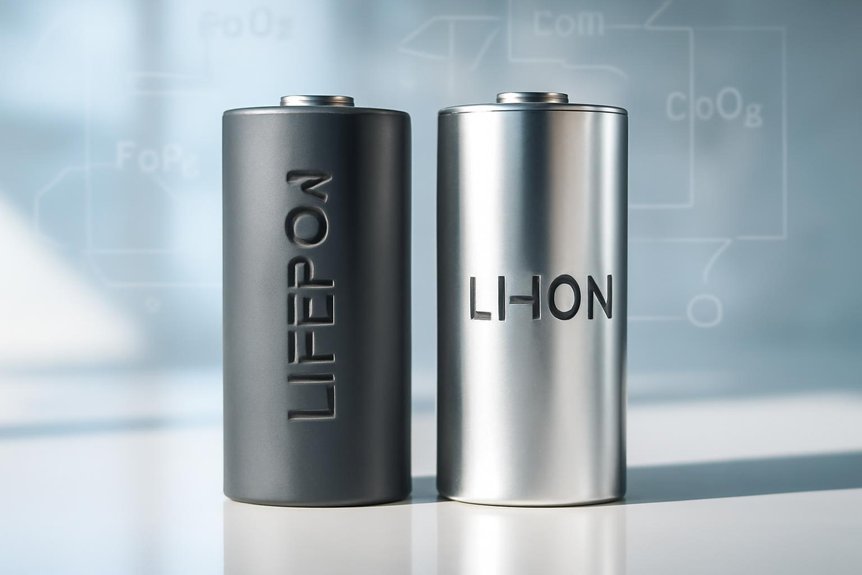
While both Lifepo4 and Li-ion batteries are lithium-based, their internal chemistries differ considerably, impacting their performance and safety profiles. Composition differences primarily stem from their chemical structures. Lifepo4 batteries utilize lithium iron phosphate as the cathode material, which features a stable crystal lattice, contributing to enhanced thermal stability. In contrast, typical Li-ion batteries employ layered alloy metal oxides like lithium cobalt oxide, with more complex chemical structures that are prone to thermal runaway. These structural distinctions influence electrochemical properties, such as voltage stability and lifespan. The chemical structures of Lifepo4’s phosphate framework provide a more robust, less reactive environment, whereas the layered oxide structures in Li-ion batteries enable higher energy density but at the expense of increased safety risks.
What Are the Main Advantages of Lifepo4 Batteries?
The unique chemical composition of Lifepo4 batteries confers several notable advantages, particularly in safety features, longevity, and thermal stability. Their stable crystal structure minimizes risks of thermal runaway, making them inherently safer than other lithium-ion chemistries. This robustness reduces the need for complex safety mechanisms and enhances reliability in demanding environments. While their energy density is generally lower than some Li-ion counterparts, Lifepo4 batteries still provide sufficient capacity for many applications, with the added benefit of maintaining consistent performance over numerous charge cycles. Their extended lifespan—often surpassing 2,000 cycles—further reduces replacement costs and environmental impact. Overall, these attributes make Lifepo4 batteries a technically advantageous choice where safety and durability are paramount.
Why Are Li-Ion Batteries Popular for Portable Electronics?
Li-ion batteries have become the preferred power source for portable electronics due to their high energy density and compact form factor. This advanced battery technology enables devices to operate longer without increasing size or weight, which is critical for portability. The high energy density allows more energy to be stored in smaller volumes, making Li-ion batteries ideal for smartphones, laptops, and wearable tech. Their lightweight design also enhances device mobility and user convenience. Additionally, the solid-state chemistry provides stable performance over numerous charge cycles, maintaining efficiency and reliability. These factors collectively explain why Li-ion batteries dominate portable electronics markets. Their combination of high energy density, compactness, and durability makes them the best choice for modern, portable electronic devices.
Comparing Safety: Which Battery Type Is Less Prone to Risks?
Which battery type presents fewer safety risks? Lifepo4 batteries generally offer enhanced safety features due to their superior thermal stability. This stability minimizes the risk of thermal runaway, a critical concern in Li-ion batteries, which are more prone to overheating and potential fires. Lifepo4’s robust chemistry provides inherent safety advantages, reducing the likelihood of catastrophic failure under stress or damage. Conversely, Li-ion batteries, while widely used, rely heavily on complex safety mechanisms such as thermal management systems to mitigate risks. Although both types include safety features, Lifepo4’s chemistry inherently resists thermal instability, making it less prone to hazards. Overall, for safety considerations, Lifepo4 batteries tend to be the safer choice, especially in high-stress or demanding environments.
How Do Lifepo4 and Li-Ion Batteries Perform in Terms of Longevity?
When evaluating longevity, we focus on charge cycle durability and how each battery type degrades over time. Lifepo4 batteries typically sustain more charge cycles before capacity diminishes considerably, whereas Li-ion batteries tend to degrade more rapidly with repeated use. Understanding these performance trends helps us assess their long-term reliability in various applications.
Charge Cycle Durability
Among the key factors influencing battery lifespan, charge cycle durability determines how many complete charging and discharging cycles a battery can reliably endure before its capacity markedly diminishes. Lifepo4 batteries typically exhibit a superior cycle lifespan, often exceeding 2,000 cycles, compared to Li-ion batteries, which average around 500 to 1,000 cycles. This performance comparison highlights Lifepo4’s enhanced durability, making it more suitable for applications requiring frequent cycling, such as renewable energy storage. The chemistry of Lifepo4 contributes to its resilience, maintaining capacity over numerous cycles with minimal degradation. Conversely, Li-ion batteries tend to show more capacity fade after fewer cycles. Consequently, Lifepo4 batteries demonstrate a more robust charge cycle durability, translating into longer overall longevity and reduced replacement costs.
Degradation Rate Over Time
Lifepo4 and Li-ion batteries differ markedly in how their performance declines over time, affecting their overall longevity. Degradation factors such as temperature, depth of discharge, and charge rates influence their lifespan comparison considerably. Lifepo4 chemistry exhibits slower capacity fade due to its stable crystal structure, which resists degradation under repeated cycles. Conversely, Li-ion batteries tend to experience faster capacity loss because of electrolyte decomposition and electrode material degradation. Over extended periods, Lifepo4 batteries typically retain higher capacity and exhibit fewer performance declines, making them more durable in long-term applications. Understanding these degradation factors helps in evaluating long-term performance, where Lifepo4’s slower degradation rate offers a clear advantage in longevity, especially in high-cycle or demanding environments.
Which Battery Offers Better Charging Speed and Efficiency?
Which battery type offers superior charging speed and efficiency? Li-ion batteries generally excel in this area due to advanced charging technology that enables faster, more controlled charging cycles. Their high energy density allows for quicker energy transfer during charging, minimizing downtime. Lifepo4 batteries, while safer and with a longer lifespan, typically have lower energy density, resulting in slower charging speeds. The design of Li-ion chemistry supports rapid charging without significant degradation, making it more efficient for applications demanding quick turnaround times. Conversely, Lifepo4’s stable chemistry simplifies thermal management, but at the expense of longer charging durations. Overall, Li-ion batteries deliver better charging speed and efficiency, primarily because of their optimized charging technology and higher energy density.
How Do Cost and Availability Influence Your Battery Choice?
Since cost and availability greatly impact our decision-making process, understanding their influence is essential when choosing between Lifepo4 and Li-ion batteries. A thorough cost comparison reveals that Lifepo4 batteries typically have higher upfront costs but offer longer lifespan and safer operation, which can lower total ownership costs over time. Market trends indicate that Li-ion batteries remain more widely available due to established manufacturing infrastructure, resulting in lower initial prices. However, supply chain disruptions and raw material constraints can affect availability, especially for Li-ion variants reliant on specific materials like cobalt. Ultimately, these factors shape our choice by balancing initial investment against long-term value, with Lifepo4 offering advantages in durability and safety, while Li-ion benefits from broader market access and cost competitiveness.
What Applications Are Best Suited for Lifepo4 Batteries?
Have you considered how specific energy storage needs influence the suitability of different battery chemistries? Lifepo4 batteries excel in applications requiring safety, longevity, and thermal stability. They are ideal for solar energy systems, where reliable, long-term energy storage is essential. In electric vehicles, Lifepo4 offers high cycle life and stability, making them suitable for fleet and commercial use. Portable tools also benefit from Lifepo4’s safety and durability, providing consistent power over many charge cycles. Additionally, grid storage projects leverage Lifepo4’s thermal stability and deep discharge capabilities, ensuring efficient energy management. While they may have lower energy density than other chemistries, their robustness and safety profile make Lifepo4 batteries a strategic choice for demanding, high-reliability applications.
When Should You Choose Li-Ion Batteries for Your Projects?
Li-ion batteries become the preferred choice when energy density and compact form factors are top priorities in a project. Their Li ion advantages include high energy density, lightweight design, and fast charging capabilities, making them ideal for portable electronics and electric vehicles. However, Li ion limitations—such as sensitivity to high temperatures, potential thermal runaway, and shorter lifespan—must be carefully managed. We recommend choosing Li-ion batteries when space constraints and performance demands outweigh concerns about thermal stability or long-term durability. Their ability to deliver consistent power output in a compact package makes them suitable for applications requiring high power density. Ultimately, selecting Li-ion depends on balancing these advantages against limitations, ensuring the battery’s characteristics align with the project’s specific operational needs.
How Do Environmental Impact and Recycling Factor Into Battery Selection?
How considerably do environmental impact and recycling evaluations influence the choice between LiFePO4 and Li-ion batteries? These factors are crucial in assessing sustainability practices and long-term environmental effects. LiFePO4 batteries generally have a lower environmental footprint due to safer, more stable chemistry and less toxic materials. Recycling processes for LiFePO4 are more efficient, with fewer hazardous chemicals involved. Conversely, Li-ion batteries often contain cobalt and nickel, raising concerns about ecological damage and ethical sourcing. When selecting batteries, it’s essential to evaluate:
- Material toxicity and safety during disposal
- Recycling process efficiency and cost
- Long-term environmental sustainability practices
- Impact of raw material extraction on ecosystems
Ultimately, environmental impact and recycling play a significant role in responsible battery choices, emphasizing sustainability and ecological preservation.
Frequently Asked Questions
How Do Lifepo4 and Li-Ion Batteries Compare in Weight and Size?
We find Li-ion batteries typically have higher energy density, making them lighter and more compact, while Lifepo4 batteries are bulkier but offer superior cycle longevity, affecting overall size and weight in energy storage applications.
Are There Temperature Limitations for Lifepo4 and Li-Ion Batteries?
We recognize temperature effects considerably impact both battery types; Lifepo4 offers superior thermal stability, tolerating broader temperature ranges, while Li-ion batteries are more sensitive to high or low temperatures, risking reduced performance and safety concerns.
Which Battery Type Is More Environmentally Friendly?
We find LiFePO4 batteries more environmentally friendly due to their safer recycling processes and lower lifecycle impact, thanks to fewer toxic materials and longer durability, which reduces waste and resource consumption over their operational lifespan.
How Do Lifepo4 and Li-Ion Batteries Handle Deep Discharge Cycles?
Imagine a river’s steady flow; Lifepo4 batteries excel in deep discharge cycles, maintaining high discharge efficiency and cycle stability, unlike Li-ion batteries, which risk capacity fade due to stress from frequent deep discharges.
What Maintenance Is Required for Each Battery Type?
We monitor charging frequency closely to optimize battery lifespan, implement safety measures like proper venting, and perform regular inspections; Li-ion batteries may require more frequent maintenance, while LiFePO4’s cost analysis favors its longer, safer cycle life.
Conclusion
Ultimately, selecting between Lifepo4 and Li-ion batteries involves weighing nuances of safety, longevity, and application needs. While Lifepo4 offers a resilient, long-lasting option with inherent stability, Li-ion provides lightweight efficiency suited for portable devices. Balancing these factors against cost and environmental considerations guides us toward a more informed, discerning choice—one that aligns with both technological demands and sustainable practices, subtly shaping the future of energy storage solutions.