The difference between LiFePO4 and lead-acid batteries in efficiency is staggering, potentially redefining how we evaluate energy storage. While LiFePO4 offers superior performance in key areas like energy density and cycle life, lead-acid batteries still dominate in certain applications due to their lower upfront costs. Understanding these nuances can dramatically influence long-term operational costs and system reliability—analyzing which type truly delivers better value requires a closer look at their fundamental efficiencies.
Key Takeaways
- LiFePO4 batteries have higher energy density, offering better performance under high demand than lead-acid batteries.
- LiFePO4 maintains stable voltage and capacity during heavy loads, unlike lead-acid which drops significantly.
- Longer cycle life of LiFePO4 reduces replacements, enhancing overall efficiency and cost-effectiveness.
- Faster charging supported by LiFePO4 increases uptime without risking damage, unlike lead-acid batteries.
- Minimal maintenance for LiFePO4 lowers operational downtime compared to more maintenance-intensive lead-acid batteries.
How Do LiFePO4 and Lead-Acid Batteries Differ in Efficiency?
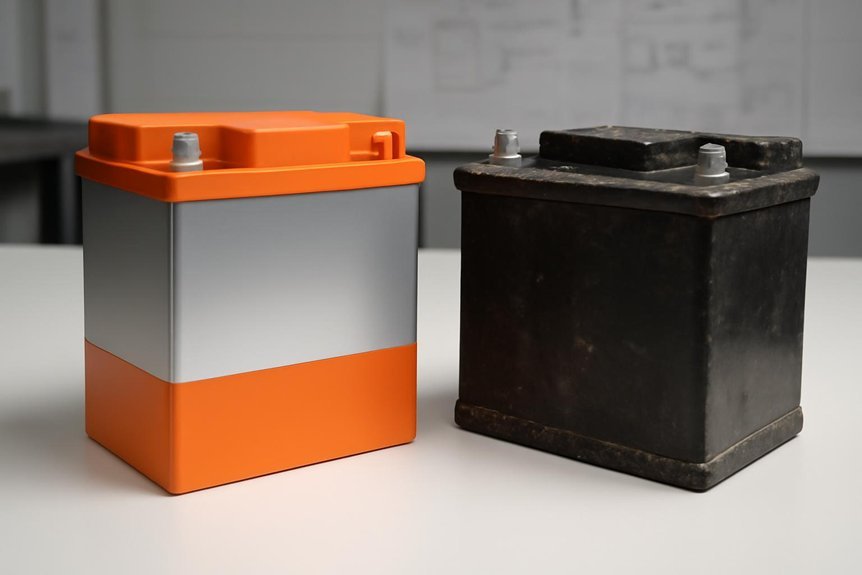
How do LiFePO4 and lead-acid batteries compare regarding efficiency? LiFePO4 batteries generally outperform lead-acid in energy density, offering more stored energy per unit volume or weight, which enhances overall system efficiency. They also excel in discharge rates, maintaining stable voltage and capacity during high-demand periods, unlike lead-acid batteries that experience significant voltage drops under heavy loads. This stability results in more effective energy utilization and less energy loss during operation. Additionally, LiFePO4’s longer cycle life reduces the need for frequent replacements, improving long-term efficiency. Conversely, lead-acid batteries tend to have lower energy density and limited discharge rates, leading to higher energy losses and reduced operational efficiency. Overall, the technical advantages of LiFePO4 make them a more efficient choice for demanding applications.
Charging Speed and Its Impact on Battery Performance
Charging speed considerably influences battery performance, affecting both operational efficiency and lifespan. Advanced charging technology enables faster recharge rates, but the impact varies between Lifepo4 and lead-acid batteries. Lifepo4 batteries typically support higher charging currents due to their superior energy density and thermal stability, allowing for rapid charging without compromising safety or longevity. Conversely, lead-acid batteries require more conservative charging rates to prevent damage, which can limit operational efficiency. Faster charging enhances system uptime but can accelerate degradation if not managed properly, particularly for lead-acid types. Consequently, understanding the interplay between charging technology and energy density is essential when optimizing charging speed, as it directly affects not only performance but also long-term battery health.
Cycle Life: How Longevity Affects Overall Efficiency
The longevity of a battery considerably influences its overall efficiency, as longer cycle life reduces the frequency of replacements and maintenance costs. When we compare Lifepo4 and lead acid batteries through cycle comparison, Lifepo4 consistently demonstrates superior longevity metrics, often exceeding 2000 cycles, compared to lead acid’s typical 500-1000 cycles. This extended cycle life means Lifepo4 batteries maintain their capacity longer, resulting in higher overall efficiency over their lifespan. The difference in longevity metrics directly impacts total cost of ownership, as fewer replacements are needed for Lifepo4 systems. Consequently, the enhanced cycle life of Lifepo4 batteries translates into better resource utilization, reduced downtime, and lower long-term operational expenses, making them a more efficient choice for demanding applications.
Maintenance Requirements and Their Effect on Battery Longevity
Maintenance practices directly influence the lifespan and reliability of battery systems. Proper battery care minimizes degradation and maximizes performance enhancement, impacting overall lifespan factors. Key considerations include:
- Regular inspection and cleaning to prevent corrosion and guarantee secure connections.
- Monitoring electrolyte levels and specific gravity in lead acid batteries to prevent capacity loss.
- Avoiding deep discharges and maintaining ideal charge cycles to reduce stress on batteries.
- Keeping batteries within recommended temperature ranges to prevent thermal degradation.
These actions affect maintenance costs and help sustain efficiency over time. For Lifepo4 batteries, minimal maintenance reduces downtime, while lead acid batteries demand more frequent attention. Ultimately, disciplined maintenance enhances longevity and stabilizes performance, making it a critical aspect of effective battery management.
Which Battery Type Offers Better Cost-Effectiveness Over Time?
When evaluating long-term cost-effectiveness, it’s essential to take into account both initial investment and operational expenses associated with each battery type. Lifepo4 batteries generally have a higher initial investment compared to lead-acid batteries, but their longer cycle life reduces replacement costs over time. Operational costs for Lifepo4 are also lower due to higher efficiency and reduced maintenance needs. Additionally, Lifepo4 batteries have a lower environmental impact, thanks to their longer lifespan and fewer hazardous materials. Lead-acid batteries, while cheaper upfront, tend to incur higher replacement and maintenance costs, making them less cost-effective over extended periods. Overall, Lifepo4 offers better long-term value when considering total ownership costs, especially when factoring in environmental sustainability.
Frequently Asked Questions
How Do Temperature Variations Influence the Efficiency of Lifepo4 and Lead-Acid Batteries?
Temperature effects greatly impact efficiency comparison; Lifepo4 batteries perform better in extreme temperatures with minimal efficiency loss, while lead-acid batteries suffer notable efficiency declines in both cold and hot conditions, making Lifepo4 more reliable across varied environments.
What Environmental Factors Impact the Long-Term Efficiency of These Battery Types?
We find that environmental factors like battery recycling practices, strict environmental regulations, material sourcing, and thorough lifecycle analysis greatly influence the long-term efficiency of Lifepo4 and lead-acid batteries, affecting sustainability and operational performance over time.
How Does Depth of Discharge Affect Overall Battery Efficiency Differently for Each Type?
We find that deeper discharge impacts Lifepo4’s cycle stability less severely, maintaining efficiency metrics longer, while lead acid batteries’ discharge curves show efficiency drops and reduced lifespan, leading to a notable lifespan comparison favoring Lifepo4’s superior cycle stability.
Are There Specific Applications Where One Battery Type Outperforms the Other in Efficiency?
In solar applications and backup systems, Lifepo4 batteries outperform lead-acid due to higher efficiency and longer cycle life. For electric vehicles and renewable integration, Lifepo4’s superior energy density and stability make it the preferred choice.
How Do Aging Effects Alter the Efficiency of Lifepo4 Versus Lead-Acid Batteries?
Aging impacts Lifepo4 batteries with superior cycle life and capacity retention, maintaining efficiency longer. Lead-acid batteries degrade faster, losing capacity and performance over time, making lifespan and aging effects essential in choosing the ideal technology.
Conclusion
In our analysis, LiFePO4 batteries emerge as the steadfast lighthouse guiding efficiency through stormy demands, illuminating stability and longevity. Their resilience and rapid charging act as a compass, steering us away from the fog of frequent replacements and maintenance. As we navigate the energy landscape, choosing LiFePO4 is akin to anchoring in a harbor of long-term value, where consistent performance and reduced operational costs symbolize the steady beacon guiding sustainable, efficient power solutions.