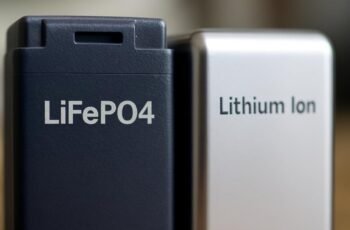
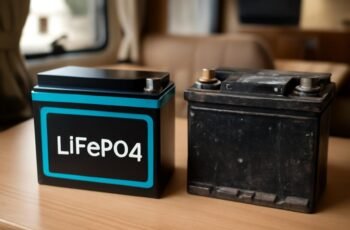
While it might be tempting to focus solely on initial costs, understanding the nuanced differences between LiFePO4 and deep cycle lead acid batteries is essential for making an informed choice. Their chemistry, lifespan, size, and safety profiles each carry implications that can greatly impact long-term performance and value. Charting these technical distinctions reveals a complex landscape that could influence your application’s efficiency and reliability—making it worthwhile to explore further.
Key Takeaways
- LiFePO4 batteries have higher energy density and longer lifespan than deep cycle lead acid batteries.
- Lead acid batteries are initially cheaper but require more frequent replacements, increasing overall costs.
- LiFePO4 batteries are lighter and more compact, ideal for portable or space-constrained applications.
- Maintenance for LiFePO4 is minimal, with less risk of acid spills and thermal runaway compared to lead acid.
- For high power and longevity, LiFePO4 offers better performance despite higher upfront costs.
How Do Lifepo4 and Deep Cycle Lead Acid Batteries Differ in Chemistry and Performance
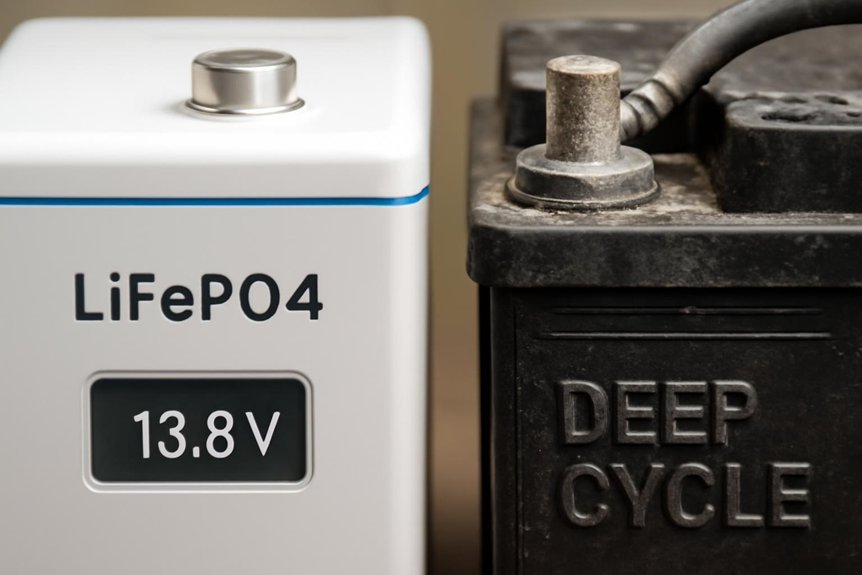
Although both LiFePO4 and deep cycle lead acid batteries serve similar purposes, their underlying chemistries greatly influence their performance characteristics. LiFePO4 batteries utilize lithium iron phosphate chemistry, which offers higher energy density and improved thermal stability. This results in a longer battery lifespan, often exceeding 2000 cycles, compared to about 500-1000 cycles for lead acid. The superior energy density of LiFePO4 means more stored energy in a smaller, lighter package, enhancing portability and efficiency. Conversely, deep cycle lead acid batteries rely on lead plates and sulfuric acid, which limit their energy density and contribute to faster degradation over time. These fundamental chemical differences shape their respective performance, durability, and suitability for various applications.
Which Battery Is More Cost-Effective Over Its Lifespan?
When comparing the long-term cost-effectiveness of LiFePO4 and deep cycle lead acid batteries, we must consider not just upfront expenses but also total ownership costs over their lifespans. A thorough cost analysis reveals that while lead acid batteries typically have a lower initial price, their shorter lifespan—around 500 to 1,000 cycles—results in higher replacement costs over time. In contrast, LiFePO4 batteries offer a lifespan comparison of approximately 2,000 to 5,000 cycles, reducing replacement frequency and associated costs. Despite higher initial investments, LiFePO4 batteries often prove more cost-effective over their lifespan due to enhanced longevity, lower maintenance, and increased efficiency. Ultimately, a detailed lifespan comparison favors LiFePO4 for long-term applications, making them a more economical choice over time.
How Do Weight and Size Impact Battery Choice for Different Applications
How considerably do weight and size influence the selection of batteries for various applications? They are critical factors affecting application suitability and operational efficiency. Regarding weight distribution, batteries that are lighter facilitate better balance and reduce strain on supporting structures, especially in portable or mobile systems. Size constraints directly impact installation options, limiting or expanding the range of feasible applications. For example, compact batteries improve transport efficiency in confined spaces like RVs or marine vessels. Larger, heavier batteries may be suitable for stationary setups where weight is less critical but long-term capacity and durability are prioritized. Ultimately, understanding the interplay between weight, size, and application demands guarantees the best battery choice, balancing performance, safety, and logistical considerations.
What Are the Maintenance Needs and Safety Considerations for Each Battery Type?
Both lithium iron phosphate (LiFePO4) and deep cycle lead acid batteries require specific maintenance routines and safety precautions to guarantee peak performance and longevity. Proper maintenance extends battery lifespan by ensuring efficient operation and avoiding damage. LiFePO4 batteries demand minimal upkeep, mainly periodic voltage checks and avoiding over-discharge, which can harm their chemistry. In contrast, lead acid batteries need regular equalization, water level monitoring, and terminal cleaning. Regarding safety, LiFePO4 batteries are inherently stable, producing fewer thermal runaway risks; however, correct handling during charging methods is essential. Lead acid batteries pose acid spill hazards and generate explosive gases during charging, necessitating ventilation and careful monitoring. Adhering to these maintenance and safety practices maximizes battery life and prevents accidents.
Which Battery Should You Choose Based on Your Power Needs and Budget?
Deciding between LiFePO4 and deep cycle lead acid batteries hinges on analyzing your specific power requirements and budget constraints. For high power needs with a focus on long-term investment, LiFePO4 batteries offer superior battery longevity and higher charging efficiency, reducing overall operational costs over time. They sustain more charge cycles, making them ideal for demanding applications. Conversely, lead acid batteries typically present lower upfront costs but lag in longevity and charge retention, which can lead to increased replacement frequency and maintenance expenses. If your priority is maximizing lifespan and optimizing charging performance, LiFePO4 is the more efficient choice. However, for shorter-term or budget-restricted projects, lead acid batteries may suffice, despite their comparatively lower charging efficiency and shorter lifespan.
Frequently Asked Questions
How Do Lifepo4 and Lead Acid Batteries Perform in Cold Temperatures?
In cold weather, Lifepo4 batteries generally perform better due to lower temperature effects and stable chemistry, whereas lead acid batteries experience significant capacity loss and slower charging, making Lifepo4 more reliable in low temperatures.
What Is the Typical Lifespan Comparison Between the Two Batteries?
We find Lifepo4 batteries typically last 8-10 years, outperforming lead acid’s 3-5 years in performance metrics. Cost analysis shows Lifepo4’s higher initial investment is offset by longer lifespan and lower maintenance, enhancing long-term value.
Are Lifepo4 Batteries Environmentally Friendly?
Like a seed growing into a resilient tree, Lifepo4 batteries symbolize sustainability practices rooted in eco-friendly manufacturing. They’re environmentally friendly, with lower toxic materials, longer lifespans, and recyclability, reducing waste and supporting greener energy solutions.
Can Lifepo4 Batteries Be Recycled Easily?
Yes, LiFePO4 batteries can be recycled through established recycling processes, which efficiently recover valuable materials, reducing environmental impact. Proper battery disposal guarantees safe, sustainable handling, emphasizing the importance of advanced recycling techniques for responsible management.
How Do Charging Times Differ Between These Battery Types?
We find Lifepo4 batteries charge faster due to higher charging efficiency, completing more charging cycles in less time, whereas deep cycle lead acid batteries take longer, with reduced efficiency and fewer cycles, impacting overall charging speed and longevity.
Conclusion
In weighing LiFePO4 against deep cycle lead acid batteries, we see a clear trajectory toward efficiency and durability. While lead acids may seem like the budget-friendly option upfront, their shorter lifespan and maintenance needs can turn the tide. LiFePO4 batteries, with their superior chemistry and compact design, are the steady ship sailing through long-term reliability. Ultimately, choosing the right battery hinges on your specific power demands and investment outlook—balancing cost, performance, and safety like a finely tuned engine.