As we consider switching from lead acid to LiFePO4 batteries, it’s clear that this change involves more than just replacing one technology with another. We need to carefully analyze the long-term benefits, including lifespan and total cost of ownership, against the initial investment and system compatibility. Understanding the technical requirements and potential challenges is essential. The decision ultimately hinges on how well this upgrade aligns with operational goals and energy efficiency needs, prompting us to explore the key factors involved.
Key Takeaways
- Ensure compatibility of voltage, capacity, and physical dimensions between existing batteries and LiFePO4 options.
- Upgrade the battery management system (BMS) to accommodate LiFePO4’s charging and safety requirements.
- Plan a phased transition to monitor performance and address potential compatibility or integration issues.
- Evaluate long-term cost savings from lower maintenance and longer lifespan against higher initial investment.
- Adjust or reinforce mounting and structural supports to accommodate weight differences of LiFePO4 batteries.
Why Switch From Lead Acid to Lifepo4 Batteries?
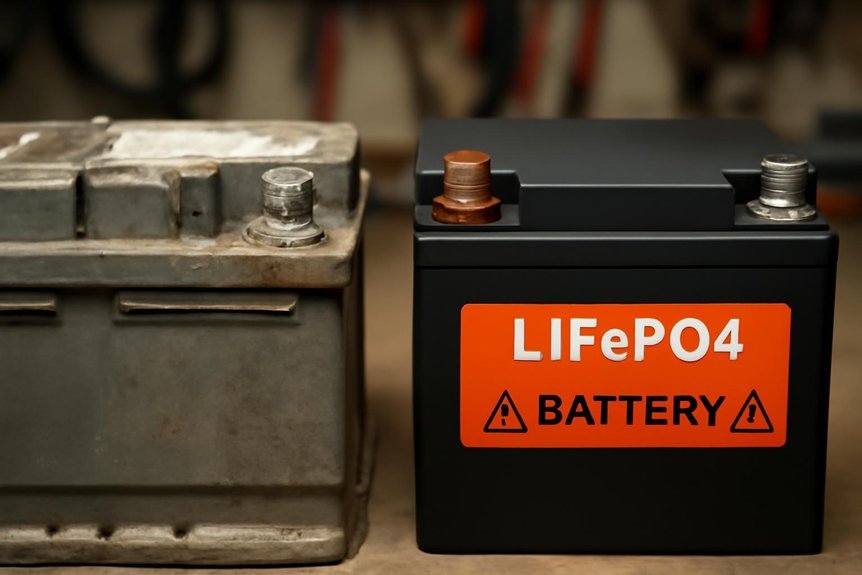
While lead acid batteries have long been the standard for energy storage, advancements in lithium iron phosphate (LiFePO4) technology present compelling reasons to contemplate switching. A key factor is the cost comparison; although LiFePO4 batteries have a higher upfront cost, their superior lifespan markedly reduces long-term expenses. A lifespan analysis reveals that LiFePO4 units typically last 8-10 years or over 2,000 cycles, compared to 3-5 years for lead acid batteries with approximately 500 cycles. This durability minimizes replacement frequency and maintenance costs. Additionally, LiFePO4 batteries exhibit higher efficiency and stability, further enhancing value over time. Consequently, the investment in LiFePO4 offers better total cost of ownership, making it a more economically sound choice for energy storage solutions.
Key Advantages of Lithium Iron Phosphate Batteries
Lithium iron phosphate (LiFePO4) batteries offer several key advantages that make them a superior choice for energy storage. Their notable cost efficiency stems from lower maintenance and longer lifespan, reducing total ownership costs. Additionally, LiFePO4 batteries deliver significant longevity benefits, often exceeding 10 years of reliable operation. They also feature high thermal stability and enhanced safety, minimizing risks of thermal runaway. The following table summarizes these advantages:
| Advantage | Description | Impact |
|---|---|---|
| Cost efficiency | Lower maintenance and longer lifespan | Reduced total cost of ownership |
| Longevity benefits | Extended cycle life (>2000 cycles) | Long-term durability |
| Safety | High thermal stability | Reduced safety risks |
| Performance | Stable voltage output | Consistent energy supply |
| Environmental impact | Fewer hazardous materials | Eco-friendly disposal |
These attributes highlight why LiFePO4 batteries are increasingly preferred for modern energy systems.
How to Evaluate if LiFePO4 Is Right for Your Energy System
Determining whether LiFePO4 batteries are suitable for your energy system requires a careful assessment of your specific energy needs, operational conditions, and long-term objectives. We analyze your load profiles, peak demand, and duty cycles to guarantee LiFePO4’s high discharge rates meet your requirements. Additionally, evaluating the battery lifespan is critical; LiFePO4 typically offers a longer cycle life compared to lead-acid, which can justify higher initial costs over time. Consider environmental factors such as temperature ranges and vibration exposure, as these influence performance and longevity. By systematically examining these factors, you can determine if LiFePO4 batteries align with your operational goals and provide reliable, cost-effective energy storage for the long haul.
Steps to Transition From Lead Acid to Lifepo4 Batteries
Shifting from lead-acid to LiFePO4 batteries requires a structured approach to guarantee compatibility and maximize benefits. First, we assess battery compatibility by comparing voltage, capacity, and physical dimensions to confirm seamless integration into existing systems. Next, we review the charging requirements; LiFePO4 batteries demand specific charging profiles, including appropriate voltage limits and charger compatibility, to optimize lifespan and performance. We then upgrade or adjust the battery management system (BMS) to accommodate different voltage and current parameters. Finally, we implement a phased shift, monitoring system performance closely during initial operation. This methodical process guarantees that the new batteries operate safely, efficiently, and reliably within the existing energy infrastructure.
Common Challenges and Tips for a Smooth Upgrade
While shifting to LiFePO4 batteries offers significant performance benefits, it often presents technical challenges that require careful management. Compatibility issues can arise with existing systems, necessitating component upgrades or adjustments. Charging concerns, such as voltage regulation and balancing, need precise control to guarantee longevity. Weight differences impact mounting and structural support planning, while cost analysis reveals higher upfront expenses but lower long-term maintenance. Installation tips include verifying inverter compatibility and upgrading wiring for safety. Maintenance requirements are minimal but essential, including regular monitoring of cell health and voltage levels.
| Issue | Solution | Consideration |
|---|---|---|
| Compatibility issues | Use compatible BMS and inverter | Confirm system specs before upgrade |
| Charging concerns | Install proper chargers | Adjust charge parameters |
| Weight differences | Reinforce mounting points | Assess structural load |
| Cost analysis | Evaluate long-term savings | Budget for initial investment |
Frequently Asked Questions
What Is the Typical Lifespan Difference Between Lead Acid and Lifepo4 Batteries?
We find Lifepo4 batteries typically offer superior cycle longevity, often exceeding 2000 cycles, compared to lead acid’s 500-1000. Their capacity retention remains higher over time, making them more durable and cost-effective long-term.
Are Lifepo4 Batteries Environmentally Friendly Compared to Lead Acid?
You might be surprised—Lifepo4 batteries are more environmentally friendly, thanks to better recycling processes and higher energy efficiency. This reduces hazardous waste and energy consumption, making them a smarter, greener choice over traditional lead acid options.
How Do Lifepo4 Batteries Perform in Extreme Temperatures?
Lifepo4 batteries offer robust temperature tolerance, maintaining performance metrics in extreme conditions. They perform reliably across a wide temperature range, but ideal operation occurs within specific limits, ensuring safety and efficiency during temperature fluctuations.
Can Lifepo4 Batteries Be Used With Existing Lead Acid Battery Systems?
We find that using LiFePO4 batteries with existing lead acid systems raises compatibility concerns due to different charging requirements and voltages. Properly managing these differences is essential to prevent damage and guarantee safe, efficient operation.
What Are the Maintenance Requirements for Lifepo4 Versus Lead Acid Batteries?
We find LiFePO4 batteries require less maintenance, with no watering or equalizing needed. They support more charging cycles and have higher efficiency rates, making them more reliable and cost-effective over time compared to lead acid batteries.
Conclusion
In summary, shifting to LiFePO4 batteries is a strategic move that can greatly enhance your energy system’s reliability and longevity. While the change requires careful planning and technical adjustments, the long-term benefits outweigh the initial hurdles. By embracing this modification, you’re not just keeping pace but staying ahead of the curve—like a well-oiled machine operating at peak efficiency. With proper evaluation and implementation, this upgrade can release substantial operational savings and sustainability.