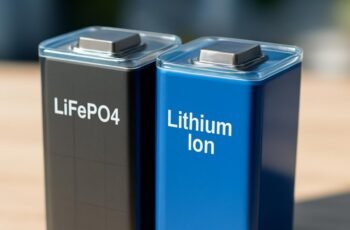
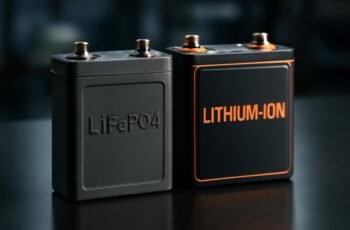
When selecting a marine battery, understanding the fundamental differences between LiFePO4 and lead acid options is essential for optimizing performance and longevity. Both types have distinct advantages and limitations that can greatly impact vessel operation, safety, and maintenance. As we compare their technical specifications and practical applications, it’s clear that choosing the right battery requires careful consideration. The decision ultimately hinges on balancing your specific needs with the inherent characteristics of each technology.
Key Takeaways
- LiFePO4 batteries are lighter and more compact, improving vessel agility and space efficiency compared to bulkier lead acid batteries.
- They offer longer cycle life (over 2,000 cycles) versus 500-1,000 cycles for lead acid, enhancing longevity.
- LiFePO4 supports faster charging and higher discharge rates, suitable for demanding marine power needs.
- Lead acid batteries are more cost-effective upfront and have established reliability in marine environments.
- Safety considerations and proper handling are essential for both types, with LiFePO4 providing better temperature tolerance.
What Are the Main Differences Between LiFePO4 and Lead Acid Batteries for Marine Use?
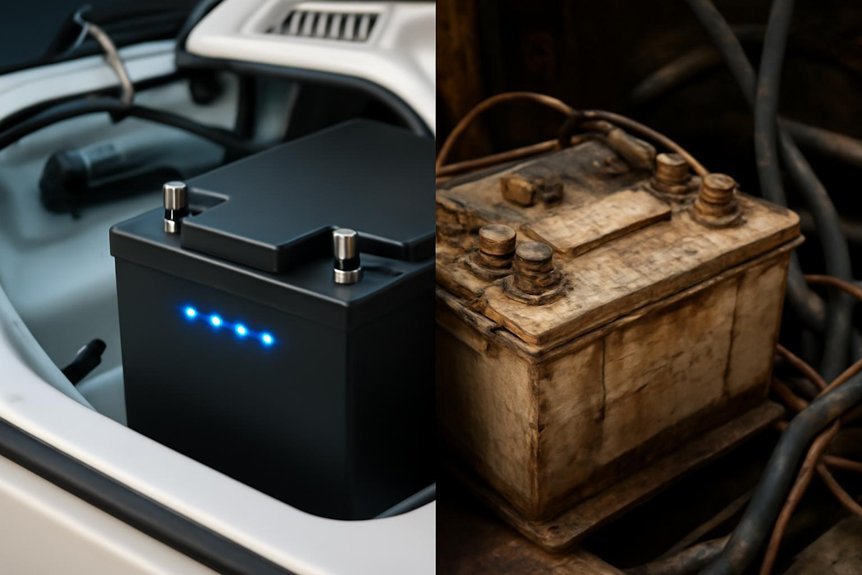
While both LiFePO4 (Lithium Iron Phosphate) and lead acid batteries serve as primary energy sources for marine applications, their fundamental differences markedly impact performance, lifespan, and safety. A key distinction lies in battery weight; LiFePO4 batteries are considerably lighter, reducing vessel load and improving fuel efficiency. Their higher energy density allows more stored energy in a compact form, enabling longer operation times without increasing size. Conversely, lead acid batteries are heavier and bulkier, limiting space and increasing the vessel’s overall weight. These differences influence installation flexibility and operational efficiency. LiFePO4’s superior energy density also contributes to faster charging and better cycle life, whereas lead acid batteries tend to degrade more rapidly under heavy cycling. These factors make LiFePO4 a more advanced and efficient marine power source.
Advantages of Using Lithium Iron Phosphate (LiFePO4) Batteries on Your Boat
The advantages of using Lithium Iron Phosphate (LiFePO4) batteries on your boat are substantial, making them a superior choice for marine power systems. LiFePO4 batteries have a markedly lower battery weight compared to traditional lead-acid options, improving vessel agility and fuel efficiency. Their high energy density allows for more compact installations without sacrificing capacity. Additionally, they support higher discharge rates, enabling rapid power delivery when needed. Their temperature tolerance enhances reliability in diverse marine environments, reducing performance issues in extreme conditions. LiFePO4 batteries also present a lower environmental impact due to their longer lifespan and fewer hazardous materials. Moreover, installation flexibility is increased thanks to their versatile form factors and 12V or 24V configurations, simplifying integration into existing marine systems.
Benefits of Traditional Lead Acid Batteries for Marine Applications
Traditional lead acid batteries have long been the standard choice for marine applications due to their proven reliability and established technology. Their traditional advantages include widespread availability, ease of maintenance, and a well-understood performance profile. In marine environments, lead acid batteries are favored for their robustness under various operating conditions and their ability to deliver high surge currents essential for starting engines. Additionally, they are generally more cost-effective upfront, making them an attractive option for boat owners seeking dependable power without a significant initial investment. Their mature manufacturing process guarantees consistent quality and compatibility with existing marine electrical systems. Overall, the traditional advantages of lead acid batteries continue to make them a practical choice for many marine applications, especially where proven durability and affordability are priorities.
Key Factors to Consider When Choosing a Marine Battery: Performance, Cost, and Maintenance
When selecting a marine battery, we focus on performance, cost, and maintenance to guarantee peak operation. High efficiency and reliability are critical for consistent power delivery, while cost and maintenance influence long-term value and operational simplicity. Understanding these key factors helps us make informed decisions tailored to specific marine needs.
Performance Efficiency and Reliability
Evaluating performance efficiency and reliability is essential when selecting a marine battery, as these factors directly impact operational safety and longevity. Performance metrics such as charge/discharge efficiency, cycle life, and energy density reveal how well the battery sustains power under demanding marine conditions. Reliability factors include consistent performance over time, resistance to temperature fluctuations, and minimal self-discharge. Lithium iron phosphate (LiFePO4) batteries generally outperform lead-acid options in these areas, offering higher cycle life and better stability, which translates into more dependable power delivery. Lead-acid batteries, while proven, tend to exhibit reduced performance metrics over their lifespan and are more susceptible to failure from environmental stressors. Prioritizing these performance and reliability considerations guarantees safer, more efficient marine operations.
Cost and Maintenance Requirements
Cost and maintenance requirements are critical factors that influence the overall feasibility and operational efficiency of marine battery systems. Lifepo4 batteries generally entail higher initial costs but offer lower maintenance demands, simplifying installation procedures and reducing long-term expenses. Lead acid batteries, conversely, have lower upfront costs but require regular maintenance, including water top-ups and terminal cleaning, increasing operational complexity. Additionally, Lifepo4 batteries have a lower environmental impact due to fewer hazardous materials and longer cycle life, which diminishes disposal concerns. Proper installation procedures for Lifepo4 batteries guarantee peak performance and safety, whereas lead acid batteries demand more frequent checks to prevent failures. Overall, evaluating these factors helps enhance lifecycle costs while minimizing environmental impact and assuring reliable marine power systems.
Understanding the Longevity and Charging Characteristics of Both Battery Types
Understanding the longevity and charging characteristics of LiFePO4 and lead-acid batteries is essential for making informed decisions in marine applications. These factors influence battery lifespan, operational efficiency, and maintenance schedules. LiFePO4 batteries typically offer more charging cycles—often 2,000 or more—resulting in a longer battery lifespan. In contrast, lead-acid batteries generally endure around 500-1,000 cycles before significant capacity loss.
Visualize this:
- LiFePO4: rapid, consistent charging, minimal voltage drop, low internal resistance, high cycle durability
- Lead-acid: slower, less efficient charging, voltage sag under load, higher internal resistance, shorter lifespan
Understanding these differences helps optimize performance and maintenance planning in marine settings.
Safety Considerations and Handling of LiFePO4 vs Lead Acid Batteries
While both LiFePO4 and lead-acid batteries require careful handling to guarantee safety, their distinct chemical compositions demand different precautions. LiFePO4 batteries are thermally stable but still necessitate proper charging safety to prevent overcharging or thermal runaway, which can lead to fire hazards. Lead-acid batteries, on the other hand, contain sulfuric acid, posing risks of acid spills and corrosion; they must be handled with protective equipment and proper ventilation. Safe battery disposal is critical for both types; lead-acid batteries require recycling due to toxic materials, while LiFePO4 batteries should be disposed of following specific protocols to avoid environmental contamination. Proper handling, charging safety, and adherence to disposal regulations are essential to ascertain safe marine operation and environmental protection.
Which Marine Battery Is Right for Your Boat? Making an Informed Choice
Choosing the right marine battery depends on your boat’s specific power needs, usage patterns, and long-term maintenance considerations. To make an informed decision, consider key factors like capacity, weight, recharge cycles, and safety features. Our battery selection tips emphasize understanding marine battery types, whether lead acid or lithium iron phosphate (LiFePO4). Visualize your setup with a battery that:
- Fits seamlessly into limited compartment space
- Provides reliable starting power in cold conditions
- Offers rapid recharge for frequent use
- Guarantees long-term durability with minimal maintenance
Assessing these aspects helps narrow options and guarantees peak performance. Carefully evaluating your boat’s electrical demands against these criteria ensures you select a marine battery that delivers efficiency, safety, and longevity, aligning with your specific boating needs.
Frequently Asked Questions
How Do Lifepo4 and Lead Acid Batteries Affect Boat Weight Distribution?
Lifepo4 batteries are lighter, improving weight distribution and enhancing performance balance on boats. Lead acid batteries are heavier, potentially affecting stability and handling; choosing the right type optimizes boat performance and safety.
Are There Environmental Impacts Associated With Each Battery Type?
We recognize that both Lifepo4 and lead acid batteries impact the environment through their recycling processes and battery disposal, with Lifepo4 offering less toxic waste and easier recycling, thereby reducing ecological footprints and promoting sustainable marine power solutions.
Can Lifepo4 Batteries Be Used With Existing Marine Charging Systems?
Like fitting a new engine into a trusted vessel, Lifepo4 batteries generally integrate smoothly with existing marine charging systems. We advise reviewing charging compatibility and installation considerations to guarantee seamless performance and longevity, safeguarding your maritime adventures.
What Are the Warranty Differences Between Lifepo4 and Lead Acid Batteries?
We find that Lifepo4 batteries typically offer a longer warranty duration, often around 8-10 years, reflecting their extended battery lifespan. Lead acid batteries usually have shorter warranties, about 1-3 years, aligning with their comparatively limited lifespan.
How Do Temperature Variations Influence Battery Performance on Boats?
Temperature impact acts like a double-edged sword on batteries; cold dulls performance and efficiency, while heat accelerates aging. Understanding this helps us optimize battery life and guarantee reliable marine power, regardless of weather’s unpredictable influence.
Conclusion
Choosing the right marine battery ultimately depends on your vessel’s specific needs and operational priorities. Are you seeking maximum efficiency and longevity, or proven reliability at a lower initial cost? Both LiFePO4 and lead acid batteries have their merits, but understanding their technical differences helps us make informed decisions. By weighing performance, maintenance, and safety considerations, we guarantee peak vessel performance and safety—making the right choice isn’t just smart, it’s essential.