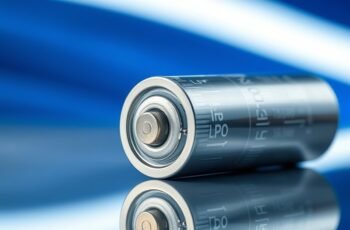
When we encounter the term LiFePO₄ in batteries, it refers to a specific chemistry that combines lithium ions with a phosphate-based cathode. Understanding what LiFePO₄ stands for is essential, as it influences the battery’s stability, safety, and overall performance. This composition sets it apart from other lithium-ion options, making it a focus for many applications. Let’s explore what makes this chemistry unique and why it’s gaining prominence.
Key Takeaways
- LiFePO₄ stands for Lithium Iron Phosphate, a type of rechargeable battery chemistry.
- It uses lithium, iron, and phosphate components in its chemical structure.
- Known for high safety, thermal stability, and long cycle life.
- Often used in electric vehicles, energy storage, and portable devices.
- Offers environmentally friendly and recyclable energy storage solutions.
What Does LiFePO4 Stand for in Batteries?
LiFePO4 stands for Lithium Iron Phosphate, a specific chemistry used in rechargeable batteries. This chemistry offers advantages such as enhanced thermal stability, longer cycle life, and improved safety compared to other lithium-ion chemistries. Proper battery maintenance is essential to optimize performance and longevity. Following correct charging protocols—such as avoiding overcharging and maintaining voltage within recommended limits—is critical for preserving battery health. LiFePO4 batteries require a specialized charger with appropriate voltage and current settings to prevent damage. Unlike other chemistries, they tolerate deep discharges better but still benefit from regulated charge cycles. By adhering to proper maintenance routines and precise charging protocols, users can maximize the lifespan and safety of LiFePO4 batteries, ensuring reliable operation over extended periods.
Understanding the Chemistry Behind LiFePO4
Understanding the chemistry behind LiFePO₄ involves examining its unique molecular structure, which consists of a lithium ion intercalated within a phosphate (PO₄) group bonded to an iron (Fe) backbone. This layered crystalline structure facilitates efficient battery manufacturing by enabling reversible lithium-ion intercalation during charge and discharge cycles. The phosphate group imparts remarkable chemical stability, preventing thermal runaway and enhancing safety. The iron backbone contributes to the material’s robustness, resisting structural degradation over multiple cycles. This combination results in a battery chemistry characterized by high stability, longevity, and consistent performance. Understanding these chemical properties is essential for optimizing LiFePO₄-based batteries, ensuring they meet safety standards and deliver reliable energy storage in various applications.
How Does Lifepo4 Differ From Other Lithium Batteries?
Lifepo4 batteries exhibit superior safety and thermal stability compared to other lithium chemistries, reducing risks of thermal runaway. They also provide consistent performance and longer cycle life, making them reliable over extensive use. Understanding these distinctions helps clarify why Lifepo4 is often preferred for demanding applications.
Safety and Stability
While many lithium-ion batteries share common safety concerns, LiFePO4 batteries stand out due to their inherently stable chemical composition. This stability reduces risks like thermal runaway, making them safer in diverse applications. The battery manufacturing process emphasizes strict control over material purity, enhancing safety features. Market trends indicate increasing adoption driven by safety advantages and stable performance. Below is a comparison illustrating these differences:
| Feature | LiFePO4 | Other Lithium Batteries |
|---|---|---|
| Chemical Stability | High | Moderate to Low |
| Thermal Runaway Risk | Minimal | Higher |
| Market Adoption | Growing rapidly | Slower growth |
| Manufacturing Focus | Safety-focused | Cost and performance-focused |
| Market Trends | Increasing safety demands | Variable safety standards |
This table underscores LiFePO4’s superior safety and stability profile.
Performance and Longevity
Compared to other lithium-ion chemistries, LiFePO4 batteries deliver superior cycle life and maintain stable performance over extended periods. Their robust chemistry allows for over 2,000 charge-discharge cycles with minimal capacity loss, outperforming typical lithium-ion batteries. This durability enhances longevity and reduces replacement frequency, benefiting both performance metrics and environmental impact through more efficient battery recycling. Additionally, LiFePO4 batteries exhibit high charging efficiency, enabling faster, safer charging with less heat generation. Their stable voltage profile ensures consistent power delivery, essential for demanding applications. Overall, these features underscore LiFePO4’s advantages in longevity, sustainability, and operational reliability, making them an ideal choice for long-term energy storage solutions.
Key Benefits of Using LiFePO4 Batteries
The key benefits of using LiFePO4 batteries stem from their stable chemical composition and robust design, which contribute to enhanced safety and longevity. Their thermal stability reduces the risk of thermal runaway, making battery installation safer in various applications. Additionally, LiFePO4 batteries have a longer cycle life, often exceeding 2000 cycles, which lowers replacement frequency and overall maintenance costs. When comparing costs, although initial investment is higher, their durability and lower maintenance expenses provide a favorable long-term cost comparison. The consistent voltage output and high charge efficiency further optimize system performance. These attributes make LiFePO4 batteries a reliable choice where safety, longevity, and cost-effectiveness are critical considerations.
Common Applications of LiFePO4 Technology
LiFePO4 batteries are widely employed across a diverse range of applications due to their safety, durability, and high performance. They are integral to electric vehicles, grid energy storage, and portable power systems, where their long cycle life and thermal stability are essential. In renewable energy setups, LiFePO4 batteries facilitate efficient energy storage, supporting sustainable operations. Cost analysis shows that, despite higher initial investments, their extended lifespan reduces total ownership costs. Additionally, their recyclability enhances sustainability, with battery recycling efforts focusing on recovering valuable materials and minimizing environmental impact. This combination of safety, longevity, and recyclability makes LiFePO4 technology a preferred choice across multiple sectors requiring reliable and cost-effective energy solutions.
Factors to Consider When Choosing LiFePO4 Batteries
When choosing LiFePO4 batteries, it’s essential to assess several key factors to guarantee ideal performance and durability. Battery storage capacity must align with your energy demands, ensuring sufficient reserve without excess weight or cost. Consider the battery’s cycle life; LiFePO4 batteries typically offer extensive charging cycles, often exceeding 2000 cycles, which impacts long-term cost-effectiveness. The quality of battery storage is critical for maintaining consistent voltage and preventing capacity loss over time. Additionally, evaluate the battery’s ability to withstand repeated charging cycles without significant degradation. Proper thermal management and built-in protection features further enhance reliability. By scrutinizing these factors—storage capacity, cycle life, and charge endurance—you optimize your battery system’s efficiency, lifespan, and safety.
Are LiFePO4 Batteries Safe and Environmentally Friendly?
LiFePO4 batteries are considered safer due to their non-toxic chemistry and stable structure, reducing the risk of thermal runaway. They are also highly recyclable, supporting environmentally sustainable disposal methods. This combination of safety and eco-friendliness makes them a preferable choice for various applications.
Non-Toxic and Stable
Because of their chemical composition, LiFePO4 batteries are inherently safer and more environmentally friendly than many other lithium-ion options. Their stability stems from the robust iron phosphate cathode, which resists thermal runaway and minimizes fire risks. Additionally, LiFePO4 batteries are non-toxic, reducing environmental hazards during use and disposal. However, recycling challenges remain due to complex manufacturing processes that involve materials difficult to separate and process efficiently. These challenges can complicate environmentally responsible disposal, despite the batteries’ non-toxic nature. Their stable chemistry reduces the risk of leakage and degradation over time, enhancing safety during operation. Overall, LiFePO4 batteries present a safer, more stable, and environmentally conscious choice, although addressing recycling challenges is essential for maximizing their ecological benefits.
Recyclable and Eco-Friendly
Are LiFePO4 batteries truly eco-friendly and safe for widespread use? Yes, their recyclability and use of eco-friendly materials *substantially* reduce environmental impact. Recycling processes for LiFePO4 batteries efficiently recover valuable components, minimizing waste and resource depletion. Unlike other chemistries, they contain no hazardous heavy metals, making disposal safer and more sustainable. The eco-friendly materials used in their manufacture, such as iron and phosphate, are abundant and less toxic. This combination ensures a lower ecological footprint throughout their lifecycle. *Furthermore*, their stability reduces the risk of leaks and fires, enhancing safety. Overall, LiFePO4 batteries offer a compelling balance of performance and environmental responsibility, making them a preferred choice for eco-conscious applications.
Future Trends and Innovations in LiFePO4 Battery Technology
Advancements in battery technology continue to drive the evolution of LiFePO4 systems, with researchers focusing on enhancing energy density, charging speed, and cycle life. Future innovations include integrating manufacturing advancements to improve electrode materials and cell design, boosting performance and safety. Additionally, progress in battery recycling techniques aims to reduce environmental impact and recover valuable materials more efficiently, supporting sustainability goals. Researchers are exploring solid-state electrolytes and nanostructured cathodes to increase energy storage capacity, while fast-charging technologies are reducing downtime. These developments will make LiFePO4 batteries more competitive in diverse applications, from electric vehicles to grid storage. Overall, ongoing innovations are poised to refine performance metrics and sustainability, ensuring LiFePO4 technology remains a key energy storage solution.
Frequently Asked Questions
How Long Do Lifepo4 Batteries Typically Last?
Lifepo4 batteries typically last 2,000 to 3,000 charge cycles, thanks to their stable battery chemistry and high energy density. This results in a lifespan of around 8-10 years under ideal conditions, ensuring reliable long-term performance.
Are Lifepo4 Batteries Cost-Effective Long-Term?
We find LiFePO4 batteries cost-effective long-term due to favorable cost comparison and lower environmental impact, as their longer lifespan reduces replacement frequency, making them a sustainable, economically advantageous choice for energy storage solutions.
Can Lifepo4 Batteries Be Recycled Easily?
We believe LiFePO4 batteries can be recycled more easily than other lithium-ion types due to a straightforward recycling process, reducing environmental impact. This efficiency supports sustainable practices and minimizes hazardous waste in battery disposal.
What Are the Temperature Limits for Lifepo4 Batteries?
In the era of digital innovation, we find Lifepo4 batteries operate ideally between -20°C to 60°C. Proper thermal management and safety considerations are vital to prevent overheating, guarantee longevity, and maintain reliable performance within these temperature limits.
How Do Lifepo4 Batteries Perform in Cold Weather?
In cold weather, LiFePO4 batteries perform reliably with proper insulation, maintaining safety and efficiency. They have minimal environmental impact and are safer than other chemistries, making them ideal for diverse conditions and sustainable energy solutions.
Conclusion
In essence, LiFePO₄ batteries exemplify a blend of stability, safety, and sustainability, making them a logical choice for many applications. Their environmentally friendly components and reliable performance aren’t just coincidental but stem from deliberate chemistry design. As technology advances, it’s clear that the stability and safety features of LiFePO₄ will continue to drive innovations, reinforcing their position as a preferred choice—highlighting that, fundamentally, in battery development, safety and efficiency often go hand in hand.