When it comes to storing LiFePO4 batteries, the devil truly is in the details. Proper storage isn’t just about placing them on a shelf; it involves maintaining precise temperature ranges, best charge levels, and protective measures to guarantee longevity and safety. Neglecting these factors can lead to capacity loss or safety hazards over time. To truly preserve these batteries’ performance and lifespan, understanding the intricacies of perfect storage conditions becomes essential—so, let’s explore how to do it right.
Key Takeaways
- Store LiFePO4 batteries at 50-60% charge (around 3.20-3.40V per cell) for optimal longevity.
- Keep batteries in a cool, dry environment within 0°C to 25°C to prevent degradation.
- Use protective, non-conductive containers and disconnect from all loads before storage.
- Regularly monitor voltage and perform partial recharges to maintain capacity during extended storage.
- Ensure proper ventilation, stable temperature, humidity control, and fire safety measures in the storage area.
How Do LiFePO4 Batteries Work and Why Storage Matters
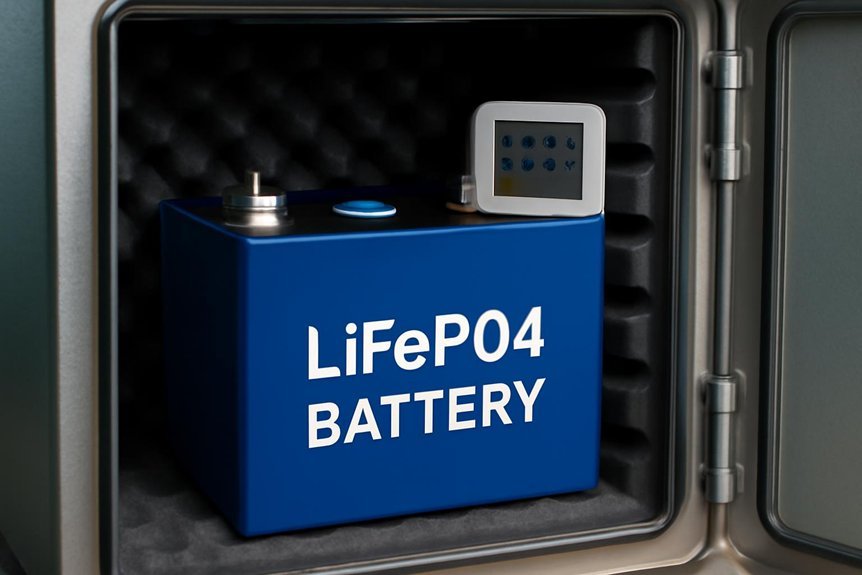
LiFePO4 batteries, also known as lithium iron phosphate batteries, operate through a reversible electrochemical reaction involving lithium ions migrating between the anode and cathode during charge and discharge cycles. This process hinges on Lifepo4 chemistry, which offers stable voltage and high thermal stability, reducing risks of thermal runaway. Proper storage is essential because it directly influences battery lifespan; exposure to extreme temperatures or full charge can accelerate capacity fade. Maintaining ideal storage conditions minimizes internal stress and preserves electrochemical integrity. During storage, the battery’s chemistry remains stable when kept at moderate states of charge and controlled temperatures, preventing degradation of active materials. Understanding how these batteries work emphasizes the importance of proper storage to maximize longevity and performance.
Choosing the Right Storage Environment for Your Lithium Iron Phosphate Battery
Selecting an appropriate storage environment for lithium iron phosphate batteries is critical to maintaining their performance and longevity. Ideal storage temperature typically ranges between 0°C and 25°C, as extreme temperatures accelerate degradation and reduce battery lifespan. Humidity levels should be kept low to prevent moisture ingress, which can cause internal corrosion. Using a protective casing shields the battery from physical damage and environmental impact. Maintaining stable temperature and humidity minimizes adverse effects on discharge rates and extends the number of charging cycles the battery can endure. Additionally, storage conditions influence usage frequency; consistent conditions help preserve capacity over time. Proper environment control reduces stress on the battery, ensuring reliable performance and prolonged service life while minimizing degradation caused by fluctuating environmental factors.
Optimal Voltage and State of Charge for Long-Term Storage
Maintaining the correct voltage and charge level is critical for long-term LiFePO₄ battery storage, as it directly affects cell chemistry stability. We recommend keeping the voltage within the range of 3.20 to 3.40 volts per cell and maintaining a charge level around 50-60% to minimize capacity loss. Avoid fully discharging the battery, since deep discharge can cause irreversible damage and reduce overall lifespan.
Ideal Storage Voltage Range
When storing LiFePO4 batteries for an extended period, maintaining a suitable voltage range is crucial to preserve their capacity and lifespan. The best voltage for long-term storage generally falls between 3.2V and 3.3V per cell, minimizing capacity loss and degradation over time. As storage duration increases, the importance of precise voltage control becomes more critical.
Key considerations include:
- The suitable voltage stabilizes chemical reactions within the battery, preventing capacity fade.
- Maintaining this voltage range reduces the risk of internal resistance buildup and capacity loss.
- Longer storage durations necessitate regular voltage checks to confirm the battery remains within this preferred window, avoiding deep discharge or overcharge conditions that could impair lifespan.
Optimal Charge Level
To guarantee LiFePO4 batteries remain in peak condition during long-term storage, we need to focus on maintaining their state of charge (SOC) at a carefully controlled level. The ideal charge level for storage typically falls between 40% and 60% SOC, minimizing stress on the battery’s chemistry. Maintaining this range reduces the number of harmful charging cycles and mitigates capacity fade over time. Temperature effects are critical; storing batteries at moderate temperatures (around 15°C to 25°C) helps stabilize voltage and prevents thermal degradation. Avoiding high or fluctuating temperatures minimizes adverse chemical reactions, ensuring the battery’s longevity. Consistent monitoring and periodic top-ups within this ideal voltage window further preserve capacity, making this charge level essential for effective long-term storage.
Avoid Full Discharge
Avoiding full discharge is essential because discharging LiFePO4 batteries below their safe voltage threshold causes irreversible chemical changes that degrade capacity and shorten lifespan. Deep discharge initiates detrimental reactions within the electrode material, accelerating capacity fade. To optimize battery longevity, maintaining a proper state of charge during storage is critical.
- Keep the voltage above 2.5V per cell to prevent chemical instability.
- Limit discharge cycles by avoiding unnecessary deep discharges, which accelerate capacity loss.
- Store at a partial state of charge, around 50-60%, to balance chemical stability and capacity retention.
Best Practices for Preparing Your LiFePO4 Battery Before Storage
Preparing your LiFePO4 battery properly before storage is vital to maintain its longevity and performance. Effective battery maintenance begins with confirming the battery is at an ideal state of charge, typically around 50-60%, to prevent capacity loss. Before storing, clean the terminals to remove any corrosion, and verify the voltage is within this recommended range. Choose appropriate storage containers that are non-conductive, dry, and ventilated to prevent moisture buildup and thermal issues. It’s important to disconnect the battery from all loads and make sure it’s stored in a cool, stable environment to minimize degradation. Regularly inspecting the storage setup and maintaining proper environmental conditions will help preserve the battery’s health over extended periods.
How to Maintain Battery Health During Extended Storage Periods
Maintaining ideal battery health during extended storage requires consistent monitoring and proactive management of key parameters. Proper battery maintenance during prolonged storage minimizes capacity loss and prolongs lifespan, especially over extended storage durations. To enhance storage conditions, regularly check voltage levels, aiming for a state of charge around 50-60%. Temperature control is crucial; keep batteries in a cool, dry environment, ideally between 0°C and 25°C, as temperature fluctuations accelerate capacity degradation. Additionally, periodic partial recharges prevent voltage sag and electrolyte stratification.
Regular monitoring and controlled storage conditions preserve battery health during long-term storage.
- Monitor voltage and capacity levels periodically to detect early signs of deterioration
- Keep the storage environment temperature stable and within recommended ranges
- Perform partial recharges every few months to sustain optimal cell chemistry
Common Mistakes to Avoid When Storing LiFePO4 Batteries
Proper storage practices for LiFePO4 batteries demand careful attention to detail, as even small mistakes can markedly reduce their lifespan and performance. Common misconceptions about battery storage, such as the belief that batteries can be stored at any charge level or indefinitely without maintenance, lead to reduced cycle life. Overlooking ideal storage duration, especially neglecting to periodically recharge batteries stored for extended periods, accelerates capacity loss. Additionally, many assume that temperature fluctuations are harmless; however, high or low temperatures can cause electrolyte degradation or internal damage. Failing to understand these nuances results in diminished battery health. Avoid these pitfalls by adhering to recommended storage guidelines, maintaining appropriate charge levels, and monitoring storage duration to preserve LiFePO4 battery longevity.
Safe Handling and Protective Measures for Storage Areas
Effective storage of LiFePO4 batteries requires ensuring proper ventilation to prevent the buildup of potentially hazardous gases. Fire safety precautions, including fire-resistant enclosures and accessible extinguishers, are essential to mitigate the risk of thermal incidents. By implementing these protective measures, we can greatly reduce safety hazards in storage areas.
Proper Ventilation Essential
Since lithium iron phosphate (LiFePO4) batteries can release flammable gases if malfunctioning or damaged, guaranteeing adequate ventilation in storage areas is crucial for safety. Proper airflow management prevents gas accumulation, reducing fire risk and toxic exposure. Effective ventilation systems must be designed to maintain consistent airflow, avoiding stagnant air pockets. Regular inspection of vents and fans guarantees peak operation. Additionally, storage spaces should be positioned in areas with natural ventilation, such as well-ventilated rooms or outdoor shelters. To enhance safety, consider installing gas detection sensors that trigger alarms when dangerous concentrations are detected. These measures collectively enhance airflow management, minimizing hazards associated with gas buildup and guaranteeing a safe environment for handling and storage.
Fire Safety Precautions
To guarantee safety when handling and storing LiFePO4 batteries, we must implement strict fire safety precautions that address potential risks associated with thermal runaway, electrical faults, and physical damage. Proper storage involves using fire-resistant storage containers and ensuring environmental factors like temperature and humidity are controlled. Keep heat sources away from batteries and avoid physical impacts that could damage battery insulation. Fire hazards demand accessible fire extinguishers suitable for electrical fires and extensive emergency procedures. Additionally, always wear safety gear during handling.
| Precaution | Details |
|---|---|
| Storage containers | Use fire-resistant, ventilated enclosures |
| Environmental factors | Maintain stable temperature, avoid heat sources |
| Fire safety equipment | Keep fire extinguishers and safety gear nearby |
Monitoring Your Battery’s Condition During Storage
Monitoring your LiFePO4 battery’s condition during storage is vital to guarantee maximum performance and longevity. Regular assessments help maintain battery health and prevent deterioration over extended storage durations. We recommend measuring voltage levels periodically, ideally every few months, to detect any voltage sag that indicates capacity loss. Additionally, monitoring internal resistance provides insight into cell degradation, as increased resistance signals declining battery health. Temperature fluctuations should also be tracked, since excessive heat accelerates aging, while cold may cause capacity reduction. Consistent recording of these parameters allows for early detection of potential issues, enabling timely intervention to preserve peak battery performance. Proper monitoring during storage ultimately extends the lifespan and reliability of your LiFePO4 batteries, safeguarding your investment and ensuring readiness when needed.
When and How to Properly Recondition or Reuse Stored LiFePO4 Batteries
When stored batteries show signs of reduced capacity or uneven voltage distribution, it’s crucial to recondition or reuse them properly to maximize their battery lifespan and guarantee safety. Reconditioning techniques involve carefully discharging and recharging the battery to restore its electrochemical balance, often using a specialized charger with voltage and current regulation. Before reusing, perform capacity testing to assess whether the battery retains sufficient performance. If capacity remains below ideal, reconditioning can rejuvenate the cells, extending their service life. Proper procedures include balancing cells, performing voltage equalization, and monitoring temperature during reconditioning cycles. These steps help prevent potential safety hazards and enhance the efficiency of reused LiFePO4 batteries while safeguarding their longevity.
Frequently Asked Questions
How Often Should I Check My Stored Lifepo4 Batteries?
We recommend checking our stored Lifepo4 batteries monthly, following a strict maintenance schedule to prevent capacity loss, guarantee peak performance, and maximize battery lifespan through early detection of potential issues like voltage imbalance or corrosion.
Can Lifepo4 Batteries Be Stored Outdoors Safely?
We’d advise against outdoor storage for LiFePO4 batteries, as outdoor conditions can cause corrosion and degradation. Consistent battery maintenance, including temperature regulation and moisture control, is essential for longevity and safety during outdoor storage.
What Temperature Fluctuations Are Safe for Lifepo4 Storage?
We recommend maintaining a safe temperature range of 0°C to 25°C for Lifepo4 storage, as temperature fluctuations outside this can cause capacity loss and impact lifespan. Consistent, moderate temperatures preserve battery health effectively.
How Long Can Lifepo4 Batteries Be Stored Without Recharging?
Like a fine wine, LiFePO4 batteries can be stored for up to a year without recharge if kept at ideal temperatures, preserving battery lifespan and storage capacity. Regular checks guarantee performance remains stable over extended periods.
Are There Specific Storage Containers Recommended for Lifepo4 Batteries?
We recommend using fire-resistant, sealed, and vented containers made from non-conductive materials like polypropylene, following strict safety precautions to prevent short circuits and thermal runaways, ensuring safe, ideal storage of LiFePO4 batteries.
Conclusion
In conclusion, proper storage of LiFePO4 batteries is vital for maintaining their longevity and performance. By controlling temperature, voltage, and environmental conditions, we guarantee they remain reliable—much like a well-preserved manuscript in a Victorian library. Regular inspections, protective measures, and mindful handling are essential. With diligent care, your batteries will stay healthy, ready to power your projects, much like a finely tuned instrument waiting for its next symphony.