Ensuring ideal storage conditions for LiFePO4 batteries requires careful attention to temperature, humidity, and state of charge. Proper management can greatly extend their lifespan and maintain performance. Each factor plays a vital role in preventing degradation and capacity loss over time. Understanding these parameters is essential for effective storage. To fully grasp the best practices and avoid common pitfalls, it’s important to explore the specific recommendations that enhance longevity and safety in battery storage.
Key Takeaways
- Store LiFePO4 batteries at a partial charge of 40-60% to prolong lifespan.
- Keep storage in a cool, dry environment between 0°C and 25°C to prevent damage.
- Avoid exposure to high humidity, extreme temperatures, and corrosive elements.
- Regularly monitor voltage and temperature every 3 to 6 months during storage.
- Disconnect batteries and ensure proper ventilation for safety and maintenance.
How Do LiFePO4 Batteries Need to Be Stored for Longevity?
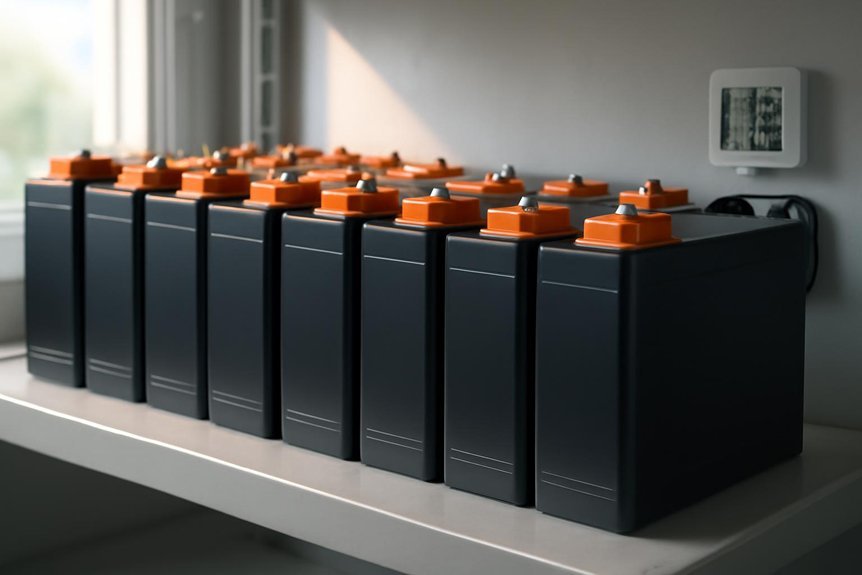
Although LiFePO4 batteries are known for their long cycle life and stability, proper storage is essential to maximize their longevity. The battery lifespan greatly depends on maintaining a suitable storage environment that minimizes self-discharge and degradation. We recommend storing the batteries at a partial state of charge, typically around 50%, to prevent capacity loss. The storage environment should be dry, clean, and protected from electromagnetic interference, avoiding high humidity and exposure to corrosive elements. Ensuring the batteries are stored in a secure, temperature-controlled setting further preserves their integrity. Proper storage practices reduce internal stress, slow capacity fade, and extend overall lifespan, enabling consistent performance and reliable operation over prolonged periods.
What Temperature Conditions Are Ideal for LiFePO4 Battery Storage?
Maintaining ideal temperature conditions is essential for preserving the performance and longevity of LiFePO4 batteries during storage. Preferred storage temperatures range between 0°C and 25°C, as exposure to temperature extremes accelerates capacity fade and degrades internal components. Temperatures above 25°C can cause thermal stress, while sub-zero conditions risk internal damage and reduced efficiency. Humidity levels should also be controlled; high humidity increases the risk of corrosion and moisture ingress, which compromise battery integrity. We recommend storing LiFePO4 batteries in a dry, temperature-controlled environment with stable conditions, avoiding rapid fluctuations. Consistent, moderate temperatures combined with low humidity help maintain chemical stability and extend battery lifespan, ensuring reliable performance over time.
How Should You Maintain the Proper State of Charge During Storage?
Maintaining an ideal state of charge during storage involves keeping the battery at a partial charge level, typically around 50-70%. We also need to regularly monitor storage conditions such as temperature and voltage to prevent capacity loss. Proper management of these factors guarantees the longevity and performance of LiFePO4 batteries over time.
Maintain Partial Charge Level
When storing LiFePO4 batteries, it’s crucial to keep them at a partial charge level rather than fully charged or completely drained. This approach aligns with the battery chemistry, which favors a state of charge around 40-60% for long-term storage, minimizing stress and degradation. Maintaining this partial charge reduces the risk of capacity loss caused by overcharging or deep discharging. Additionally, it helps preserve the number of charge cycles the battery can sustain over its lifespan. Fully charged batteries during storage can accelerate capacity fade, while depleted ones are prone to internal damage. Regularly verifying and adjusting the charge level guarantees peak preservation, supporting the longevity and performance of LiFePO4 cells during periods of inactivity.
Monitor Storage Conditions
To guarantee the ideal state of charge during storage, we must actively monitor environmental conditions and battery parameters. This involves consistent monitoring of humidity levels to prevent moisture ingress, which can lead to corrosion or capacity loss. Additionally, we must track temperature fluctuations, as extreme or inconsistent temperatures accelerate degradation or cause safety concerns. Maintaining a stable environment with controlled humidity—preferably between 45-55%—and moderate temperatures around 20°C (68°F) minimizes stress on the battery cells. Regularly measuring voltage and internal resistance helps detect early signs of imbalance or capacity drift. By systematically overseeing these factors, we can preserve battery health during storage, ensuring peak performance and longevity upon reuse.
What Are Common Mistakes to Avoid When Storing LiFePO4 Batteries?
Improper storage practices can considerably diminish the lifespan and performance of LiFePO4 batteries. Common mistakes include neglecting proper voltage levels, leading to discharging errors or overcharging, which can cause capacity loss. Inadequate temperature control during storage also accelerates degradation. To avoid these issues, follow precise charging practices—keeping batteries at a state of charge between 40-60% for extended periods. Additionally, avoid frequent deep discharges before storage, as they stress the cells.
| Mistake | Consequence |
|---|---|
| Discharging below recommended levels | Capacity reduction and damage |
| Ignoring ideal charge levels | Accelerated aging and capacity loss |
| Storing at extreme temperatures | Increased chemical degradation |
How Can You Ensure Safety When Handling Stored LiFePO4 Batteries?
Handling stored LiFePO4 batteries safely requires strict adherence to proper safety protocols to prevent accidents, chemical exposure, or damage. Always wear appropriate safety gear, including gloves and safety goggles, to protect against potential leaks or thermal events. Before handling, confirm the batteries are disconnected and stored in a well-ventilated area away from heat sources. Familiarize yourself with emergency procedures, such as how to contain a thermal runaway or leak, and have fire extinguishing equipment readily available. Use insulated tools to avoid short circuits, and never puncture or disassemble batteries. Regularly review safety guidelines and verify all personnel are trained. Proper handling minimizes risks, ensuring safe storage and maintenance of LiFePO4 batteries.
How Often Should You Check and Maintain Your Stored LiFePO4 Batteries?
Regular inspection and maintenance are essential to guarantee the longevity and safe operation of stored LiFePO4 batteries. To preserve battery health, we recommend checking your batteries at least every 3 to 6 months, depending on storage conditions. Consistent monitoring guarantees early detection of voltage drops, temperature anomalies, or capacity loss. The following table summarizes maintenance frequency and key checks:
| Check Interval | Key Actions | Expected Outcomes |
|---|---|---|
| Every 3-6 months | Measure voltage, inspect terminals | Confirm stable battery health |
| Annually | Full capacity testing | Assess overall performance |
| As needed | Visual inspection for corrosion | Prevent potential failures |
Adhering to this schedule maintains ideal battery health and safety.
Frequently Asked Questions
How Long Can Lifepo4 Batteries Be Stored Without Significant Capacity Loss?
Lifepo4 batteries can be stored for up to a year without significant capacity loss, provided we maintain an ideal temperature around 20°C and limit self-discharge rate, which is relatively low compared to other lithium-ion chemistries.
What Are the Signs of Deteriorating Lifepo4 Batteries During Storage?
We observe deteriorating Lifepo4 batteries during storage when battery health declines, indicated by reduced capacity, increased internal resistance, or voltage imbalances, especially if stored outside ideal storage temperature ranges. Monitoring these signs helps maintain longevity.
Can Lifepo4 Batteries Be Stored in a Discharged State Safely?
We believe storing LiFePO4 batteries in a partially charged, not fully discharged state, guarantees ideal battery safety and longevity. Fully discharging can be a recipe for trouble, so maintaining a safe, balanced charged level is always best.
What Types of Storage Containers Are Best for Lifepo4 Batteries?
We recommend using battery-compatible, non-conductive, vented containers for LiFePO4 batteries, maintaining ideal storage temperatures around 20°C to prevent thermal risks, ensuring safety and longevity during storage.
How Does Humidity Affect the Storage Life of Lifepo4 Batteries?
Humidity accelerates battery degradation, so we emphasize humidity control and moisture absorption measures. Excess moisture causes corrosion and capacity loss, underscoring the importance of meticulous storage conditions to extend Lifepo4 batteries’ lifespan.
Conclusion
By following these storage guidelines, we can extend the lifespan of LiFePO4 batteries to astonishing levels, ensuring they remain reliable and efficient for years to come. Proper temperature, charge level, and regular maintenance are essential—think of it as giving your batteries a supercharged shield against internal wear and tear. Neglecting these details could lead to rapid degradation, but with diligent care, your batteries will perform like new, defying the test of time itself.