It’s a coincidence that proper maintenance can greatly extend the lifespan of LiFePO4 batteries, yet many overlook the critical details involved. Ensuring consistent charging practices, monitoring voltage and temperature, and maintaining a clean storage environment are essential steps that demand precision. Neglecting these can lead to reduced performance or early failure, so understanding the best practices becomes crucial. Let’s explore how to implement these strategies effectively to maximize your battery’s longevity and reliability.
Key Takeaways
- Maintain charge levels between 40-60% during storage to reduce aging and stress.
- Regularly monitor voltage and temperature to prevent overcharging and overheating.
- Use regulated chargers with proper voltage and current settings for safe charging.
- Inspect terminals for corrosion, clean connections, and replace damaged batteries promptly.
- Avoid deep discharges below 20% and limit DoD to extend battery lifespan.
How to Properly Charge and Discharge Your Lifepo4 Battery
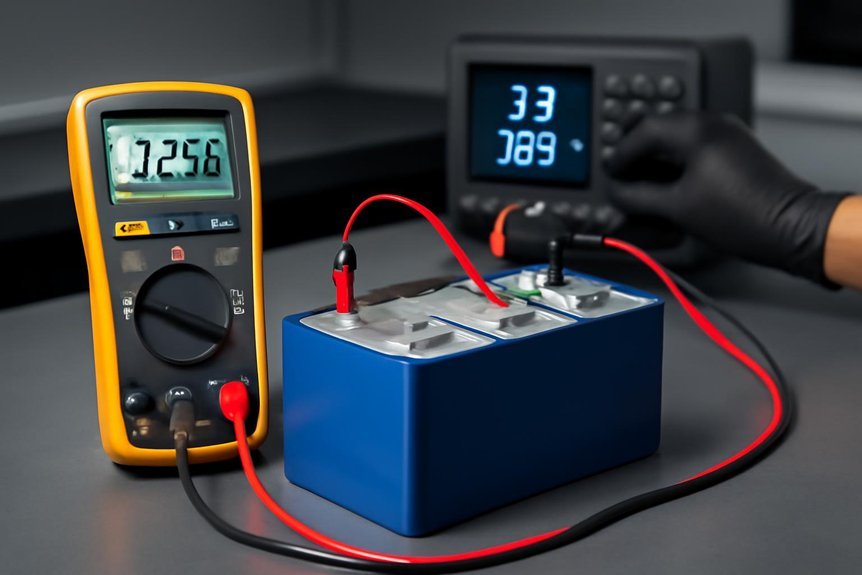
To guarantee peak performance and longevity of your Lifepo4 battery, it is essential to follow proper charging and discharging protocols. Effective charging techniques involve maintaining a consistent charge current and avoiding overcharging beyond 3.65V per cell, which can degrade the battery. Enhanced discharge cycles entail limiting depth of discharge (DoD) to prevent capacity loss, ideally keeping it below 80%. Frequent shallow discharge cycles preserve battery health better than deep discharges. Using regulated chargers with appropriate voltage and current settings guarantees safety and efficiency. Monitoring voltage levels during charging and discharging helps prevent overstress. Adhering to these precise charging techniques and managing discharge cycles minimizes capacity fade, enhances cycle life, and sustains peak performance over the battery’s lifespan.
Maintaining Optimal Operating Voltage and Temperature
To guarantee ideal performance and longevity, we must regularly monitor voltage levels to prevent overcharging or deep discharging. Maintaining the battery’s operating temperature within specified ranges is critical to avoid capacity loss and thermal stress. By controlling these parameters, we can greatly enhance the lifespan and efficiency of the Lifepo4 battery.
Monitor Voltage Levels Regularly
Regularly monitoring voltage levels is crucial for maintaining the ideal performance and longevity of Lifepo4 batteries. Voltage fluctuations can indicate underlying issues, such as overcharging or deep discharging, which compromise battery health. Precise voltage measurements help detect deviations from peak operating ranges, allowing timely interventions to prevent capacity loss or damage. Consistent monitoring guarantees that the battery remains within specified voltage thresholds, directly impacting overall battery performance. Using accurate multimeters or integrated monitoring systems, we can track voltage trends over time, identifying potential problems before they escalate. This proactive approach helps extend battery life and maintains reliable power output. Adhering to strict voltage monitoring routines is a fundamental best practice for sustainable and efficient Lifepo4 battery operation.
Control Operating Temperature
Controlling the operating temperature of Lifepo4 batteries is essential because temperature fluctuations directly influence voltage stability and overall performance. Effective thermal management guarantees batteries operate within ideal temperature ranges, preventing capacity loss or safety hazards. Using temperature sensors allows real-time monitoring, enabling prompt adjustments. To maintain proper temperature, we recommend:
- Installing temperature sensors at critical points for accurate readings.
- Implementing active cooling or heating systems based on sensor data.
- Providing proper ventilation to dissipate heat during high load conditions.
- Regularly inspecting thermal management components for signs of wear or malfunction.
Regular Inspection and Battery Health Monitoring
Regular inspection involves checking for corrosion signs on terminals and connections, which can compromise battery performance and safety. Consistently monitoring voltage levels helps detect abnormalities that may indicate capacity loss or internal issues. Implementing these practices guarantees early identification of potential problems, extending battery lifespan and reliability.
Check for Corrosion Signs
To guarantee peak performance and safety, we must routinely inspect LiFePO4 batteries for signs of corrosion, which can indicate underlying issues or deterioration. Corrosion types, such as white powdery residue or greenish deposits, often result from electrolyte leaks or environmental exposure. Recognizing these signs early helps prevent further damage. Prevention methods include maintaining proper ventilation, applying dielectric coatings, and ensuring secure terminal connections. Additionally, look for:
- Discolored or crusty terminal surfaces
- Unusual buildup around contact points
- Loose or corroded terminal bolts
- Visible corrosion on battery casing or terminals
Regular inspections enable us to identify corrosion signs promptly, allowing for targeted maintenance and extending battery lifespan. Staying vigilant minimizes risks associated with corrosion, ensuring reliable operation.
Monitor Voltage Levels Regularly
Monitoring voltage levels consistently provides a clear indication of the battery’s overall health and performance. By regularly checking the voltage, we can detect voltage fluctuations that may signal underlying issues, such as reduced battery capacity or internal cell imbalance. Stable voltage levels generally reflect a healthy state, whereas significant deviations could indicate degradation or impending failure. Maintaining accurate records of voltage readings over time helps us identify trends, enabling proactive maintenance. Monitoring also allows us to verify that the battery operates within the manufacturer’s specified voltage range, ensuring maximum efficiency. Regular inspection of voltage levels is essential for preventing unexpected performance drops, extending battery lifespan, and maintaining reliable operation of the Lifepo4 system.
Best Practices for Storage and Long-Term Maintenance
Proper storage and long-term maintenance of LiFePO4 batteries are essential to preserve their performance and lifespan. Effective battery storage requires specific conditions to prevent capacity loss and degradation. Here are key maintenance tips:
Proper storage and maintenance are vital for maximizing LiFePO4 battery lifespan and performance.
- Store batteries at a state of charge around 40-60% to minimize stress during prolonged periods.
- Keep the storage environment cool, ideally between 0°C and 25°C, avoiding extreme temperatures that accelerate aging.
- Make sure the batteries are in a dry, clean location to prevent moisture-related damage.
- Periodically check voltage levels and recharge if voltage drops below recommended thresholds, maintaining ideal charge for long-term health.
Adhering to these best practices for storage and maintenance guarantees longevity and reliable performance of your LiFePO4 batteries.
Troubleshooting Common Lifepo4 Battery Issues
Despite following ideal storage and maintenance practices, LiFePO4 batteries can still encounter issues that affect their performance. Troubleshooting techniques are essential for identifying underlying problems quickly and accurately. Common indicators include reduced capacity, inconsistent voltage, or abnormal heating during operation. We recommend first verifying the battery’s state of charge and inspecting for physical damage or corrosion on terminals. Using a multimeter, check voltage levels against manufacturer specifications to detect imbalance or deterioration. If issues persist, consider conducting a load test to evaluate battery performance under load conditions. These diagnostic steps help isolate faults and determine whether the problem stems from internal cell degradation, faulty connections, or external factors. Precise troubleshooting guarantees peak performance and extends the lifespan of LiFePO4 batteries.
Enhancing Lifepo4 Battery Lifespan Through Proper Usage
To maximize the lifespan of LiFePO4 batteries, adopting correct usage habits is crucial. Understanding the battery chemistry informs ideal practices that prevent capacity fade and degradation. Adherence to usage guidelines guarantees longevity and maintains performance.
Key practices include:
- Avoid deep discharges below 20%, as excessive cycling stresses the battery chemistry.
- Keep charge levels between 30% and 80% to minimize stress and prolong cycle life.
- Use a compatible charger with proper voltage and current specifications.
- Store batteries in a cool, dry environment, especially during long-term inactivity, to prevent capacity loss.
Implementing these guidelines preserves battery integrity, reduces degradation rates, and maximizes operational lifespan through informed, precise usage aligned with battery chemistry principles.
Frequently Asked Questions
How Do Environmental Factors Affect Lifepo4 Battery Performance?
Environmental factors like temperature extremes and humidity effects substantially influence Lifepo4 battery performance, causing capacity loss and degradation. We monitor and control these factors to guarantee peak operation, emphasizing the importance of stable conditions for longevity.
What Safety Precautions Should Be Taken During Battery Maintenance?
Did you know proper battery handling reduces risks by 50%? We always wear safety gear like gloves and goggles, follow strict protocols, and avoid short circuits to guarantee safe maintenance of LiFePO4 batteries.
Can Lifepo4 Batteries Be Recycled or Reused After End of Life?
We can recycle LiFePO4 batteries through specialized recycling processes that extract valuable materials, and reuse strategies involve refurbishing cells or repurposing modules, ensuring environmental sustainability and resource efficiency at the end of their operational life.
How Often Should I Recalibrate My Battery Management System?
We recommend recalibrating the battery management system every 3 to 6 months to guarantee accurate monitoring of battery health. Regular calibration prevents misreadings, optimizes performance, and enhances lifespan, making precise battery calibration frequency essential for reliable operation.
Are There Specific Brands or Models Recommended for Longevity?
We recommend researching brand comparisons and model reviews for longevity, focusing on reputable manufacturers like A123, Winston, and CALB. These brands consistently deliver durable Lifepo4 batteries, supported by technical specifications and long-term user performance data.
Conclusion
By following these meticulous maintenance practices, we can guarantee our LiFePO4 batteries perform at their absolute peak—outlasting and outperforming even the most advanced energy storage systems in history. Proper charging, vigilant monitoring, and careful storage aren’t just routine; they’re the secret weapons to releasing maximum lifespan and reliability. Neglect these, and even the most robust batteries risk premature failure—so let’s commit to precision and care for unrivaled performance that defies time itself.