Many beginners assume that maintaining LiFePO4 batteries is complicated or unnecessary, but with proper understanding and routine care, these batteries can deliver exceptional longevity and safety. To maximize their lifespan and performance, it’s vital to follow specific charging, storage, and monitoring practices, which may seem technical at first glance. Recognizing the importance of these details can make a significant difference in your overall experience—so let’s explore the essential steps to keep your batteries in ideal condition.
Key Takeaways
- Use a compatible charger and avoid overcharging or deep discharging beyond recommended voltage levels.
- Store batteries in a cool, dry place with around 50-60% charge to prevent capacity loss.
- Regularly monitor voltage, temperature, and cycle count to maintain optimal battery health.
- Handle batteries carefully, wear protective gear, and prevent punctures or short circuits during use and disposal.
- Utilize a Battery Management System (BMS) for safety, cell balancing, and early fault detection.
What Are LiFePO4 Batteries and Why Are They a Good Choice?
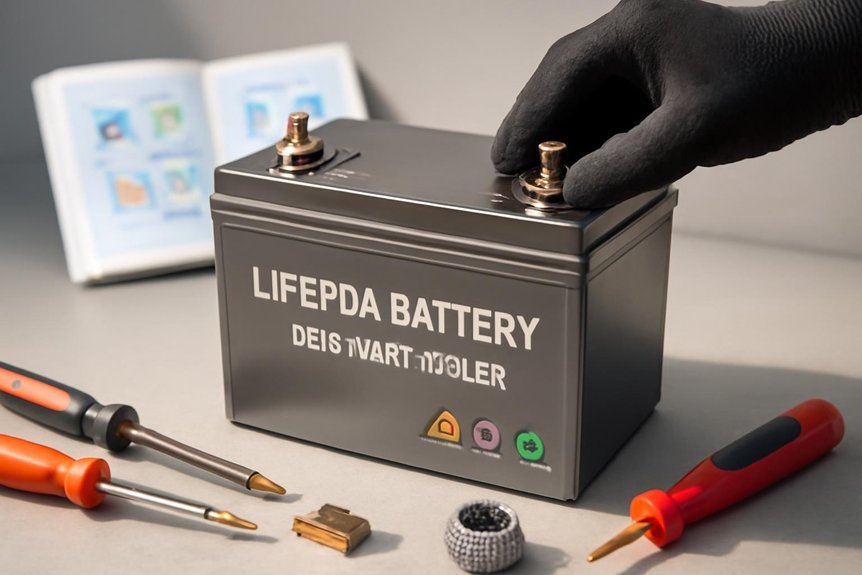
LiFePO4 batteries, also known as lithium iron phosphate batteries, are a type of rechargeable lithium-ion battery distinguished by their cathode chemistry, which offers enhanced thermal stability and safety. They provide a reliable balance of energy density and safety features, making them suitable for various applications. Their superior thermal stability reduces the risk of overheating and thermal runaway, while their long cycle life guarantees consistent performance over thousands of charge-discharge cycles. These batteries have a lower environmental impact due to less toxic materials and improved recyclability. Cost efficiency is achieved through durability and reduced maintenance needs. Additionally, their performance consistency and fast charging speed make them an attractive choice for demanding environments, where safety and longevity are essential.
How to Properly Charge Your LiFePO4 Battery for Longevity
Maintaining proper charging practices is essential to maximizing the lifespan and performance of your LiFePO4 battery. Effective charging techniques prevent overcharging and deep discharges, which can degrade the battery’s chemistry over time. To optimize battery lifespan, make certain you use a compatible charger with precise voltage regulation—typically around 14.6V for full charge. Regularly monitor the state of charge, avoiding charging above 100% or discharging below 20%. Keep the battery in a stable, cool environment during charging to prevent thermal stress. Additionally, follow manufacturer guidelines for charge rates and avoid rapid charging unless specified. Properly managing these aspects helps sustain capacity and prolongs the overall durability of your LiFePO4 battery.
Proper charging practices extend LiFePO4 battery life and performance by preventing overcharge, deep discharge, and thermal stress.
- Visualize a steady, controlled current flowing into the battery, maintaining a safe voltage threshold
- Imagine a temperature sensor preventing overheating during fast charging
- Envision a charger with an automatic cutoff, stopping when fully charged
- Think of a battery sitting in a cool, ventilated space during the process
- Picture precise digital readouts showing real-time voltage and current levels
Best Practices for Maintaining Optimal Battery Voltage Levels
To guarantee your battery operates at its peak efficiency and longevity, we must carefully manage its voltage levels within the ideal range. Precise voltage calibration guarantees the battery’s voltage readings are accurate, allowing effective monitoring. Regular battery monitoring involves tracking voltage levels using a reliable multimeter or a dedicated battery management system (BMS) to detect undercharging or overcharging conditions. Maintaining voltage within the recommended 3.2V to 3.6V per cell prevents capacity loss and thermal stress. Consistent voltage calibration helps guarantee that voltage measurements reflect true battery health, enabling timely interventions. Implementing automated alerts for voltage deviations and conducting periodic voltage checks are best practices to sustain peak performance and extend lifespan. Proper voltage management is essential for maximizing your LiFePO4 battery’s efficiency.
How to Store LiFePO4 Batteries When Not in Use
Proper storage practices are crucial for preserving the health and longevity of your LiFePO4 batteries when they are not in active use. Maintaining ideal storage conditions prevents capacity loss and extends battery lifespan. Store batteries in a cool, dry environment, ideally between 0°C and 25°C, avoiding extreme heat or cold which can degrade internal components. Make sure the batteries are partially charged to around 50-60%; storing them fully charged or completely discharged accelerates capacity fade. Use a well-ventilated container to prevent moisture buildup. Regularly check the stored batteries for voltage stability and recharge if voltage drops considerably.
- Cool, dry location with stable temperature
- Avoid direct sunlight and humidity
- Use a fire-resistant storage container
- Periodic voltage checks and recharging
- Keep terminals insulated to prevent short circuits
Common Mistakes to Avoid During LiFePO4 Battery Upkeep
One of the most common mistakes during LiFePO4 battery upkeep is neglecting regular voltage monitoring, which can cause unbalanced cells and diminished capacity over time. Proper battery care requires adherence to maintenance tips that include consistent voltage checks, ensuring cells remain within ideal charge ranges. Many fall prey to charging myths, such as overcharging or frequently discharging below recommended levels, which negatively impact lifespan factors. Ignoring safety precautions, like improper handling or inadequate ventilation, can lead to hazards and environmental impact concerns. Following precise usage guidelines and avoiding shortcuts during charging and discharging enhance performance and extend the battery’s longevity. Awareness of these pitfalls is essential for effective maintenance, ultimately supporting safe operation, environmental responsibility, and sustained battery efficiency.
How to Monitor Your Battery’s Health and Performance
To effectively monitor your Lifepo4 battery’s health, we recommend regularly checking voltage levels to detect potential issues early. Tracking the number of charge cycles and observing temperature fluctuations provide insights into the battery’s aging process and operational stability. These precise measurements enable proactive maintenance, ensuring peak performance and longevity.
Check Voltage Regularly
Regularly checking the voltage of your Lifepo4 battery is crucial for evaluating its health and performance. Voltage monitoring provides real-time data on the cell’s state of charge, enabling early detection of potential issues that could compromise battery safety. To effectively monitor, use a multimeter with precise readings, ensuring connections are stable and contacts clean. Visualize the process:
- Connecting probes to battery terminals with minimal resistance
- Noticing a voltage consistently below 3.2V per cell, indicating undercharge
- Observing voltage spikes during high load, signaling possible imbalance
- Recording voltage at rest for accurate state-of-charge assessment
- Comparing readings to manufacturer specifications for ideal performance
This diligent voltage monitoring helps maintain battery safety, prolongs lifespan, and prevents unexpected failures. Staying vigilant with voltage checks is an essential step in responsible Lifepo4 upkeep.
Track Charging Cycles
Tracking the number of charging cycles your Lifepo4 battery undergoes provides a critical metric for evaluating its overall health and longevity. Cycle tracking involves recording each complete charge and discharge cycle, which directly impacts the battery’s lifespan. By maintaining detailed logs or using battery management systems (BMS) with cycle counting features, we can accurately monitor cumulative cycle counts. This data allows us to predict when the battery may experience capacity fade or require replacement, thereby optimizing maintenance schedules. Understanding the relationship between cycle count and battery degradation helps us avoid unnecessary early replacements and extend the battery’s functional life. Regular cycle tracking is essential for informed management, ensuring longevity and reliable performance of your Lifepo4 battery over time.
Observe Temperature Changes
Monitoring temperature changes in your Lifepo4 battery provides essential insights into its health and performance. Effective temperature monitoring allows us to detect abnormal thermal patterns that may indicate internal issues or inadequate thermal management. During operation, keep an eye on these thermal cues:
- Sudden spikes in temperature during charging or discharging
- Persistent high temperatures in specific cells
- Uneven temperature distribution across the battery pack
- Rapid temperature fluctuations under steady load
- Elevated thermal readings during storage or idle periods
Tips for Safe Handling and Disposal of LiFePO4 Batteries
Handling LiFePO4 batteries safely requires strict adherence to established protocols to prevent accidents and environmental harm. We recommend wearing appropriate personal protective equipment, such as gloves and eye protection, during handling and disposal. Always use insulated tools to prevent short circuits, and avoid puncturing or crushing the battery, as internal damage can lead to thermal events. When disposing of LiFePO4 batteries, follow local recycling options and regulations—many facilities accept batteries for environmentally safe recycling, preventing hazardous waste. Proper storage during disposal is vital; keep batteries in a cool, dry, well-ventilated area away from flammable materials. Implementing these safety precautions minimizes risks, protects ecosystems, and guarantees responsible battery management at the end of their lifecycle.
The Role of Battery Management Systems (BMS) in LiFePO4 Maintenance
Battery Management Systems (BMS) serve as the core control units that oversee the performance, safety, and longevity of LiFePO4 batteries. They monitor essential parameters such as voltage, current, and temperature, ensuring ideal Battery Safety and efficient operation. BMS Features include balancing cells, protecting against overcharge or discharge, and maintaining accurate Voltage Regulation. These functions directly enhance Charging Efficiency by preventing energy loss and reducing stress on individual cells. Proper BMS operation contributes to Lifespan Extension, minimizing degradation over time. Visualize a BMS as a vigilant guardian—constantly balancing, adjusting, and safeguarding. Its role is pivotal in:
- Preventing thermal runaway
- Ensuring uniform cell voltage
- Enhancing charge cycles
- Detecting faults promptly
- Maintaining consistent performance
Troubleshooting Typical LiFePO4 Battery Issues
When diagnosing LiFePO4 battery issues, we focus on common charging problems such as incomplete charging cycles, voltage irregularities, or temperature anomalies. We also look for clear signs of degradation like capacity loss, increased internal resistance, or uneven cell voltage. Addressing these indicators systematically helps maintain peak performance and prolongs battery lifespan.
Common Charging Problems
Despite their robustness, LiFePO4 batteries can encounter common charging issues that hinder peak performance. These problems often relate to reduced charging efficiency and voltage fluctuations, which can compromise capacity and lifespan. Common issues include inconsistent voltage regulation, where fluctuations disrupt proper charging cycles; inadequate charger compatibility, leading to incomplete charge cycles; thermal management failures, causing overheating during charging; faulty connections or corrosion, impeding current flow; and aging or degraded internal components, impacting voltage stability. Visualize these issues as irregular voltage spikes, overheating hotspots, loose terminals, or corrosion buildup. Addressing these problems requires precise troubleshooting, such as verifying charger specifications, inspecting connections, and monitoring temperature during charge cycles. Correct management guarantees ideal charging efficiency and prolongs battery life.
Signs of Battery Degradation
Over time, signs of degradation become evident through specific symptoms that indicate a LiFePO4 battery’s performance is waning. Common degradation indicators include a noticeable reduction in capacity, meaning the battery cannot hold its full charge or deliver rated power. You may observe increased internal resistance, leading to voltage drops during load, which shortens runtime. As the battery approaches the end of its lifespan, it might show uneven charging or excessive heat during operation. These symptoms signal that electrochemical processes are deteriorating, impacting overall efficiency. Monitoring these degradation indicators helps prevent unexpected failures and optimizes maintenance schedules. Recognizing these signs early guarantees you can replace or service the battery before significant performance loss occurs, extending its effective lifespan.
When to Replace Your LiFePO4 Battery and How to Do It Properly
Determining the ideal time to replace your LiFePO4 battery requires careful monitoring of its performance metrics and overall health. Battery lifespan indicators, such as capacity fade, increased internal resistance, and voltage drops during load, signal declining performance. Regularly check these metrics against manufacturer replacement frequency guidelines, typically around 2000-3000 charge cycles or 8-10 years. When capacity drops below 80%, or if the battery exhibits inconsistent voltage or rapid self-discharge, it’s time for replacement. To do it properly, verify the system is powered down, disconnect all terminals, and follow the manufacturer’s instructions for safe removal and installation. Proper disposal or recycling of the old battery is also essential for environmental safety.
Frequently Asked Questions
How Often Should I Check My Lifepo4 Battery’s Voltage?
We recommend voltage monitoring weekly for ideal battery maintenance, ensuring cells stay balanced and healthy. Regular voltage checks help detect potential issues early, extending lifespan and maintaining performance, especially during periods of heavy use or storage.
Can Lifepo4 Batteries Be Used in Cold Weather?
In the blink of an eye, we find that LiFePO4 batteries perform well in cold weather, maintaining decent efficiency, but their capacity can decline; proper insulation and pre-warming greatly improve cold weather performance and battery efficiency.
What Are Signs of a Failing Lifepo4 Battery?
We notice failing Lifepo4 batteries when battery performance drops considerably, capacity diminishes, or charging becomes inconsistent. Regular maintenance tips, like monitoring voltage and temperature, help identify issues early, ensuring longevity and reliable performance.
How Do Temperature Fluctuations Affect Lifepo4 Battery Lifespan?
Temperature impact greatly influences Lifepo4 battery lifespan factors; extreme fluctuations cause thermal stress, accelerating capacity fade. We recommend maintaining stable temperatures within ideal ranges to extend battery longevity and guarantee consistent performance over time.
Are There Specific Chargers Recommended for Lifepo4 Batteries?
We recommend using chargers specifically compatible with LiFePO4 batteries to guarantee proper charging speed and safety. These chargers maintain ideal voltage levels, prevent overcharging, and prolong battery lifespan by adhering to the precise charging profiles required.
Conclusion
In summary, understanding proper LiFePO4 battery upkeep is essential for maximizing lifespan—these batteries typically last 2,000 to 3,000 cycles when maintained correctly. Regular monitoring of voltage and temperature can prevent costly failures. With a well-maintained BMS and adherence to best practices, we can guarantee safety, efficiency, and longevity in our power storage solutions. Staying informed and diligent reduces waste and enhances performance, making LiFePO4 batteries a sustainable, reliable choice for long-term energy needs.