Maintaining LiFePO4 batteries is essential for ensuring ideal performance and extending their lifespan. Regular inspections, proper charging protocols, and thermal management are critical components often overlooked. By adhering to an extensive maintenance routine, we can prevent damage, reduce costs, and guarantee safe operation. Understanding these best practices is crucial—yet, many users find themselves uncertain about where to start or what signs indicate potential issues. Let’s explore the key steps to keep your batteries in peak condition.
Key Takeaways
- Regularly inspect for physical damage, corrosion, swelling, and electrolyte leaks.
- Monitor voltage levels and performance metrics to detect early signs of degradation.
- Maintain proper charging (3.2V-3.65V per cell) and discharging practices, avoiding deep discharge.
- Ensure thermal management through ventilation and keep batteries in cool, dry storage at 0-25°C.
- Follow manufacturer guidelines and conduct routine maintenance to maximize lifespan and safety.
Why Regular LiFePO4 Battery Maintenance Matters
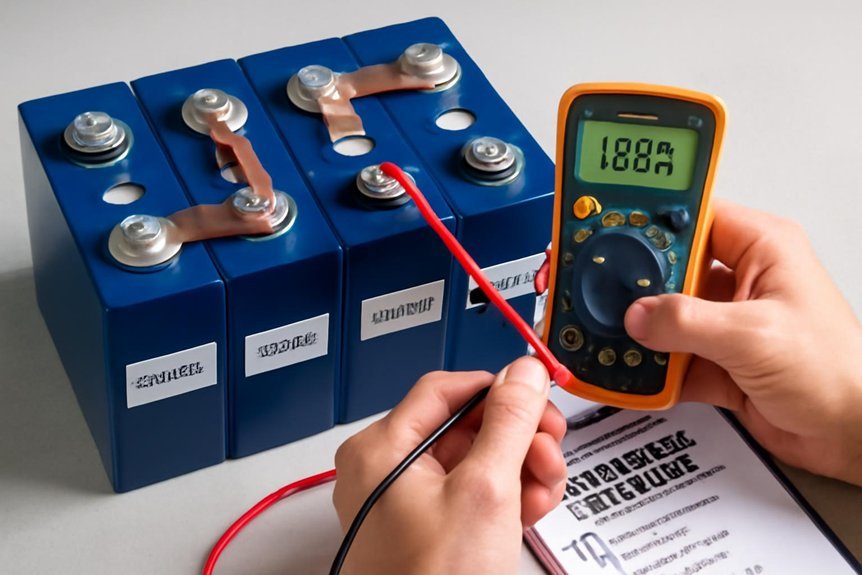
Regular maintenance of LiFePO4 batteries is essential to guarantee peak performance and longevity. Proper upkeep directly influences battery lifespan by minimizing degradation factors such as capacity loss and internal resistance increases. Routine checks help identify potential issues early, preventing irreversible damage and ensuring consistent operation. Maintenance benefits include maximum efficiency, higher charge retention, and extended service life, which collectively reduce replacement costs and downtime. By systematically monitoring voltage levels, temperature, and connections, we can mitigate risks associated with overcharging, deep discharges, or thermal stress. This disciplined approach preserves the battery’s structural integrity and chemical stability, ultimately maximizing its operational lifespan and ensuring reliable energy delivery over time. Regular maintenance is a critical factor in achieving sustained performance and cost-effective energy storage solutions.
How to Inspect Your LiFePO4 Battery for Early Signs of Damage
To identify early signs of damage, we begin with a thorough visual inspection for cracks, swelling, or corrosion. Additionally, monitoring unusual performance patterns, such as rapid voltage drops or inconsistent power output, can indicate underlying issues. Recognizing these indicators promptly helps prevent further damage and maintains ideal battery health.
Visual Damage Indicators
Visual inspection is a critical step in maintaining LiFePO4 batteries, as early detection of physical damage can prevent safety hazards and extend the battery’s lifespan. Look for cracking casings, which compromise structural integrity, and signs of corrosion like surface rust or terminal oxidation. Swelling cells indicate internal issues, while electrolyte leaks suggest compromised seals. Connector damage and heat discoloration can impair electrical performance. Physical deformation, such as bulging or warping, signals internal failure, and discoloration effects on the surface often point to overheating. Regularly inspect for these indicators to address potential issues before they escalate.
| Damage Indicator | Description |
|---|---|
| Cracking casing | Structural failure, risk of exposure to internal components |
| Corrosion signs | Surface rust, terminal oxidation increase conductivity issues |
| Swelling cells | Internal gas buildup, potential thermal runaway |
Unusual Battery Performance
Unusual performance issues often serve as early warning signs of underlying damage within a LiFePO4 battery. As the battery ages, it may exhibit performance fluctuations, such as inconsistent voltage output or reduced capacity. These irregularities can indicate internal degradation, such as cell imbalance or electrolyte issues. To inspect for early signs of damage, we monitor voltage levels during charge and discharge cycles, noting any abnormal drops or spikes. Additionally, increased internal resistance, detected through precise impedance testing, can signal deterioration. Visual inspection for swelling, leaks, or corrosion, combined with consistent performance tracking, helps identify issues before complete failure. Addressing performance fluctuations promptly promotes ideal battery longevity and safety, particularly as the battery’s age progresses.
Proper Charging and Discharging Practices for LiFePO4 Batteries
Proper charging and discharging practices are essential to maximize the lifespan and performance of LiFePO4 batteries. We must adhere to ideal charging procedures and strict discharge limit guidelines to prevent damage and guarantee safety. Implementing precise protocols helps maintain battery integrity over its operational life.
Optimal Charging Procedures
To guarantee peak performance and longevity of LiFePO4 batteries, it’s essential to follow specific charging and discharging practices. Proper charging procedures involve maintaining an ideal voltage range, typically between 3.2V and 3.65V per cell, and adhering to an appropriate charging frequency to prevent overcharging or undercharging. Consistent, controlled charging minimizes capacity loss and prolongs lifespan. Use the table below to understand key parameters:
| Parameter | Recommended Setting |
|---|---|
| Ideal Voltage | 3.65V per cell |
| Charging Frequency | Every 1-2 months during inactivity |
| Charge Rate | 0.5C to 1C |
| Voltage Cutoff | 3.2V per cell |
| Temperature Range | 0°C to 45°C |
Following these guidelines guarantees efficient, safe operation.
Discharge Limit Guidelines
While maintaining appropriate voltage levels is critical during charging, adhering to discharge limits is equally essential to secure the longevity and safety of LiFePO4 batteries. We recommend restricting discharge to no more than 80-90% of the battery’s capacity per cycle to minimize stress on the cells and optimize capacity retention over time. Excessive deep discharges, especially below 20%, accelerate capacity fade and reduce overall lifespan. By controlling discharge cycles within these parameters, we preserve the battery’s structural integrity and guarantee consistent performance. Proper discharge limit guidelines help prevent over-discharge conditions that could lead to thermal runaway or permanent damage. Following these practices maintains the battery’s efficiency, extends operational life, and sustains reliable power output throughout its service life.
Keeping Your LiFePO4 Battery Cool and Ventilated
Maintaining your LiFePO4 battery’s coolness and proper ventilation is crucial for sustaining peak performance and extending its lifespan. Effective thermal management prevents overheating, which can accelerate degradation and reduce capacity. To improve airflow enhancement, position the battery in a location with adequate ventilation, avoiding enclosed spaces that trap heat. Use ventilation fans or passive airflow strategies to facilitate heat dissipation. Monitoring temperature regularly helps identify thermal anomalies early, enabling timely interventions. Maintaining consistent ambient temperatures further reduces thermal stress. Proper thermal management not only preserves the chemical stability of the LiFePO4 cells but also boosts overall efficiency. Prioritizing airflow enhancement and temperature regulation guarantees your battery operates within ideal temperature ranges, promoting durability and reliable performance over time.
How to Clean and Maintain Battery Terminals and Contacts
Regularly inspecting and cleaning your battery terminals and contacts is essential for maintaining ideal electrical connections and preventing issues caused by terminal corrosion. To guarantee reliable performance, we recommend thorough contact cleaning when signs of corrosion or buildup appear. Use a wire brush or terminal cleaner to remove oxidation. Apply a dielectric terminal protector after cleaning to inhibit future corrosion. Here’s a detailed overview:
| Step | Action | Purpose |
|---|---|---|
| 1 | Disconnect terminals | Prevent accidental short circuits |
| 2 | Clean contacts | Remove corrosion, guarantee conductivity |
| 3 | Reconnect securely | Maintain solid electrical contact |
Monitoring Battery Voltage and State of Charge Effectively
Accurate monitoring of battery voltage and state of charge (SOC) is essential for optimizing lifespan and performance. Voltage monitoring provides real-time insights into the battery’s condition, enabling us to detect potential issues early. Reliable charge indicators are critical for evaluating SOC, ensuring we do not overcharge or deeply discharge the Lifepo4 battery, which could impair longevity. Precise measurement tools, such as multimeters or dedicated battery management systems, should be used regularly to track voltage levels. Maintaining correct voltage levels prevents capacity loss and promotes consistent performance. By closely observing voltage and charge indicators, we can implement timely adjustments and avoid operational failures, ensuring the Lifepo4 battery remains efficient, safe, and durable over its service life.
Extending Lifepo4 Battery Life With Proper Storage Techniques
Proper storage techniques are crucial for maximizing the lifespan of Lifepo4 batteries, especially when they are not in active use for extended periods. Maintaining optimal storage temperature prevents capacity loss and degradation, directly impacting battery lifespan. We recommend the following measures:
Proper storage preserves Lifepo4 battery capacity and extends lifespan through optimal temperature, charge, and dryness.
- Store batteries at a temperature between 0°C and 25°C to prevent thermal stress.
- Keep the state of charge around 50% to reduce stress on the cells.
- Store batteries in a dry, cool environment to avoid moisture-related damage.
- Periodically check voltage levels and recharge to maintain the ideal state of charge during long-term storage.
Implementing these practices guarantees the battery remains in good condition, preserves capacity, and extends its overall lifespan.
Troubleshooting Common LiFePO4 Battery Issues and When to Seek Help
Have you ever encountered issues with your LiFePO4 battery not performing as expected? Performance issues such as unexpected voltage fluctuations or reduced battery lifespan often stem from improper maintenance or environmental factors. Monitoring voltage levels during charging cycles helps identify potential problems early. Frequent cycling beyond recommended limits can degrade capacity faster, so adherence to safety precautions and user manuals is essential. When troubleshooting, consider environmental factors like temperature extremes, which impact overall performance and lifespan. If irregularities persist despite routine checks, seek professional assistance. Regular maintenance, including proper storage and cautious handling, minimizes risks. Understanding these indicators enables timely intervention, preventing costly damage and prolonging your battery’s operational life.
Frequently Asked Questions
How Often Should I Perform Maintenance on My Lifepo4 Battery?
We recommend inspecting and maintaining your Lifepo4 battery every three to six months to optimize battery lifespan and guarantee safety. Regular maintenance frequency helps prevent capacity loss and prolongs the battery’s overall performance, making it more reliable over time.
What Are the Signs of a Failing Lifepo4 Battery?
We observe signs like reduced battery lifespan, noticeable performance degradation, increased internal resistance, inconsistent voltage output, and rapid capacity loss, indicating potential failure. Monitoring these indicators helps us maintain ideal operation and extend battery longevity effectively.
Can I Use Any Charger for My Lifepo4 Battery?
We can’t use any charger for our Lifepo4 batteries; charger compatibility is essential to avoid damaging the cells. Using a charger designed for Lifepo4 guarantees proper voltage, current, and charging cycles, maximizing battery lifespan and safety.
How Do Temperature Fluctuations Affect Battery Performance?
Temperature effects greatly impact battery performance stability; extreme fluctuations can cause capacity loss and reduce lifespan. We monitor temperature closely, ensuring ideal operating ranges to maintain consistent performance and prevent thermal stress that degrades Lifepo4 batteries.
Is It Safe to Store Lifepo4 Batteries Long-Term Without Use?
Yes, it’s safe to store Lifepo4 batteries long-term without use if we keep them at a proper state of charge, in a cool, dry environment, and periodically recharge to maintain ideal battery lifespan and prevent capacity degradation.
Conclusion
To conclude, diligent maintenance of our LiFePO4 batteries—through regular inspections, proper charging, and ideal storage—ensures peak performance and extends lifespan. By proactively addressing issues, we prevent costly failures and safeguard operational integrity, much like a seasoned alchemist safeguarding their ancient secrets. Consistent vigilance and adherence to best practices are our best tools to maximize efficiency and reliability, ensuring our batteries serve us faithfully, now and in the age of progress that lies ahead.