Many users overlook the importance of cell balancing in LiFePO4 batteries, which is critical for maintaining capacity and prolonging lifespan. Proper maintenance involves more than just regular charging; it requires careful monitoring of temperature, voltage levels, and physical condition. Understanding these nuances can greatly impact your battery’s performance over time. To guarantee you’re following best practices, let’s explore key tips that can help you maximize efficiency and safety.
Key Takeaways
- Keep voltage within manufacturer’s recommended limits and avoid deep discharges below 20%.
- Regularly check cell balancing, connections, and terminals for corrosion or looseness.
- Store batteries at 0°C to 25°C in a dry, ventilated environment, avoiding extreme temperatures.
- Monitor operating temperatures between 20°C and 25°C to prevent thermal stress.
- Use a high-quality BMS for balanced charging and prevent overcharging or over-discharging.
How to Properly Charge and Discharge Your Lifepo4 Battery
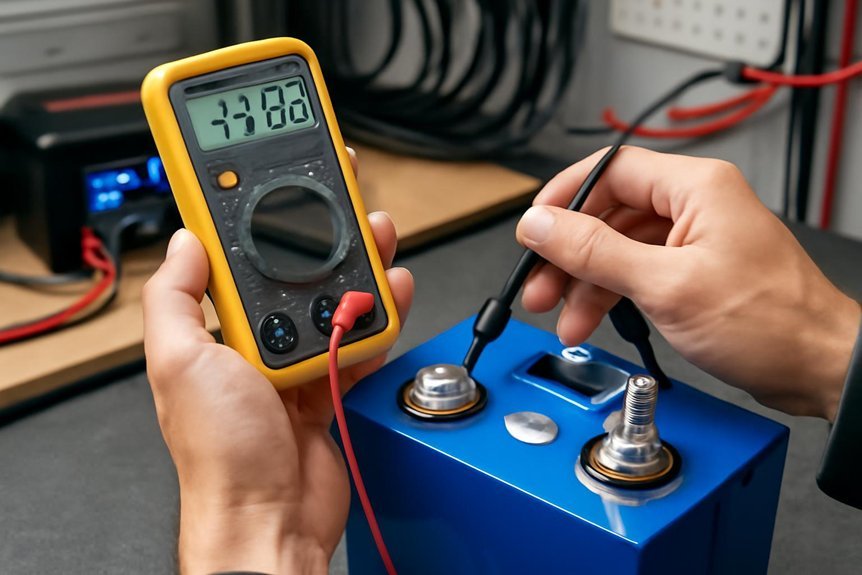
To guarantee peak performance and longevity of your LiFePO4 battery, it is essential to follow proper charging and discharging procedures. A well-managed charging cycle maintains ideal cell chemistry and prevents overcharging, which can degrade capacity over time. We recommend maintaining the charger’s voltage within the manufacturer’s specified limits and avoiding rapid charging to minimize undue stress. Discharge depth, or Depth of Discharge (DoD), greatly influences battery lifespan; shallow discharges (around 20-30%) extend cycle life, while deep discharges accelerate capacity loss. Consistent, controlled charge and discharge practices preserve battery health and guarantee reliable operation. Monitoring voltage and current during each cycle helps prevent excessive strain, ensuring the battery operates efficiently and maintains its capacity over numerous cycles.
Essential Maintenance Checks for Longevity and Safety
Regular maintenance checks are essential to ensuring both the longevity and safety of your LiFePO4 battery. Key procedures include:
Regular maintenance ensures your LiFePO4 battery’s longevity and safety.
- Cell balancing: Regularly verify that all cells are equally charged to prevent imbalances that could lead to capacity loss or damage.
- Temperature monitoring: Keep an eye on operating temperatures, ensuring they stay within the manufacturer’s recommended range to avoid thermal stress.
- Visual inspection: Check for any physical damage, corrosion, or leaks on terminals and casing.
- Connections and terminals: Tighten and clean all connections to maintain peak conductivity and prevent potential short circuits.
Performing these checks consistently helps identify issues early, maintaining battery health and safety over its lifespan.
Best Practices for Storage and Handling of Lifepo4 Batteries
Proper storage and handling are critical to maintaining the performance and safety of LiFePO4 batteries. Maintaining an ideal battery temperature—typically between 0°C and 25°C—is essential to prevent capacity loss and degradation. Avoid exposing batteries to extreme temperatures during storage, as this can accelerate chemical breakdown. When handling, make certain batteries are stored in a dry, well-ventilated environment, away from conductive materials. For safe transport, secure batteries upright in insulated containers, minimizing movement and preventing short circuits. Use protective covers and insulate terminals to avoid accidental contact. Regularly check stored batteries for signs of swelling or corrosion. Adhering to these best practices safeguards battery integrity, prolongs lifespan, and reduces safety risks associated with improper storage and handling.
Troubleshooting Common Lifepo4 Battery Issues
When Lifepo4 batteries exhibit performance issues, systematic troubleshooting can quickly identify the root causes and prevent further damage. First, check for capacity degradation, which manifests as reduced runtime; this often indicates aging or improper charging. Second, inspect for signs of thermal runaway, such as swelling, overheating, or unusual smells, signaling safety hazards. Third, verify the voltage and current readings with precise instruments; abnormal values can point to internal cell imbalance or damaged modules. Fourth, examine connections and terminals for corrosion or looseness, which impair efficiency and exacerbate capacity loss. Addressing these issues promptly helps avert further capacity degradation and mitigates risks of thermal runaway. Accurate diagnosis guarantees safe operation and extends the lifespan of your Lifepo4 battery system.
Tips to Maximize Lifepo4 Battery Performance Over Time
To guarantee Lifepo4 batteries maintain peak performance over their lifespan, it’s essential to adopt practices that minimize wear and maximize efficiency. Consistently keeping the battery within ideal voltage ranges—avoiding deep discharges below 20% or overcharging above 95%—significantly enhances performance optimization. Using a high-quality Battery Management System (BMS) guarantees balanced charging and prevents voltage extremes that accelerate capacity loss. Regularly monitoring temperature during operation, ideally between 20°C and 25°C, reduces thermal stress, safeguarding battery health. Avoiding prolonged periods of inactivity helps prevent capacity fade. Implementing these precise measures extends battery lifespan, maintains consistent performance, and guarantees the longevity of your Lifepo4 system. Proper maintenance and operational discipline are critical for maximizing long-term efficiency.
Frequently Asked Questions
How Often Should I Calibrate My Lifepo4 Battery Monitor?
We recommend calibrating your LiFePO4 battery monitor every 3 to 6 months to guarantee monitor accuracy. Regular calibration maintains precise readings, prevents discrepancies, and optimizes performance, especially if battery usage or environmental conditions change frequently.
What Environmental Conditions Can Damage Lifepo4 Batteries?
Environmental conditions like extreme temperatures, high humidity effects, and poor battery storage can damage Lifepo4 batteries. We recommend storing batteries in a cool, dry place, avoiding moisture exposure, and maintaining ideal temperature ranges for longevity and safety.
Can Lifepo4 Batteries Be Recycled at Home?
Recycling LiFePO4 batteries at home isn’t feasible; dangerous chemicals and strict regulations prevent that. Instead, we follow proper recycling methods and battery disposal procedures through certified facilities to guarantee environmental safety and compliance.
Are There Specific Brands of Chargers Recommended for Lifepo4 Batteries?
We recommend using chargers with specific compatibility for Lifepo4 batteries, focusing on recommended brands like NOCO, SkyRC, and Victron. These guarantee precise voltage regulation, ideal charging cycles, and prevent potential damage or safety issues.
How Do Temperature Fluctuations Affect Lifepo4 Battery Lifespan?
Temperature fluctuations cause thermal effects that greatly impact Lifepo4 battery lifespan, as extreme heat accelerates degradation while cold reduces performance. We recommend maintaining stable temperatures to minimize performance impact and extend your battery’s longevity effectively.
Conclusion
Regular maintenance extends the lifespan of LiFePO4 batteries considerably—studies show proper care can double their usable life. By monitoring temperature, maintaining cell balance, and avoiding deep discharges, we optimize performance and safety. Implementing these best practices guarantees reliable operation and cost savings over time. With up to 2000 charge cycles, diligent upkeep transforms your investment into a durable, high-performing energy source. Proper maintenance isn’t just recommended; it’s essential for maximizing longevity and efficiency.