Did you know that upgrading from lead-acid batteries can greatly improve system performance through advanced chemistry and design? While many focus on initial costs, the true benefits lie in reduced maintenance, longer lifespan, and enhanced safety. These improvements can reshape your operational efficiency, but choosing the right technology requires careful analysis of factors like energy density and lifecycle costs. Understanding these aspects will help you determine the best upgrade path for your specific needs.
Key Takeaways
- Consider lithium-ion or LiFePO4 batteries for longer lifespan, higher energy density, and lower maintenance compared to lead-acid.
- Ensure compatibility in voltage, size, and terminal configuration for seamless replacement and optimal performance.
- Evaluate total cost of ownership by factoring in upfront price, cycle life, and maintenance savings.
- Prioritize batteries with higher cycle durability and thermal stability for enhanced safety and longevity.
- Stay informed about emerging solid-state battery technologies for future upgrades with increased safety and energy capacity.
Why Upgrade From Lead-Acid Batteries? Benefits You Need to Know
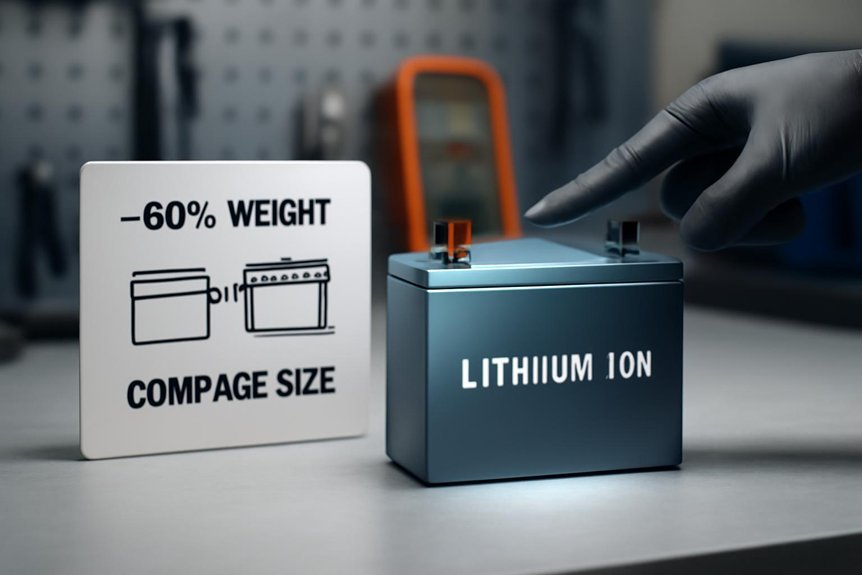
While lead-acid batteries have been a longstanding standard in various applications, their limitations regarding energy density, lifespan, and maintenance requirements often hinder ideal performance. Upgrading provides a clear performance comparison advantage, as newer battery technologies typically offer higher energy density, longer cycle life, and reduced maintenance needs. These improvements translate into more reliable power sources, increased operational efficiency, and lower total cost of ownership over time. Additionally, the environmental impact of lead-acid batteries is significant due to toxic lead and acid components. Upgrading to advanced batteries reduces hazardous waste and promotes sustainability, aligning with stricter environmental regulations. Overall, a shift from lead-acid batteries enhances both system performance and ecological responsibility, making it a strategic choice for long-term energy solutions.
Key Factors to Consider When Choosing a Battery Replacement
When selecting a battery replacement, understanding the key factors that influence performance and compatibility is essential for making an informed decision. Critical considerations include battery performance metrics such as capacity, deep-cycle ability, and charge retention, which directly impact operational reliability. Energy efficiency is equally important, as it determines how effectively the battery converts stored energy into usable power, influencing overall system efficiency and operational costs. Compatibility factors, like voltage, size, and terminal configuration, must align with existing systems to guarantee seamless integration. Additionally, examining the battery’s cycle life and maintenance requirements helps predict longevity and long-term cost-effectiveness. Prioritizing these factors enables us to choose a replacement that enhances performance, optimizes energy efficiency, and guarantees dependable operation over time.
Lithium-Ion Batteries: The Top Modern Alternative
Lithium-ion batteries offer significant advantages over lead acid options, particularly in their longer lifespan and enhanced durability, which reduces replacement frequency. They also support faster charging times and are lighter and more compact, improving overall efficiency and ease of use. These technical benefits make lithium-ion batteries a compelling modern alternative for demanding applications.
Longer Lifespan and Durability
Lithium-ion batteries greatly outperform lead acid counterparts regarding lifespan and durability, making them a superior choice for modern energy storage. Their use of advanced materials enhances battery efficiency, resulting in longer cycles and better resilience against degradation. This translates to a lifespan that often exceeds 8-10 years, compared to 3-5 years for lead acid. The durable design minimizes capacity loss over time, maintaining performance even with repeated charge cycles.
| Feature | Lead Acid | Lithium-Ion |
|---|---|---|
| Typical Lifespan | 3-5 years | 8-10+ years |
| Cycle Durability | Fewer cycles | Considerably more cycles |
| Material Robustness | Lower durability | Advanced, resilient materials |
Faster Charging Capabilities
Given the increasing demand for rapid energy replenishment, lithium-ion batteries stand out due to their superior charging capabilities. Their design allows for fast charging without compromising energy efficiency, making them ideal for high-demand applications. Lithium-ion technology minimizes heat generation during fast charging cycles, reducing the risk of thermal runaway and extending battery lifespan. This efficiency translates into shorter downtime and increased operational productivity. Unlike lead-acid batteries, which require lengthy recharge times and are prone to sulfation, lithium-ion cells can be recharged considerably faster while maintaining stability. The combination of fast charging and high energy efficiency enhances overall system performance, making lithium-ion batteries a compelling upgrade for those seeking minimal downtime and maximum operational uptime.
Lighter Weight and Compact
Because space and weight constraints are critical in many modern applications, lithium-ion batteries offer a significant advantage by being particularly lighter and more compact than traditional lead-acid options. Their lightweight designs reduce overall system weight, enabling easier integration into portable or space-limited devices. This inherent compactness allows for more efficient use of available space, facilitating innovative engineering solutions where size is a limiting factor. Lithium-ion batteries deliver compact solutions without sacrificing capacity or performance, making them ideal for applications such as electric vehicles, aerospace, and portable electronics. Their high energy density guarantees that reduced size and weight do not come at the expense of power output, providing a balanced, efficient upgrade over bulkier lead-acid systems.
Lithium Iron Phosphate (LiFePO4): Safety and Longevity Benefits
Lithium Iron Phosphate (LiFePO4) batteries are distinguished by their enhanced safety profile and extended lifespan compared to traditional lead-acid alternatives. Their safety features include robust thermal stability, which prevents overheating and thermal runaway—common concerns with other lithium chemistries. LiFePO4’s chemical stability contributes to a lower risk of fires or explosions, even under extreme conditions. These batteries also resist overcharging and deep discharges better, reducing long-term degradation. As a result, they maintain performance over a considerably longer cycle life, often exceeding 2000 cycles. The combination of superior safety features and durability makes LiFePO4 an ideal upgrade, especially for applications demanding reliable, long-lasting power with minimized risk.
Comparing Other Alternatives: AGM, Gel, and Sodium-Ion Batteries
While LiFePO4 batteries offer notable advantages in safety and longevity, alternative chemistries like AGM, Gel, and Sodium-Ion serve specific needs. AGM vs. Gel batteries differ mainly in maintenance and performance; AGM provides higher power output and faster recharge, whereas Gel offers superior deep-cycle durability and spill-proof design. Sodium-Ion batteries bring promising benefits such as abundant raw material availability, lower costs, and better environmental sustainability but are still emerging.
| Feature | AGM Batteries | Gel Batteries | Sodium-Ion Batteries |
|---|---|---|---|
| AGM vs. Gel | Higher power, faster recharge | Longer lifespan, maintenance-free | Emerging technology, cost-effective |
| Sodium Ion Advantages | Sustainable, cheaper raw materials | Less mature, limited cycle life | Eco-friendly, scalable production |
How to Transition Safely From Lead-Acid to a New Battery Type
Shifting from lead-acid batteries requires careful attention to proper disposal to prevent environmental hazards. We must verify compatibility with existing systems and confirm the new battery meets technical specifications before installation. Following precise safety procedures during installation minimizes risks and assures peak performance of the upgraded system.
Proper Disposal Methods
Proper disposal of lead-acid batteries is a critical step in safely shifting to a new battery type, as improper handling can pose environmental and health hazards. Adhering to disposal regulations guarantees compliance and minimizes risks. Lead-acid batteries should always undergo professional battery recycling processes, which recover valuable materials like lead and sulfuric acid while preventing toxic exposure. Recycling facilities are equipped to safely dismantle and process these batteries, reducing environmental contamination. Failing to follow proper disposal methods can lead to lead leaching into soil and water sources, creating health hazards. As a result, it’s vital to collaborate with certified recycling centers and strictly observe local regulations. Proper disposal not only protects the environment but also supports sustainable practices in battery management.
Compatibility Checks Required
Before replacing a lead-acid battery, it’s crucial to verify compatibility with the new battery type to guarantee safe and ideal operation. Compatibility testing involves evaluating electrical specifications, such as voltage, capacity, and cold cranking amps, to confirm the new battery aligns with your system’s requirements. Proper battery sizing is critical to prevent over- or under-performance; an inaccurately sized battery can lead to reduced lifespan or system failure. We recommend consulting manufacturer specifications and conducting thorough compatibility checks before installation. This process minimizes risks associated with mismatched components, confirming the battery’s performance matches your system’s demands. Ultimately, diligent compatibility testing and accurate battery sizing are essential steps in shifting safely from lead-acid to a newer, more reliable battery technology.
Safe Installation Procedures
To guarantee a safe and effective switch from lead-acid to a new battery type, we must follow a systematic installation process that prioritizes safety protocols and proper handling procedures. First, we gather essential installation tools, including insulated wrenches and voltage testers, alongside appropriate safety equipment such as gloves and eye protection. Before disconnecting the old battery, verify the vehicle is powered down, and the area is well-ventilated. Carefully remove the lead-acid battery, avoiding contact with terminals or acid spills. When installing the new battery, double-check polarity and secure connections tightly using insulated tools. Throughout the process, continuous use of safety equipment minimizes risks associated with electrical hazards and chemical exposure. This methodical approach guarantees safety and preserves the integrity of the new battery system.
Cost, Maintenance, and Lifecycle: Which Battery Offers the Best Value?
When evaluating batteries as upgrades from lead acid models, understanding their cost, maintenance needs, and lifecycle duration is essential for determining long-term value. A thorough cost analysis reveals that lithium-ion batteries, though initially more expensive, offer lower total ownership costs due to longer lifespan and reduced maintenance. Maintenance tips for these batteries include avoiding overcharging and ensuring proper thermal management. To compare options effectively, consider these factors:
Evaluate long-term value by comparing costs, maintenance needs, lifespan, and reliability of lithium-ion versus lead acid batteries.
- Upfront purchase price versus total cost of ownership
- Frequency and complexity of maintenance routines
- Expected cycle life and degradation rates
- Reliability and warranty support over time
Future Trends in Battery Technology for Reliable Power Solutions
Advancements in battery technology are poised to greatly enhance the reliability and efficiency of power storage systems, driven by innovations in materials science and engineering. Solid state batteries, which replace liquid electrolytes with solid electrolytes, are emerging as a promising development. They offer remarkably higher energy density, enabling longer runtimes and more compact designs. This leap in energy density not only improves performance but also enhances safety by reducing risks of leakage and thermal runaway. Future trends focus on optimizing solid state battery materials to increase lifespan, reduce costs, and enable faster charging. As these innovations mature, they are expected to transform reliable power solutions across sectors, from renewable energy storage to electric vehicles, providing safer, more durable, and energy-dense alternatives to traditional lead acid and lithium-ion batteries.
Frequently Asked Questions
How Do Installation Requirements Differ Between Lead-Acid and Modern Batteries?
Installation requirements differ mainly in challenges related to battery compatibility and managing electrical systems. Modern batteries often need specialized charging setups, secure mounting, and safety considerations, unlike lead-acid batteries, which are generally more straightforward to install.
Are There Environmental Impacts When Disposing of Upgraded Batteries?
Disposing of upgraded batteries involves environmental impacts, but recycling methods mitigate harm by properly handling hazardous materials, ensuring safe battery disposal. We analyze these processes to reduce ecological footprints and promote sustainable practices effectively.
What Are the Warranty Differences Among Various Battery Types?
We’ve found lithium-ion batteries often offer a warranty duration of 8-10 years, double that of lead-acid. Proper battery maintenance can extend lifespan, but warranty terms vary greatly, emphasizing the importance of understanding manufacturer policies for reliable performance.
Can Existing Charging Systems Be Used With Newer Battery Technologies?
We can typically use existing charging systems with newer battery technologies if they support proper charging compatibility, including correct voltage, current, and charging profiles. Always verify specific battery requirements to guarantee ideal performance and longevity.
How Do Temperature Sensitivities Affect Battery Performance and Lifespan?
Just like a delicate plant wilts in harsh sun, batteries suffer from temperature effects, causing performance degradation and reducing lifespan. We’ve seen heat accelerate chemical reactions, underscoring the importance of temperature management for ideal battery longevity.
Conclusion
As we navigate the evolving landscape of energy storage, upgrading from lead-acid batteries is like shifting from a flickering candle to a powerful lighthouse beam—more reliable, efficient, and future-ready. Lithium-ion and LiFePO4 technologies illuminate a clear path forward, offering longer lifespans and smarter performance. Embracing these advancements guarantees your power systems are not just current, but resilient anchors in a sea of technological innovation, guiding us toward sustainable, robust energy solutions.