The debate between LiFePO4 and lead-acid batteries is like comparing a finely tuned engine to an old, reliable truck—each has its strengths, but one drives smoother and longer. As we examine their differences, from lifespan to safety features, it becomes clear that understanding these nuances could greatly impact your energy storage decisions. What truly sets LiFePO4 apart, and how does that influence its value over traditional options? Let’s explore the facts that could reshape your perspective.
Key Takeaways
- LiFePO4 batteries have higher energy density and longer cycle life than lead-acid batteries.
- They support faster charging, deeper discharges, and maintain capacity over more cycles.
- LiFePO4 units are lighter, more compact, and easier to install and handle.
- They offer enhanced safety with thermal stability and reduced risk of thermal runaway.
- Lower maintenance needs and longer lifespan reduce overall long-term costs.
How Do Lifepo4 Batteries Differ From Lead-Acid Batteries?
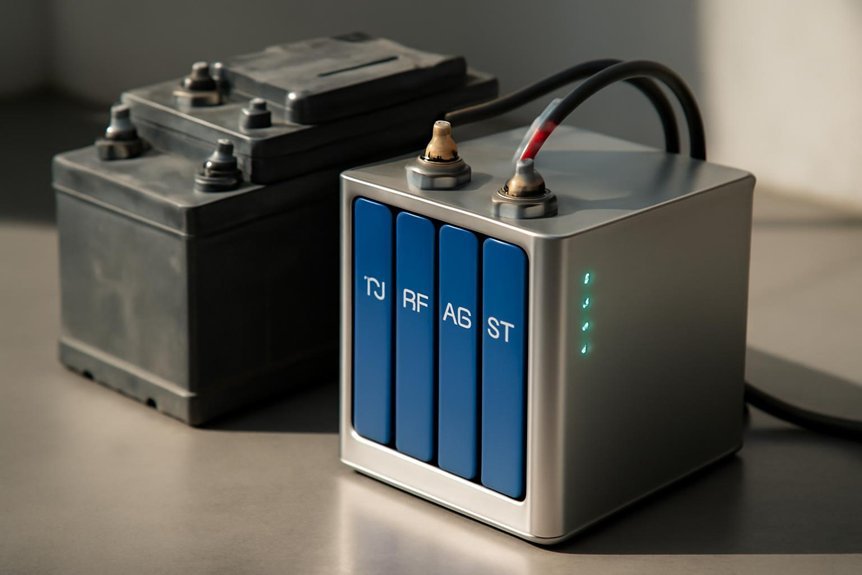
While both LiFePO4 (lithium iron phosphate) and lead-acid batteries serve as reliable energy storage solutions, they differ considerably in their chemical composition and operational characteristics. Battery chemistry fundamentally influences performance metrics such as energy density, charge cycles, and safety. LiFePO4 batteries utilize lithium iron phosphate, offering higher energy density and more stable chemistry, resulting in improved efficiency and longevity. In contrast, lead-acid batteries rely on lead plates and sulfuric acid, which limit their cycle life and energy capacity. Performance metrics like charge acceptance and discharge rates are typically superior in LiFePO4, enabling faster charging and deeper discharges without damage. These distinctions underscore the fundamental differences in chemistry and performance that shape their suitability for various applications.
Why Lifepo4 Offers a Longer Lifespan Than Lead-Acid Batteries
Lifepo4 batteries inherently support deeper charge cycles with minimal capacity degradation, which extends their operational lifespan compared to lead-acid alternatives. Their reduced capacity loss over time enhances overall durability, and their improved chemical stability minimizes degradation mechanisms. Consequently, Lifepo4 batteries maintain reliable performance over a greater number of charge-discharge cycles.
Deeper Charge Cycles
Because of their advanced chemistry, Lifepo4 batteries tolerate deeper charge cycles without significant degradation, unlike lead-acid counterparts that suffer capacity loss after repeated deep discharges. This results in superior cycle longevity and enhances deeper efficiency, making Lifepo4 suitable for demanding applications. The robust chemistry minimizes electrode wear, allowing for more complete discharges without harming performance. Consider the following comparison:
| Battery Type | Typical Cycle Count | Depth of Discharge (DoD) | Efficiency |
|---|---|---|---|
| Lead-Acid | 300-500 | 50% | 80-85% |
| Lifepo4 | 2000+ | 80-90% | 95%+ |
This demonstrates Lifepo4’s ability to sustain more extensive discharge cycles, directly translating into longer lifespan and better overall performance.
Reduced Capacity Loss
The chemistry of Lifepo4 batteries inherently reduces capacity loss over time, providing a significant advantage in longevity compared to lead-acid batteries. This chemistry promotes superior capacity retention, essential for maintaining consistent performance across numerous charge cycles. Lifepo4’s stable electrochemical structure minimizes degradation of active materials, thereby reducing capacity fade. Unlike lead-acid batteries, which suffer from sulfation and grid corrosion, Lifepo4’s resilience directly influences longevity factors, ensuring sustained capacity over a longer lifespan. This reduced capacity loss translates into fewer replacements and lower total cost of ownership. Ultimately, the intrinsic chemical stability of Lifepo4 batteries underpins their ability to retain capacity more effectively, making them a more durable and reliable choice for long-term energy storage applications.
Enhanced Battery Stability
While lead-acid batteries are prone to degradation from sulfation and grid corrosion, Lifepo4 batteries maintain greater stability due to their robust electrochemical structure. Stability factors such as consistent voltage output and resistance to internal chemical changes contribute to their performance consistency over time. Lifepo4’s stable chemistry minimizes capacity fade and internal resistance increases, ensuring reliable operation across numerous cycles. This inherent stability reduces the risk of sudden failures and extends the overall lifespan compared to lead-acid counterparts. The solid-phase chemistry prevents the formation of harmful dendrites, maintaining structural integrity and consistent performance. Consequently, Lifepo4 batteries deliver enhanced stability, making them a superior choice for applications demanding long-term reliability and reduced maintenance.
How Light Weight and Compact Design Improve Energy Storage With Lifepo4
The lightweight and compact design of Lifepo4 batteries greatly enhances energy storage efficiency by enabling easier handling and installation. This form factor facilitates space-efficient configurations, optimizing system design in constrained environments. Consequently, these features support more flexible, scalable energy solutions with reduced logistical complexity.
Enhanced Portability and Handling
Because Lifepo4 batteries are considerably lighter and more compact than traditional lead-acid options, they enable easier handling and transportation, which directly enhances energy storage versatility. The lightweight design reduces physical strain and simplifies installation, facilitating ergonomic handling in various settings. This improved portability supports rapid deployment in remote or confined spaces, where weight and size constraints are critical. To illustrate:
| Feature | Lead-Acid Battery | Lifepo4 Battery | Impact |
|---|---|---|---|
| Weight | Heavy | Light | Easier handling |
| Size | Large | Compact | Simplified transportation |
| Ergonomics | Limited | Optimized | Reduced user fatigue |
| Durability | Moderate | High | Safer handling |
| Deployment Speed | Slower | Faster | Quicker energy setup |
This technical advantage enhances overall energy system flexibility and operational efficiency.
Space-Saving Energy Solutions
The compact and lightweight design of Lifepo4 batteries greatly enhances space efficiency in energy storage systems by reducing overall volume without compromising capacity. This allows for more effective utilization of available space, directly improving energy efficiency through optimized placement. The smaller footprint supports the development of compact storage solutions suitable for limited spaces, such as mobile or confined environments. Additionally, lighter batteries reduce structural load, enabling flexible system configurations.
- Facilitates integration into tight or mobile applications
- Minimizes infrastructure requirements for installation
- Enables scalable energy solutions with modular design
- Promotes efficient energy management through precise placement
Easier Installation Processes
Our focus on compact and lightweight Lifepo4 batteries directly streamlines the installation process by reducing the logistical and structural complexities typically associated with energy storage systems. This design simplifies installation techniques, enabling quicker setup and minimizing the need for extensive structural modifications. The reduced weight facilitates easier handling and placement, lowering labor and transportation costs. Additionally, Lifepo4’s compact form factor enhances wiring simplicity, as fewer cables and connectors are required to establish system connections. This not only shortens installation time but also decreases potential points of failure, contributing to overall system reliability. The streamlined installation process makes Lifepo4 batteries more adaptable to diverse environments, ensuring efficient integration with existing electrical infrastructure without extensive reconfiguration.
What Makes Lifepo4 Batteries Charge Faster and Perform Better?
Lifepo4 batteries excel in charging speed and overall performance due to their unique chemical and structural properties. Their stable chemistry allows for efficient current flow, enabling fast charging without compromising lifespan or safety. This results in improved performance metrics like higher charge acceptance and reduced heat generation during charging cycles. The electrode design and electrolyte composition facilitate rapid ion movement, further enhancing fast charging capabilities. Additionally, Lifepo4’s inherent thermal stability prevents overheating, allowing for consistent high performance under various conditions.
- Enhanced ion mobility promotes faster charge rates
- Stable electrode structure minimizes capacity loss
- Superior thermal stability supports continuous high performance
- Optimized electrolyte reduces internal resistance
How Improved Safety Features Make Lifepo4 a Smarter Choice
Because safety concerns are paramount in energy storage, Lifepo4 batteries incorporate advanced safety features that significantly reduce risks associated with thermal runaway, overcharging, and mechanical damage. These batteries meet stringent safety standards due to their inherent thermal stability, which minimizes the likelihood of rapid temperature increases that can lead to failure. The chemical composition of Lifepo4 provides a stable structure, reducing the risk of combustion or explosion under adverse conditions. Mechanical robustness further enhances safety by resisting damage from impacts or punctures. These safety features collectively make Lifepo4 a smarter choice, as they guarantee safer operation, reduce the need for complex safety management systems, and promote long-term reliability in various applications.
Why Maintenance Is Easier With Lifepo4 Batteries
Maintaining batteries efficiently is essential for ensuring ideal performance and longevity, and Lifepo4 batteries simplify this process through their inherent design features. Their maintenance advantages stem from reduced susceptibility to capacity loss, minimal electrolyte management, and stable chemical composition. These factors contribute to easier battery upkeep, requiring less frequent inspections and interventions. Lifepo4’s stable voltage profile and low self-discharge rate further reduce the need for constant monitoring. Additionally, their thermal stability minimizes temperature-related issues, decreasing maintenance complexity. Overall, these characteristics lead to fewer maintenance tasks, lower operational costs, and enhanced reliability. By contrast, lead acid batteries demand regular water refilling, equalization, and careful monitoring, making Lifepo4 batteries a more efficient choice for maintenance-focused applications.
- Lower maintenance frequency due to chemical stability
- Reduced need for electrolyte checks and refilling
- Minimized thermal management requirements
- Consistent performance with less routine oversight
Which Applications Benefit Most From Using Lifepo4 Technology
Which applications stand to gain the most from adopting Lifepo4 technology? Solar power systems benefit from Lifepo4’s stable energy storage, ensuring reliable off-grid operation and efficient energy management. Electric vehicles and recreational vehicles find value in Lifepo4’s high cycle life and safety, supporting longer trips and reduced maintenance. Marine applications leverage its resilience to harsh conditions and safety features, enhancing performance at sea. Off-grid systems and backup systems depend on Lifepo4’s deep discharge capability and consistent power delivery during outages. Portable devices and industrial equipment utilize its lightweight design and longevity for continuous operation. Additionally, smart homes and energy storage solutions profit from Lifepo4’s scalability and dependable energy supply. Overall, Lifepo4’s attributes make it ideal across diverse sectors requiring durable, safe, and efficient energy storage.
How Cost and Total Ownership Compare Between Lifepo4 and Lead-Acid Batteries
When comparing Lifepo4 batteries to traditional lead-acid options, cost and total ownership emerge as key factors influencing long-term value. A thorough cost analysis reveals that Lifepo4 batteries, despite higher upfront costs, offer significant savings over their lifespan. The ownership comparison shows lower maintenance requirements, fewer replacements, and better efficiency, reducing operational expenses. Lifepo4’s longer cycle life means fewer battery replacements, which impacts total cost of ownership positively. Additionally, their higher charge efficiency minimizes energy losses, further lowering costs.
- Reduced replacement frequency decreases long-term expenses
- Lower maintenance demands cut ongoing operational costs
- Greater cycle life enhances overall durability and value
- Improved efficiency results in energy savings over time
Frequently Asked Questions
Are Lifepo4 Batteries Environmentally Friendly Compared to Lead-Acid?
We believe Lifepo4 batteries are more environmentally friendly, as they have a lower sustainability impact, contain fewer toxic materials, and are more recyclable than lead-acid batteries, making them a better choice for eco-conscious applications.
How Do Lifepo4 Batteries Perform in Extreme Temperatures?
Like a trusty steed in a tech age, Lifepo4 batteries excel in extreme temperatures, offering superior temperature stability and performance reliability. We find they maintain consistent output, minimizing thermal risks and ensuring dependable operation under harsh environmental conditions.
Can Lifepo4 Batteries Be Recycled Easily?
We find that Lifepo4 batteries are recyclable through established processes, contributing to battery sustainability. Their recycling process efficiently recovers valuable materials, reducing environmental impact and supporting sustainable energy storage solutions, making them a more eco-friendly choice.
What Is the Shelf Life of Lifepo4 Batteries Without Use?
We find that Lifepo4 batteries have a shelf life of around 2-5 years without use, provided proper battery maintenance is followed. Regular checks, temperature control, and avoiding deep discharges help preserve their longevity effectively.
Do Lifepo4 Batteries Require Specialized Chargers?
We find Lifepo4 batteries generally don’t require specialized chargers, but using a charger compatible with lithium iron phosphate chemistry enhances charging efficiency and safety. Proper charger selection guarantees maximum performance and prolongs battery lifespan.
Conclusion
To sum up, LiFePO4 batteries outperform lead-acid counterparts with over 2000 charge cycles—more than quadrupling their lifespan. This not only reduces replacement costs but also enhances reliability across demanding applications. Their faster charging, safety features, and compact design make them a smarter, more efficient choice. As technology advances, embracing LiFePO4 can greatly lower total ownership costs and improve system performance, proving that investing in this technology is a forward-thinking, cost-effective decision for long-term energy storage solutions.