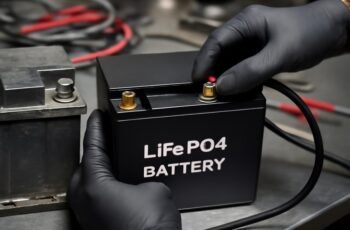
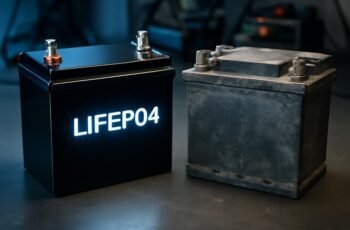
When selecting batteries for RV applications, understanding the technical differences between Lifepo4 and lead acid options is essential. Both types have distinct performance characteristics, safety profiles, and long-term costs that can notably impact your setup. As we compare their efficiencies and maintenance needs, it becomes clear that choosing the right battery involves more than just initial price. Let’s explore these factors in detail to guarantee your power system aligns with your travel demands.
Key Takeaways
- Lifepo4 batteries offer higher energy density and longer lifespan, making them more suitable for frequent RV use and deep cycling.
- They support faster charging/discharging rates and maintain voltage stability, enhancing overall RV power efficiency.
- Despite higher initial costs, Lifepo4 batteries have lower long-term ownership and maintenance expenses.
- Lifepo4 batteries are lighter, reducing RV weight and space requirements compared to lead acid options.
- They are more environmentally friendly with fewer hazardous materials and easier recycling processes.
What Are Lifepo4 and Lead Acid Batteries and How Do They Work?
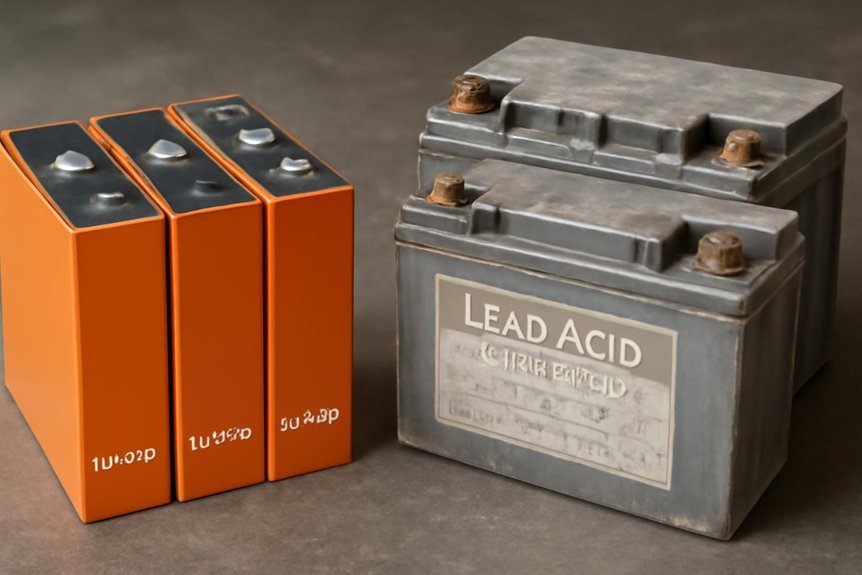
Batteries serve as the core energy storage units for RVs, with Lifepo4 and lead acid being two prevalent types. Both rely on distinct battery technology principles to store and deliver electrical energy efficiently. Lead acid batteries use a chemical reaction involving lead plates and sulfuric acid, producing electrical current through ion exchange. In contrast, Lifepo4 (lithium iron phosphate) batteries utilize lithium-ion technology, where lithium ions move between cathode and anode during charge and discharge cycles. This results in higher energy density, longer cycle life, and improved thermal stability. Understanding these differences helps clarify how each battery type impacts energy storage capacity, reliability, and safety for RV applications. Both serve critical roles in ensuring continuous, dependable power supplies while optimizing performance and lifespan.
Comparing Lifepo4 and Lead Acid Batteries: Performance and Efficiency
We observe that LiFePO4 batteries offer markedly higher energy density than lead-acid options, enabling more stored power in a compact form. They also support faster charging and discharging rates, which reduces downtime and improves overall efficiency. Understanding these technical differences helps us determine which battery type best suits specific RV energy demands.
Energy Density Differences
While both Lifepo4 and lead acid batteries serve as common energy storage solutions for RVs, their energy density differences greatly influence overall performance and efficiency. Lifepo4 batteries typically offer a higher energy capacity per unit volume, resulting in more stored energy in a smaller footprint. When considering weight comparison, Lifepo4 cells are noticeably lighter for the same energy capacity, which reduces overall vehicle weight and enhances mobility. This increased energy density translates into longer run times and more efficient use of space within the RV’s battery compartment. Conversely, lead acid batteries are bulkier and heavier for equivalent energy storage, limiting their practicality for space-constrained RV setups. These differences make Lifepo4 batteries a superior choice for maximizing both energy efficiency and weight optimization.
Charging and Discharging Rates
Because of their chemical composition and design, Lifepo4 batteries typically support higher charging and discharging rates compared to lead acid batteries, directly influencing their performance and efficiency in RV use. Lifepo4 batteries exhibit a flatter discharge curve, maintaining voltage stability under higher loads, which improves charging efficiency. They can often handle charge rates of 0.5–1C and discharge rates up to 2C, whereas lead acid batteries generally support 0.1–0.3C charging and discharge rates. This capacity allows for faster recharge times and better power delivery during high demand. The following table summarizes these differences:
| Parameter | Lifepo4 | Lead Acid |
|---|---|---|
| Max charging rate | 0.5–1C | 0.1–0.3C |
| Max discharging rate | Up to 2C | 0.2C |
| Discharge curve | Flatter, stable voltage | Steeper, voltage drops |
| Charging efficiency | >95% | 80–85% |
| Performance impact | Faster, more efficient | Slower, less efficient |
Which Battery Is Safer for Your RV: Lifepo4 or Lead Acid?
When evaluating safety, we consider the thermal stability of Lifepo4 versus lead acid batteries, as Lifepo4 cells maintain lower internal temperatures under stress. The risk of fire or explosion is generally reduced with Lifepo4 due to its stable chemistry, whereas lead acid batteries can produce flammable gases during charging or damage. Additionally, handling and maintenance safety favor Lifepo4, which requires less frequent maintenance and poses fewer hazards during installation and disposal.
Thermal Stability Differences
Thermal stability is a critical safety factor when choosing batteries for RV applications, as it directly influences the risk of thermal runaway and fire hazards. Lifepo4 batteries exhibit higher thermal conductivity than lead acid, allowing for more efficient heat dissipation during operation. This enhanced heat transfer helps prevent localized overheating, reducing the likelihood of thermal runaway. Conversely, lead acid batteries have lower thermal conductivity, which causes heat to build up internally, especially under high load or during charging faults. Lifepo4’s ability to dissipate heat effectively makes it inherently safer with respect to thermal stability. Proper heat management in lead acid batteries requires additional cooling measures, whereas Lifepo4’s intrinsic thermal properties contribute to a safer overall operating environment for RV use.
Risk of Fire or Explosion
While both Lifepo4 and lead acid batteries are generally safe for RV use, their inherent design differences influence their susceptibility to fire hazards and explosion risks. Lifepo4 batteries feature a stable chemical structure, which greatly reduces the likelihood of thermal runaway—a key cause of fires and explosions. Conversely, lead acid batteries contain liquid electrolytes that pose greater risks if damaged or improperly charged, increasing potential for fire or acid leaks. Proper safety protocols, such as adequate ventilation, secure mounting, and voltage regulation, are essential to mitigate these risks. Emergency preparedness involves having fire extinguishers suitable for electrical fires and clear procedures for handling battery malfunctions. Overall, Lifepo4 batteries tend to be safer regarding fire and explosion hazards due to their robust chemical stability.
Handling and Maintenance Safety
Handling and maintaining RV batteries safely requires careful attention to their specific requirements, as improper procedures can lead to hazardous situations. Lifepo4 batteries are generally safer, producing less heat and risk of fire, but still require proper ventilation during charging and discharging. Lead acid batteries contain sulfuric acid, posing corrosive hazards if leaks occur, necessitating protective gear during maintenance. Both types demand strict adherence to emergency protocols in case of damage or malfunction, including immediate battery disposal procedures to prevent environmental contamination. Regular inspection for corrosion, secure wiring, and proper storage are critical. Proper training on handling procedures minimizes risks, especially during battery disposal or accidental spills. Overall, mindful handling and maintenance considerably reduce safety concerns for RV owners.
Cost, Maintenance, and Longevity: Evaluating the Long-Term Value
When comparing Lifepo4 and lead acid batteries for RV use, evaluating their cost, maintenance requirements, and longevity reveals significant differences that impact long-term value. Lifepo4 batteries have a higher initial cost, but their superior cycle life and efficiency often offset the investment. Lead acid batteries, while cheaper upfront, require more frequent replacements, increasing overall costs.
- Cost comparison: Lifepo4 offers a higher upfront price but lower total ownership costs due to longer lifespan.
- Maintenance tips: Lifepo4 batteries need minimal maintenance—no watering or equalization—whereas lead acid batteries demand regular checks and fluid top-offs.
- Longevity: Lifepo4 batteries typically last 8-10 years, compared to 3-5 years for lead acid, making them more cost-effective over time.
Choosing the Right Battery for Your RV Lifestyle and Power Needs
Selecting the appropriate battery for your RV hinges on understanding your specific power demands and lifestyle preferences. We evaluate various battery types, considering energy requirements, recharge cycles, and maintenance frequency. For high RV power needs, Lifepo4 batteries offer longer cycle life and faster recharge times, aligning with active lifestyles, whereas lead acid batteries may suit simpler, lower-demand setups. Installation considerations include weight capacity and space constraints; Lifepo4 batteries are lighter, easing weight limitations. Environmental impact also plays a role, with Lifepo4 being more eco-friendly due to fewer hazardous materials. Budget constraints influence choices, as initial costs differ. Ultimately, matching battery types to your energy consumption, lifestyle compatibility, and environmental priorities guarantees reliable power while optimizing long-term value.
Final Thoughts: Making an Informed Decision Between Lifepo4 and Lead Acid
Ultimately, choosing between Lifepo4 and lead acid batteries for your RV hinges on a thorough assessment of your specific energy needs, budget, and long-term goals. Understanding the distinct battery types and their suitability for various usage scenarios is essential. Lifepo4 batteries offer higher cycle life, faster charging, and increased safety, making them ideal for frequent use and extended trips. Conversely, lead acid batteries tend to be more affordable upfront but require more maintenance and have shorter lifespans, fitting well for occasional use. When making your decision, consider factors like depth of discharge, weight constraints, and charging infrastructure. A detailed analysis of these aspects guarantees you select the battery type that best supports your RV’s power demands and operational expectations.
Frequently Asked Questions
Can Lifepo4 Batteries Be Recycled More Easily Than Lead Acid?
We find lifepo4 batteries easier to recycle due to simpler recycling processes and fewer disposal challenges, as they contain non-toxic, stable materials. Lead acid batteries pose more risks, requiring careful handling and specialized disposal methods.
How Do Lifepo4 and Lead Acid Batteries Perform in Extreme Temperatures?
We find Lifepo4 batteries excel in extreme temperatures, maintaining 80% performance longevity at -20°C, thanks to superior temperature stability. In contrast, lead acid batteries’ performance drops sharply below 0°C, risking reduced capacity and lifespan.
Are Lifepo4 Batteries Compatible With Existing RV Electrical Systems?
Lifepo4 batteries are compatible with existing RV electrical systems, but we recommend verifying voltage and capacity specifications to confirm seamless integration, as proper battery compatibility is essential for peak performance and safety within your RV’s electrical setup.
What Is the Impact of Battery Weight on RV Travel and Storage?
We find that battery weight considerably impacts RV travel efficiency and handling, influencing stability and fuel consumption. Lighter Lifepo4 batteries improve storage and maneuverability, making them preferable for optimizing travel performance and ease of handling during extended journeys.
Do Lifepo4 Batteries Have Any Environmental Advantages Over Lead Acid?
Think of Lifepo4 batteries as eco-friendly engines, offering sustainability benefits like longer lifespan and fewer toxic materials. Their manufacturing processes generate less environmental impact, making them a smarter, greener choice over lead-acid for conscientious RV travelers.
Conclusion
Ultimately, selecting between Lifepo4 and lead acid batteries hinges on your specific power demands and lifestyle. While lead acid offers initial savings, Lifepo4’s superior efficiency, lifespan, and safety make it the smarter investment in the long run. Like choosing the sturdy foundation for a skyscraper, your decision impacts your entire RV experience. We encourage you to weigh these technical differences carefully, ensuring your power system supports your adventures with reliability and precision.