As the saying goes, “change is the only constant,” and in energy storage, that change involves shifting from traditional lead-acid batteries to LiFePO4 technology. This adjustment promises notable improvements in cycle life, safety, and efficiency, yet it also introduces technical considerations that demand careful analysis. Understanding these nuances is essential for making an informed decision, especially as the potential benefits could redefine long-term operational costs and system reliability.
Key Takeaways
- Ensure LiFePO4 battery voltage and capacity match or are compatible with the existing lead-acid system.
- Verify that the charge controller and system wiring support LiFePO4 battery requirements.
- Install a Battery Management System (BMS) to protect against overcharge, over-discharge, and ensure safety.
- Adjust or upgrade system components to accommodate the higher energy density and different charging profiles.
- Follow proper installation and maintenance practices to maximize lifespan and performance of the LiFePO4 replacement.
How Do LiFePO4 Batteries Compare to Lead-Acid Batteries?
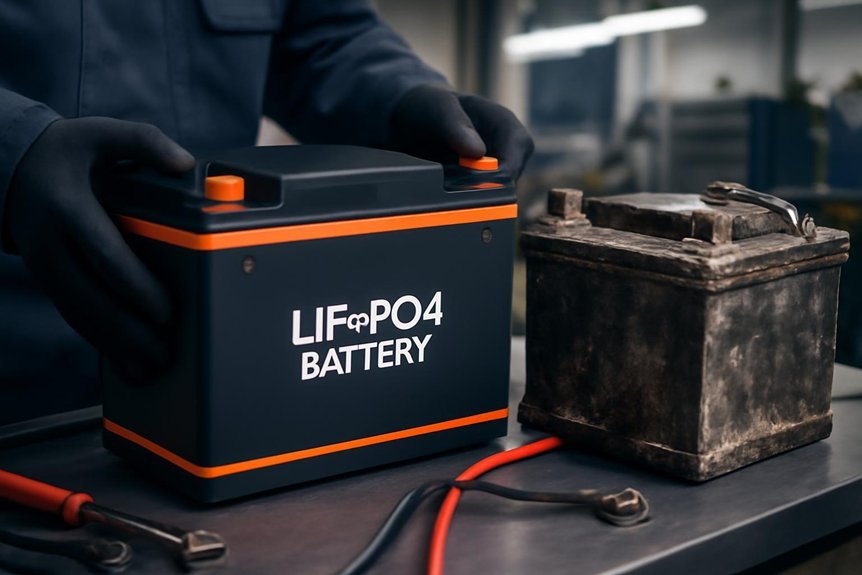
While lead-acid batteries have long been the standard for energy storage, LiFePO4 batteries offer several advantages that make them a compelling alternative. The primary Lifepo4 advantages include longer battery lifespan and improved energy efficiency, reducing replacement frequency and operational costs. Lead acid disadvantages, such as shorter cycle life and higher maintenance needs, highlight their limitations. LiFePO4’s stable chemistry results in a more durable and reliable power source, often exceeding 2000 cycles compared to lead acid’s typical 300-500. Additionally, LiFePO4 batteries deliver higher energy efficiency, minimizing energy loss during charge and discharge processes. These factors collectively enhance overall performance, making LiFePO4 a superior choice for applications demanding longevity, efficiency, and reduced total cost of ownership.
Installing Lithium Iron Phosphate Batteries: What You Need to Know
Installing Lithium Iron Phosphate (LiFePO4) batteries requires careful attention to safety protocols, proper wiring, and compatibility considerations. Confirming battery compatibility with existing systems is essential to prevent voltage mismatches and overcurrent issues. Our installation tips emphasize verifying voltage ratings, connector types, and charge controller specifications to optimize performance and longevity. Proper wiring involves using appropriately rated cables and secure connections to minimize resistance and heat buildup. We recommend installing a Battery Management System (BMS) tailored to LiFePO4 chemistry to protect against overcharge, overdischarge, and thermal risks. Attention to these details guarantees a safe, efficient installation process and maximizes the benefits of switching from lead-acid to lithium iron phosphate batteries.
Key Benefits of Switching to LiFePO4 for Your Energy System
Switching to LiFePO4 batteries offers considerable advantages for energy systems, primarily due to their superior safety, longevity, and performance characteristics. These batteries feature stable chemistry, reducing the risk of thermal runaway and ensuring safer operation. Their extended cycle life surpasses traditional lead-acid options, leading to lower replacement frequency and associated costs, resulting in substantial cost savings over time. Additionally, LiFePO4’s high energy density maximizes space and weight efficiency. From an environmental perspective, these batteries produce fewer harmful emissions during manufacturing and disposal, markedly reducing environmental impact. Their recharge efficiency minimizes energy waste, further supporting sustainability goals. Overall, shifting to LiFePO4 batteries enhances system reliability, reduces operational costs, and aligns with eco-friendly practices, making them a superior choice for modern energy systems.
Common Challenges and How to Overcome Them When Replacing Batteries
Replacing batteries in an energy system can present several technical and logistical challenges that must be carefully addressed to secure a successful changeover. Installation issues often arise from differing physical dimensions and terminal configurations, requiring precise adjustments. Compatibility concerns are critical, as LiFePO4 batteries differ in voltage profiles and charging protocols from lead-acid counterparts, necessitating system recalibration. Charging differences demand attention to avoid over- or undercharging, which can compromise battery lifespan and safety. Weight considerations also impact installation, especially in confined spaces, influencing support structures and handling procedures. Cost factors extend beyond initial purchase, encompassing potential system upgrades and safety precautions, such as proper venting and protective measures. Addressing these challenges systematically secures a safe, efficient, and reliable battery replacement process.
Maintaining Your LiFePO4 Battery for Long-Term Performance
To guarantee your LiFePO4 battery maintains peak performance over its lifespan, consistent maintenance practices are essential. Proper management of charging cycles directly impacts battery lifespan and efficiency. We recommend the following:
Maintaining proper charging and storage practices ensures optimal performance and longevity of your LiFePO4 battery.
- Limit deep discharges to prevent excessive wear on the cells.
- Use a compatible, high-quality charger to confirm ideal voltage and current levels.
- Regularly monitor voltage and temperature to detect potential issues early.
- Store the battery at a partial state of charge during long periods of inactivity to preserve cell integrity.
Frequently Asked Questions
Are Lifepo4 Batteries Compatible With All Existing Lead-Acid Systems?
We find Lifepo4 batteries aren’t universally compatible with all lead-acid systems; compatibility factors include voltage, BMS integration, and system design. Often, system modifications are necessary to guarantee safe, efficient operation with Lifepo4 replacements.
What Is the Typical Lifespan Difference Between Lifepo4 and Lead-Acid Batteries?
We find Lifepo4 batteries typically last 8-10 years, surpassing lead-acid’s 3-5 years, offering a better lifespan comparison. Although initial costs are higher, our cost analysis shows longer-term savings due to durability and reduced replacement needs.
Do Lifepo4 Batteries Require Special Charging Equipment?
We find that LiFePO4 batteries do require specialized charging methods and battery management systems to guarantee safety and longevity. For example, integrating a compatible BMS optimizes performance, highlighting the importance of technical precision in charging setups.
How Do Temperature Variations Affect Lifepo4 Battery Performance?
Temperature effects greatly influence LiFePO4 battery performance metrics; high temperatures can accelerate degradation, while low temperatures reduce capacity and efficiency. We monitor these variations closely, ensuring ideal operation by adjusting usage or employing thermal management systems.
Are There Any Environmental Concerns With Disposing of Lifepo4 Batteries?
Ironically, disposing of Lifepo4 batteries isn’t as simple as tossing them out. We must follow recycling options and disposal regulations, as improper disposal risks environmental harm, despite their eco-friendly reputation, emphasizing the need for responsible management.
Conclusion
As we’ve seen, switching to LiFePO4 batteries aligns well with evolving energy demands, offering durability and safety that’s hard to match. Coincidentally, many of us find that once installed, the reduced maintenance and enhanced efficiency unexpectedly streamline operations—almost as if the batteries adapt seamlessly to our systems. Embracing this technology isn’t just a strategic upgrade; it’s a calculated step toward more reliable, cost-effective energy management in a rapidly changing landscape.