It’s interesting that many RV owners discover their LiFePO4 batteries perform best when properly maintained, yet overlook critical steps that could extend their lifespan considerably. Given the technical intricacies involved, understanding the nuances of voltage management, temperature control, and regular inspections becomes essential for maximizing reliability. Neglecting these aspects can lead to premature capacity loss or failure, raising questions about the best practices to guarantee consistent performance—an area we’re about to explore in detail.
Key Takeaways
- Regularly inspect and clean terminals to prevent corrosion and ensure efficient power transfer.
- Monitor voltage levels and perform periodic load testing to assess battery health.
- Keep batteries stored at 50-70% charge in a cool, dry environment, checking every few months.
- Use a multimeter and proper tools to evaluate voltage, capacity, and overall performance.
- Follow proper charging and discharging practices to prolong lifespan and maintain optimal performance.
Understanding Lifepo4 Batteries and Why They Matter for RVs
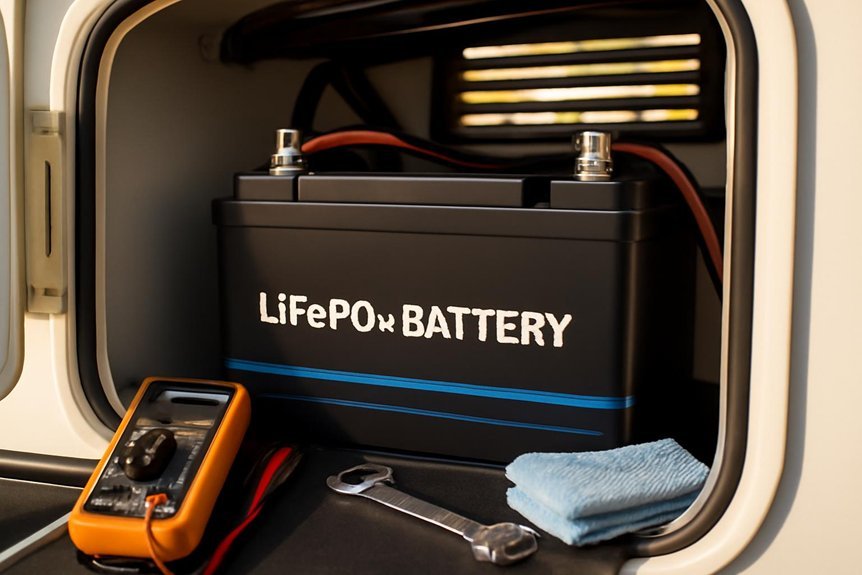
Lifepo4 batteries have become increasingly essential for RV owners due to their superior performance characteristics and safety profile. Their extended battery lifespan and high energy efficiency surpass traditional lead-acid options, reducing replacement frequency and operational costs. The weight advantages of Lifepo4 batteries are significant, easing installation and vehicle handling. Environmentally, they produce fewer harmful emissions and have a lower environmental impact over their lifecycle. With extensive charging cycles—often exceeding 2000—they maintain consistent capacity longer. Safety features, such as thermal stability and built-in protections, minimize risks of thermal runaway. When comparing performance, Lifepo4 batteries demonstrate superior durability and reliability, making them a smart investment despite higher upfront costs. Overall, their combination of efficiency, safety, and environmental benefits underscores their importance for modern RV applications.
How to Properly Charge and Discharge Your Lifepo4 Batteries
Properly charging and discharging Lifepo4 batteries is crucial to maximize their lifespan and performance. Effective charging strategies involve maintaining voltage levels within recommended ranges using appropriate charging sources, avoiding overvoltage, and guaranteeing consistent current flow. When discharging, limiting depth discharge is essential; shallow cycles preserve battery health and energy efficiency. We recommend:
Proper charging and shallow discharges extend LiFePO4 battery lifespan and optimize performance.
- Monitoring voltage levels during charge and discharge for peak performance.
- Implementing controlled discharging cycles to extend battery lifespan.
- Conducting load testing periodically to identify capacity drops.
- Following strict safety precautions, including proper wiring and ventilation.
These practices support accurate performance tracking and prevent damage. Proper management of charging sources, combined with understanding discharging cycles, guarantees longevity, reliability, and safe operation of your Lifepo4 batteries.
Regular Inspection and Cleaning for Optimal Battery Performance
Regular inspection of battery terminals is essential to prevent corrosion buildup, which can impede electrical conductivity. Keeping terminals clean and free of debris guarantees efficient power transfer and prolongs battery life. Consistent maintenance of these points optimizes overall battery performance and reliability.
Check for Corrosion Buildup
Corrosion buildup on battery terminals can considerably impair electrical conductivity and overall battery performance. To guarantee peak operation, we must incorporate a systematic approach:
- Regularly inspect terminals for white or bluish-green deposits, which indicate corrosion.
- Assess environmental factors, such as humidity or temperature, that accelerate corrosion, adjusting maintenance schedules accordingly.
- Apply terminal protection measures, like anti-corrosion sprays or protective caps, to prevent future buildup.
- Observe safety precautions during inspections to avoid electrical hazards, guaranteeing proper handling and PPE use.
Consistent inspection and targeted corrosion prevention extend battery lifespan and maintain reliable power. Incorporating these steps into your maintenance schedule minimizes the risk of terminal damage and enhances your RV’s electrical system performance.
Keep Terminals Clean and Tidy
Maintaining clean and tidy battery terminals is essential for ensuring peak electrical conductivity and reliable performance in your RV’s power system. Regular terminal cleaning prevents dust accumulation and minimizes corrosion, protecting terminal connections from degradation. Implementing a consistent maintenance schedule with visual inspections allows early detection of corrosion or loose cables. Proper cable organization within the battery enclosure reduces strain on terminals, enhancing safety and longevity. Applying corrosion protection measures, such as terminal coatings or terminal upgrades, further safeguards against environmental damage. During inspections, adhere to safety precautions to avoid short circuits or electrical shocks. Clean terminals should be free of debris and corrosion residues, ensuring optimal contact. By prioritizing terminal maintenance, you improve overall battery efficiency and extend the lifespan of your Lifepo4 system.
Managing Temperature and Environmental Conditions
Since lithium iron phosphate (LiFePO4) batteries are sensitive to temperature fluctuations, managing their environmental conditions is essential for peak performance and longevity. Temperature extremes can cause capacity loss or damage, so we recommend:
- Implementing insulation techniques and strategic battery placement to mitigate heat dissipation issues.
- Utilizing ventilation strategies to promote airflow and prevent overheating during high temperatures.
- Employing environmental monitoring tools for real-time data, enabling seasonal adjustments to temperature and humidity control.
- Ensuring humidity control and heat dissipation measures to prevent moisture-related corrosion and thermal stress.
Best Practices for Battery Storage When Not in Use
Proper storage of LiFePO4 batteries when they’re not in use is essential to preserving their lifespan and performance. To enhance battery longevity tips, maintaining the correct state of charge—around 50-70%—minimizes capacity loss during storage. We recommend storing batteries in a cool, dry environment with temperatures between 32°F and 77°F (0°C-25°C), avoiding extreme heat or cold that can accelerate degradation. Ensuring the battery terminals are clean and disconnected prevents parasitic drain and corrosion. Regularly checking the stored batteries, at least every three to six months, helps detect any voltage drops or issues early. Following these guidelines creates ideal storage conditions, reducing capacity fade and extending overall service life, ultimately ensuring the battery remains reliable when you need it.
Monitoring Battery Health and Recognizing Warning Signs
Monitoring the health of your LiFePO4 batteries is essential to secure peak performance and longevity. Effective management involves tracking key performance metrics and recognizing warning signs early.
- Voltage fluctuations indicate potential issues with charging cycles or thermal management, affecting overall battery lifespan.
- Regularly reviewing performance data from monitoring systems helps identify deviations from normal voltage and capacity levels.
- Monitoring temperature closely guarantees thermal management is functioning properly, preventing overheating that accelerates battery degradation.
- Incorporating a consistent maintenance schedule, including checks on voltage stability and cycle count, supports prime battery longevity.
Troubleshooting Common Lifepo4 Battery Issues
When troubleshooting LiFePO4 battery issues, we must systematically identify the root causes behind common problems such as voltage drops, capacity loss, or overheating. Voltage fluctuations often indicate connection issues or excessive load, while performance degradation relates to accumulated charging cycles. To maintain ideal battery lifespan, we use troubleshooting techniques like checking for loose terminals and verifying correct voltage levels. Understanding these signs helps prevent safety hazards and extends operational life.
| Issue | Diagnostic Approach |
|---|---|
| Voltage fluctuations | Inspect connections, measure voltage accuracy |
| Capacity loss | Track charge cycles, review maintenance tips |
| Overheating | Check cooling, reduce load, verify state of health |
| Connection issues | Tighten terminals, test wiring integrity |
| Performance degradation | Analyze usage patterns, adjust charging protocols |
Upgrading or Replacing Batteries: When and How to Do It
Deciding whether to upgrade or replace your RV’s LiFePO4 batteries hinges on evaluating their current performance and anticipated longevity. If battery lifespan is nearing its end or performance upgrades are needed, replacement becomes necessary. When considering a swap, focus on these key factors:
- Guarantee compatibility issues are addressed to prevent installation problems.
- Review warranty options for added safety precautions and potential cost savings.
- Evaluate cost considerations alongside environmental impact, favoring sustainable choices.
- Confirm installation tips for proper setup, maximizing safety and efficiency.
Upgrading may involve performance improvements, but if the existing battery no longer meets demands, replacement is the logical choice. Both options should account for safety precautions and long-term benefits, guaranteeing your RV operates reliably and sustainably.
Essential Tools and Accessories for Lifepo4 Maintenance
To effectively maintain Lifepo4 batteries, we rely on essential tools like a multimeter for accurate voltage assessments and proper battery cables to guarantee secure connections. A robust Battery Management System is vital for monitoring cell health and preventing system failures. These components form the foundation of a reliable maintenance routine that optimizes battery lifespan and safety.
Multimeter for Voltage Checks
A reliable multimeter is essential for accurately monitoring the voltage levels of your Lifepo4 batteries, guaranteeing peak performance and longevity. When considering multimeter selection, focus on models that prioritize voltage accuracy. This guarantees precise readings critical for maintenance.
Key considerations include:
- High-precision measurement range to detect subtle voltage fluctuations.
- Digital display readability for quick and accurate readings.
- True RMS capability for consistent results across varying signals.
- Durable build and safety features to withstand frequent use in RV environments.
Choosing a multimeter with these features assures reliable voltage checks, enabling timely interventions and optimized battery health. Proper multimeter selection directly impacts your ability to maintain consistent voltage levels, prolonging your Lifepo4 battery’s service life.
Proper Battery Cables
Proper battery cables are fundamental components that directly influence the safety, efficiency, and longevity of Lifepo4 batteries in RV systems. Selecting the correct cable gauge guarantees minimal voltage drop and reliable current flow, especially for high-capacity setups. Terminal connections must be secure and compatible with connector types to prevent arcing and resistance. Cable length should be enhanced to reduce voltage loss without creating excessive slack that can cause damage. Cable insulation must resist moisture, heat, and abrasion, while corrosion-resistant materials prolong lifespan. Routine cable maintenance involves inspecting for corrosion, cleaning terminal connections, and replacing worn or damaged cables. Attention to these details guarantees peak performance, reduces risk of failure, and maintains the integrity of the overall electrical system in your RV.
Battery Management System
Effective management of Lifepo4 batteries in an RV system hinges on the right tools and accessories that monitor, protect, and optimize battery performance. A robust Battery Management System (BMS) is essential for maintaining battery lifespan and energy efficiency. It guarantees safe operation by providing safety features like overcharge, over-discharge, and temperature protection, which prolong charging cycles and improve overall performance metrics.
Key components include:
- Monitoring Devices – Track voltage, current, and temperature, offering real-time data.
- Balancing Modules – Equalize cell voltage, enhancing lifespan and efficiency.
- Cutoff Switches – Prevent unsafe conditions from damaging the system.
- Data Logging Apps – Enable detailed analysis for maintenance tips and usage guidelines, reducing environmental impact.
Frequently Asked Questions
How Long Do Lifepo4 Batteries Typically Last With Proper Maintenance?
With proper maintenance best practices, Lifepo4 batteries typically last 8 to 10 years, depending on battery lifespan factors like charge cycles and operating conditions. Regular monitoring and careful handling maximize their longevity and performance.
Can Lifepo4 Batteries Be Used in Extremely Cold Climates?
We find Lifepo4 batteries can operate in cold climates with proper insulation, though cold performance drops considerably. Using battery insulation helps maintain temperature stability, ensuring safer, more reliable operation in extreme cold conditions.
What Safety Precautions Should I Take During Battery Maintenance?
We prioritize safety by wearing protective gear during battery maintenance, ensuring proper battery charging procedures, and carefully cleaning terminals to prevent corrosion. Always disconnect power before maintenance, and handle batteries with caution to avoid sparks or short circuits.
How Do I Dispose of or Recycle Old Lifepo4 Batteries Responsibly?
We recommend battery recycling through certified facilities to minimize environmental impact. Proper disposal prevents hazardous material release, ensuring safety and sustainability. Always follow local regulations and manufacturer guidelines to responsibly manage old Lifepo4 batteries.
Are There Specific Brands or Models Better Suited for RV Use?
Think of selecting a Lifepo4 battery like choosing a reliable map; brands like Battle Born and CALB stand out. Our research shows models with high cycle life and built-in BMS are ideal for RV use, ensuring durability and safety.
Conclusion
By adhering to these maintenance practices, we guarantee our Lifepo4 batteries stay reliable and efficient for every journey. Regular inspections, proper storage, and monitoring are essential for longevity. Are we willing to overlook these details and risk unexpected failures? Maintaining our batteries with diligence not only optimizes performance but also safeguards our investment, providing peace of mind on the road. Staying proactive today keeps us powered up tomorrow.