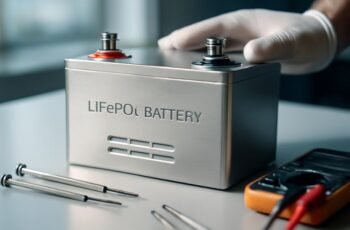
Imagine a battery sitting silently in a frost-covered landscape, its performance hampered by the biting cold. As temperatures drop, electrochemical reactions slow, internal resistance rises, and capacity diminishes. To guarantee your LiFePO4 batteries remain reliable, understanding proper maintenance during winter becomes essential. We’ll explore how to optimize charging, insulation, and monitoring techniques to protect your investment through harsh conditions—a task that requires precise methods and careful attention.
Key Takeaways
- Insulate batteries to retain heat and prevent capacity loss in cold temperatures.
- Charge batteries to 50-70% periodically every 2-4 weeks during winter storage.
- Monitor battery temperature continuously to adjust charging and prevent damage.
- Store batteries in dry, insulated enclosures within a temperature range of 0°C to 25°C.
- Conduct regular maintenance and testing to detect internal resistance and voltage issues early.
How Cold Temperatures Affect Lifepo4 Battery Performance
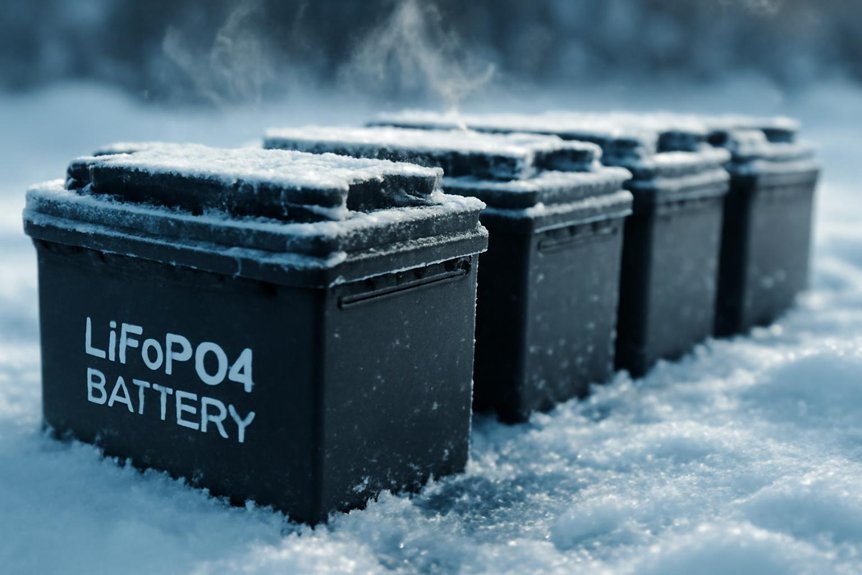
Cold temperatures directly impact the electrochemical reactions within Lifepo4 batteries, leading to reduced performance and capacity. This phenomenon primarily results from temperature effects on the battery chemistry, where lower temperatures hinder ion mobility and slow reaction kinetics. As a result, the internal resistance increases, causing voltage drops and diminished power output. The battery’s ability to accept and deliver charge is compromised, which can lead to incomplete charging and decreased overall capacity. These effects are most pronounced below ambient temperatures of 0°C, where the kinetics of lithium-ion transfer become notably less efficient. Understanding the influence of temperature effects on battery chemistry is essential, as it explains why Lifepo4 batteries exhibit reduced performance in cold environments, necessitating specific management strategies for ideal operation.
How to Keep Your Lifepo4 Batteries Charged in Winter
To maintain ideal charge levels in cold conditions, we must carefully adjust charging parameters based on temperature. Monitoring battery temperature guarantees safe and efficient charging, while insulating materials help preserve internal heat. Implementing these measures minimizes capacity loss and extends battery lifespan during winter months.
Optimize Charging Settings
Maintaining ideal charging settings is essential for preserving Lifepo4 battery performance during winter months, as lower temperatures can greatly impact charging efficiency and capacity. To enhance charging, we adjust both charging frequency and voltage settings based on ambient conditions. Proper voltage thresholds guarantee safe, complete charging without overvoltage risks, while appropriate charging frequency prevents capacity loss. Here’s a quick reference:
| Parameter | Recommended Setting | Purpose |
|---|---|---|
| Charging Voltage | 3.65V – 3.65V (max) | Maximize capacity & safety |
| Charging Frequency | Every 2-4 weeks | Prevent capacity fade |
| Temperature Adjustment | Reduce voltage in cold weather | Minimize stress on battery |
Adhering to these precise settings helps maintain peak performance and prolongs battery life during winter.
Monitor Battery Temperature
Since battery temperature greatly influences Lifepo4 performance during winter, we must actively monitor it to prevent capacity loss and potential damage. Accurate temperature tracking allows us to implement effective thermal management strategies, guaranteeing peak operation. To maintain proper thermal conditions, consider the following:
- Use temperature sensors to provide real-time data on battery core temperature
- Adjust charging rates based on temperature readings to avoid overcurrent in cold conditions
- Incorporate battery insulation to minimize heat loss and sustain consistent temperature levels
Constant temperature monitoring helps us identify when additional measures, such as heating or insulation, are necessary. Proper thermal management safeguards battery longevity, preserves capacity, and guarantees safe operation during winter conditions.
Use Insulating Materials
Insulating materials play an essential role in preserving battery temperature and guaranteeing reliable operation during winter. Proper use of insulation materials, such as thermal wraps, can greatly reduce heat loss and maintain ideal battery performance. Thermal wraps are designed to provide a consistent insulating barrier, preventing cold ambient air from rapidly cooling the battery cells. Applying these wraps tightly around the battery guarantees minimal thermal leakage. Additionally, selecting high-quality insulation materials with low thermal conductivity enhances efficiency. Proper insulation is especially critical when batteries are stored or operated in exposed environments. By effectively using thermal wraps and other insulation materials, we can protect Lifepo4 batteries from extreme cold, extending their lifespan and ensuring they remain charged and functional in winter conditions.
Protecting Lifepo4 Batteries From Extreme Cold Exposure
Extreme cold can considerably impair the performance and lifespan of Lifepo4 batteries, making effective protection crucial. To prevent damage, we recommend focusing on proper cold storage and insulation methods. Adequate battery insulation minimizes heat loss and maintains ideal operating temperatures. Cold storage solutions, such as insulated enclosures, are essential in harsh environments. Additionally, consider these protective measures:
- Use high-quality insulation materials to reduce thermal conductivity
- Store batteries in temperature-controlled environments when not in use
- Employ thermal blankets or wraps designed for battery protection
Implementing these strategies guarantees batteries remain within safe temperature ranges, preventing capacity loss and degradation caused by extreme cold exposure. Proper insulation and cold storage are critical for prolonging Lifepo4 battery life during winter months.
Monitoring Voltage Levels and Preventing Over-Discharge
Monitoring voltage levels is essential to prevent over-discharge and preserve the health of Lifepo4 batteries during winter. Accurate voltage monitoring allows us to detect early signs of voltage decline, ensuring timely intervention before reaching critical discharge thresholds. Lifepo4 batteries have a specific voltage cutoff (around 2.5V per cell) that must not be surpassed to prevent irreversible damage. Implementing reliable voltage monitoring systems, such as digital multimeters or integrated battery management systems (BMS), facilitates precise discharge prevention. By continuously tracking voltage levels, we can optimize usage and avoid deep discharges that compromise capacity and lifespan. Proper discharge prevention through vigilant voltage monitoring is vital for maintaining battery performance and safety in cold conditions, ensuring longevity and consistent operation throughout the winter months.
Best Practices for Storing Lifepo4 Batteries During Winter
Proper winter storage of Lifepo4 batteries requires maintaining an ideal temperature, typically between 0°C and 25°C, to prevent capacity loss. We recommend keeping batteries sufficiently charged—around 50-70%—to minimize degradation during inactivity. Additionally, storing batteries in a dry environment reduces the risk of corrosion and moisture-related damage.
Optimal Storage Temperature
Maintaining the ideal storage temperature for Lifepo4 batteries during winter is crucial to preserve their capacity and lifespan. Temperature fluctuations can accelerate capacity loss and increase internal resistance, so consistent conditions are essential. Optimal storage temperatures range between 0°C and 25°C, with minimal variation. To mitigate temperature effects, proper battery insulation helps stabilize internal temperatures and reduces exposure to external cold. Consider using insulated enclosures or thermal blankets to prevent rapid cooling, especially in unheated environments. Avoid storing batteries in places prone to drafts or direct contact with cold surfaces. Ensuring a stable temperature environment minimizes thermal stress and preserves battery chemistry. Proper insulation and controlled temperatures are fundamental to maintaining battery health during winter storage.
Keep Batteries Charged
To guarantee Lifepo4 batteries remain in peak condition during winter storage, we must keep them adequately charged, as low state-of-charge levels can lead to capacity loss and potential damage. Battery discharge naturally occurs over time, even in dormant states, which underscores the importance of monitoring charge levels regularly. Maintaining a 40-60% charge prevents excessive capacity fade caused by deep discharge cycles. We recommend establishing a consistent charging frequency, such as every 3 to 6 months, depending on storage duration and temperature conditions. This approach minimizes the risk of over-discharge, guarantees ideal chemical stability, and preserves overall battery health. Precise management of charge levels and timely recharging are critical to extending Lifepo4 battery longevity during winter storage periods.
Store in Dry Environment
Storing Lifepo4 batteries in a dry environment is crucial for preserving their chemical stability and preventing damage during winter. Proper battery storage minimizes moisture exposure, which can lead to corrosion and capacity loss. Effective moisture control is critical; avoid humid areas and guarantee the storage space is well-ventilated and temperature-controlled.
Key best practices include:
- Keeping batteries in a sealed, moisture-resistant container
- Maintaining ambient humidity levels below 50%
- Storing in a cool, stable temperature environment
Adhering to these guidelines guarantees peak battery performance and longevity during winter months. Proper storage not only reduces the risk of moisture-related deterioration but also supports overall battery health, making certain your Lifepo4 batteries remain reliable and safe.
Using Battery Warmers and Insulation to Maintain Optimal Temperature
When outdoor temperatures plummet, employing battery warmers and insulation becomes crucial to keep LiFePO4 batteries within their ideal operating range. Effective battery heating guarantees that the internal temperature remains above the critical threshold, preventing capacity loss and potential damage. Insulation techniques, such as foam wraps or thermal blankets, minimize heat exchange with the cold environment, maintaining consistent temperature levels. These measures reduce the risk of thermal stress and improve battery performance during winter conditions. Proper application of battery warmers involves precise control, often with thermostatic regulation, to avoid overheating. Combining active battery heating with strategic insulation provides a robust solution, guaranteeing reliable operation and prolonging battery lifespan despite harsh cold conditions.
Recognizing and Troubleshooting Common Winter Battery Issues
As temperatures drop, recognizing the signs of winter-related battery issues becomes vital for maintaining reliable performance. Environmental factors like low temperatures can impair battery capacity and cause voltage drops, making battery diagnostics critical. Common signs include decreased runtime, difficulty in charging, and abnormal voltage readings. To troubleshoot effectively:
Cold temperatures impair battery performance; monitor voltage, check for corrosion, and watch for reduced runtime during winter.
- Monitor voltage levels regularly for irregularities.
- Inspect for increased internal resistance via diagnostics tools.
- Check for physical signs such as swelling or corrosion.
Understanding how environmental factors influence battery behavior allows us to identify issues early. Failing to recognize these symptoms can lead to reduced lifespan or unexpected failure. Accurate diagnostics tailored to winter conditions are vital to guarantee peak operation and prompt intervention when problems arise.
When to Perform Maintenance and Testing on Your Batteries
Regular maintenance and testing are essential during the winter months to guarantee LiFePO4 batteries operate reliably under cold conditions. We recommend adhering to a strict maintenance schedule that includes periodic battery testing to monitor voltage, capacity, and internal resistance. Conduct battery testing monthly, or more frequently if temperatures drop considerably, to identify potential performance issues early. This proactive approach assures the batteries are functioning within ideal parameters and prevents unexpected failures. During testing, pay close attention to deviations from manufacturer specifications, especially in low temperatures, which can affect capacity and charging efficiency. Consistent maintenance practices allow us to detect early signs of degradation, assuring safe operation and extending battery lifespan throughout winter.
Tips for Extending Lifepo4 Battery Lifespan Throughout the Cold Season
To maximize the lifespan of LiFePO4 batteries during the cold season, it’s crucial to implement specific strategies that mitigate the adverse effects of low temperatures. Proper battery maintenance and adherence to winter precautions help prevent capacity loss and potential damage. We recommend:
Maximize LiFePO4 battery lifespan with proper maintenance and winter precautions to prevent capacity loss and damage.
- Keeping batteries in an insulated, temperature-controlled environment when not in use
- Avoiding deep discharges in freezing conditions, which can harm cell chemistry
- Regularly monitoring voltage and temperature to detect early signs of stress
Additionally, pre-warming batteries before use guarantees peak performance, and maintaining a consistent charge level helps prevent capacity degradation. These winter precautions are critical for extending battery lifespan, assuring reliable operation, and preserving overall battery health throughout the cold season.
Frequently Asked Questions
Can Lifepo4 Batteries Be Safely Used Indoors During Winter?
Yes, Lifepo4 batteries are safe indoors during winter if we follow proper indoor safety protocols and winter precautions, such as maintaining ideal temperature ranges and ensuring adequate ventilation, to prevent thermal issues and maximize battery lifespan.
How Often Should I Check My Lifepo4 Batteries in Cold Weather?
Think of your batteries as delicate plants; we check them weekly for battery maintenance during cold storage. Regular inspections guarantee peak performance, prevent damage from cold temperatures, and maintain longevity, especially in winter’s harsh conditions.
What Are Signs That My Lifepo4 Battery Is Damaged From Cold?
We observe signs like reduced capacity, swelling, or increased internal resistance, indicating damage from cold effects. These issues compromise battery lifespan, and prompt action is needed to prevent further deterioration and guarantee safe operation.
Do Lifepo4 Batteries Require Special Chargers in Winter?
We recommend using a charger compatible with Lifepo4 batteries to guarantee peak winter performance. Specialized chargers prevent voltage spikes and protect against cold-induced inefficiencies, maintaining battery health and assuring reliable operation in freezing conditions.
How Does Altitude Affect Lifepo4 Battery Performance in Winter?
Altitude effects can reduce Lifepo4 battery performance in winter due to decreased air pressure, which influences cooling and chemical reactions. The temperature impact is amplified at higher altitudes, potentially leading to diminished capacity and increased charging challenges.
Conclusion
By understanding how cold impacts LiFePO4 batteries, we can implement effective strategies to preserve their performance and lifespan. Keeping them properly charged, insulated, and monitored guarantees they operate efficiently even in harsh winter conditions. While some believe cold enhances battery longevity, evidence suggests extreme low temperatures accelerate degradation. As a result, proactive management, including temperature control and routine checks, is essential. Our commitment to these practices safeguards your batteries’ health, securing reliable power when you need it most.