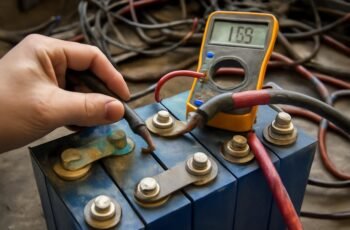
Consider a solar installation where the LiFePO4 battery bank operates continuously; even with its reputation for stability, small issues like corrosion or loose connections can compromise performance over time. While these batteries require less maintenance than other types, understanding when and how to check them is essential for longevity. We’ll explore whether regular maintenance is necessary and what measures can help maximize their lifespan.
Key Takeaways
- LiFePO4 batteries require minimal maintenance due to their stable chemistry and design.
- Regular inspections for damage, corrosion, and venting are recommended, especially during heavy use.
- Proper charging with designated chargers and voltage limits helps maintain battery health.
- Monitoring voltage and performance signs prevents issues like capacity loss and failure.
- Keeping batteries in cool, dry environments and avoiding deep discharges prolong lifespan.
Do LiFePO4 Batteries Require Regular Maintenance?

Do LiFePO4 batteries require regular maintenance? In reality, they demand minimal upkeep compared to other chemistries, which positively impacts their battery lifespan. Unlike common maintenance myths suggesting frequent balancing or equalization, LiFePO4 cells naturally maintain voltage stability, reducing the need for routine interventions. Proper use involves avoiding deep discharges and extreme temperatures, which can compromise longevity. Regular inspections for corrosion and ensuring secure connections are prudent, but extensive maintenance isn’t necessary for peak performance. By understanding these factors, we can maximize the battery’s lifespan without unnecessary procedures. Ultimately, LiFePO4 batteries are designed for reliability and low-maintenance operation, dispelling myths that maintenance is complex or time-consuming. This understanding helps us enhance usage and extend battery service life efficiently.
Understanding LiFePO4 Battery Chemistry and Design
Understanding the chemistry and design of LiFePO4 batteries is essential for proper maintenance and performance optimization. Their core involves lithium iron phosphate chemistry, which provides stability and safety advantages over other lithium-ion chemistries. We’ll examine their construction and how the specific materials influence their behavior and longevity.
Lithium Iron Phosphate Chemistry
Lithium Iron Phosphate (LiFePO₄) batteries rely on a unique cathode chemistry that offers enhanced stability and safety compared to other lithium-ion chemistries. This chemistry involves an iron phosphate cathode, which contributes to the battery’s thermal stability and long cycle life. The chemistry’s inherent stability reduces the risk of thermal runaway, making it a safer choice for various applications. Lithium advantages of LiFePO₄ include high current capability and environmental friendliness, as iron phosphate is non-toxic and abundant. Additionally, the stable crystal structure of the cathode material guarantees minimal capacity loss over time. Key features include:
- Superior thermal stability and safety
- Long cycle life due to stable chemistry
- Environmentally friendly and abundant materials
- Enhanced durability and reliability in demanding conditions
Battery Construction and Design
The construction and design of LiFePO₄ batteries are fundamentally rooted in their unique chemistry, which dictates how each component is engineered for peak performance and safety. These batteries are typically constructed as cylindrical, prismatic, or pouch cell types, each refined for specific applications and performance factors. The chemistry influences electrode composition, separator materials, and electrolyte formulation, guaranteeing stability and longevity. The design emphasizes thermal management, current handling, and cycle life, directly impacting battery performance and safety. Proper cell balancing and robust casing construction are essential to prevent degradation and guarantee consistent operation. Understanding these design principles helps us appreciate how battery types are tailored to meet diverse energy storage needs while maintaining superior performance factors.
How Often Should You Check Your LiFePO4 Battery?
Regular inspections are essential to guarantee peak LiFePO4 battery performance, with a focus on monitoring voltage levels and identifying potential issues early. We recommend checking the battery at least monthly, or more frequently under heavy usage conditions. Additionally, visual assessments for physical damage help prevent safety hazards and maintain longevity.
Regular Inspection Schedule
Scheduling consistent inspections is crucial to maintaining peak performance and longevity of LiFePO4 batteries. A regular inspection schedule enables us to implement preventive measures promptly and guarantee the battery remains in prime condition. We recommend conducting visual and functional checks at least monthly, focusing on the following:
- Examining terminals and connections for corrosion or looseness
- Inspecting battery casing for cracks or leaks
- Verifying that venting systems are unobstructed
- Reviewing the inspection checklist to confirm all maintenance points are covered
Adhering to this schedule helps identify potential issues early, reducing the risk of failure. Precise documentation during each inspection enhances monitoring accuracy and supports effective preventive measures, ultimately extending the lifespan of the battery system.
Monitoring Voltage Levels
Monitoring voltage levels is crucial for maintaining ideal performance and safety of LiFePO4 batteries, and determining the appropriate checking frequency depends on usage patterns and operational conditions. Regular voltage monitoring provides critical insights into battery health, enabling early detection of potential issues such as over-discharge or imbalance. For typical applications, daily checks are recommended during periods of heavy usage, while weekly evaluations suffice for stable, low-demand environments. Precise voltage monitoring involves measuring cell and pack voltages with calibrated tools to guarantee accuracy. Consistent voltage checks help maintain optimal battery health by preventing deep discharges that can damage cells. Ultimately, tailored monitoring schedules based on operational demands are essential for prolonging battery lifespan and guaranteeing safe, reliable performance over time.
Checking for Physical Damage
Inspecting your LiFePO4 battery for physical damage should be a routine part of maintenance, as physical issues can compromise safety and performance. Regular damage assessment guarantees early detection of issues that could lead to safety hazards or reduced battery lifespan. Conduct a detailed physical inspection to identify signs of deformation, cracks, or corrosion. Check for bulging or swelling, which indicates internal damage. Examine terminals and connectors for corrosion or looseness. Look for any leaks or discoloration on the casing. Performing these checks at regular intervals, such as monthly or after heavy use, helps maintain peak performance and safety. Consistent damage assessment minimizes risks associated with unnoticed physical damage, extending the overall lifespan of your LiFePO4 battery.
Signs That Your LiFePO4 Battery Needs Attention
When a LiFePO4 battery shows irregular performance or fails to hold a charge as expected, it signals that maintenance may be necessary. Deteriorating battery health often manifests through inconsistent voltage levels or reduced capacity. You might notice increased charging times or unexpected voltage drops during discharge cycles. These are clear signs that your battery’s internal chemistry is compromised. Monitoring these indicators allows us to implement targeted maintenance tips, such as inspecting connections or verifying temperature stability, to prevent further damage. Timely attention guarantees peak performance and prolongs battery lifespan. Recognizing these signs early helps maintain overall system reliability and efficiency, making routine checks and understanding your battery’s behavior essential components of effective maintenance.
Do You Need to Equalize or Balance LiFePO4 Batteries?
Have you ever wondered if your LiFePO4 batteries require equalization or balancing? Proper battery balancing guarantees all cells maintain consistent voltage levels, which is crucial for peak performance and longevity. The equalization process involves intentionally slightly overcharging the pack to equalize cell voltages, but it’s generally unnecessary for LiFePO4 batteries unless imbalance is detected.
LiFePO4 batteries rarely need equalization unless cell imbalance is detected. Regular monitoring ensures optimal performance and lifespan.
Key points include:
- Battery balancing prevents capacity loss and uneven aging.
- LiFePO4 batteries naturally resist cell imbalance due to stable chemistry.
- Overuse of equalization can cause unnecessary wear.
- Regular monitoring helps determine if balancing is needed.
In most cases, LiFePO4 batteries don’t need routine equalization, but careful monitoring guarantees consistent operation and lifespan extension.
Proper Charging Practices for LiFePO4 Cells
Proper charging practices are fundamental to maintaining the health and performance of LiFePO4 cells. Implementing correct charging techniques guarantees ideal battery longevity and minimizes degradation. We recommend using chargers specifically designed for LiFePO4 chemistry, maintaining a voltage cutoff of around 3.65V per cell, and avoiding overcharging. Consistent, controlled current rates during charging prevent undue stress on the cells.
| Charging Parameter | Recommended Setting |
|---|---|
| Voltage Limit | 3.65V per cell |
| Charge Rate | 0.5C to 1C |
| Temperature Range | 0°C to 45°C |
Adhering to these parameters guarantees efficient, safe charging and prolongs battery lifespan.
Tips for Extending the Lifespan of Your LiFePO4 Battery
Maintaining proper charging practices and conducting regular battery inspections are essential for maximizing your LiFePO4 battery’s lifespan. Ensuring correct charge levels prevents undue stress on the cells, while routine checks identify potential issues early. Implementing these strategies optimizes performance and extends the overall service life of your battery.
Proper Charging Practices
To maximize the lifespan of your LiFePO4 battery, implementing correct charging practices is crucial. Proper charging reduces unnecessary stress on the battery, thereby extending battery longevity and optimizing performance across charging cycles. Maintaining the voltage within recommended limits (typically 3.2V to 3.3V per cell) prevents overvoltage damage, while avoiding complete discharges minimizes cycle fatigue. Consistent use of compatible chargers guarantees stable current flow and prevents voltage spikes. Additionally, avoiding frequent shallow discharges and maintaining a partial state of charge between 20% and 80% can greatly prolong the number of effective charging cycles.
- Use a charger with a proper cut-off voltage
- Avoid rapid charging unless specified
- Keep the battery in a cool, dry environment during charging
- Limit deep discharges to preserve cycle life
Regular Battery Inspections
Regular battery inspections are essential for identifying potential issues before they compromise your LiFePO4 battery’s lifespan. Consistent inspections allow us to monitor voltage levels, check for signs of deterioration, and measure internal resistance, all of which directly influence maintenance frequency and overall battery health. By systematically evaluating these parameters, we can detect early signs of imbalance or capacity loss, preventing unnecessary degradation. Maintaining accurate records of inspection results helps enhance maintenance schedules, ensuring interventions are timely and effective. Regular inspections reduce the risk of unexpected failures, extending the battery’s effective lifespan. Ultimately, a disciplined inspection routine supports peak performance, maximizes efficiency, and prolongs the operational life of your LiFePO4 battery.
Common Mistakes That Can Damage LiFePO4 Batteries
Even a small mistake in handling LiFePO4 batteries can greatly reduce their lifespan and performance. Incorrect practices can compromise battery longevity, diminish charging cycles, and increase risks like terminal corrosion. Overlooking temperature effects, such as exposing batteries to extreme heat or cold, accelerates degradation. Ignoring storage guidelines may lead to voltage discrepancies and capacity loss. Failing to manage discharge rates or neglecting proper cell balancing can cause uneven wear and reduce overall efficiency. Common misconceptions, like assuming all charging protocols are suitable or neglecting safety precautions, can result in damage. To prevent these issues, adhere to recommended voltage ranges, monitor temperature conditions, and implement correct storage and maintenance procedures. Proper handling guarantees peak performance and extends the lifespan of LiFePO4 batteries.
Environmental Factors That Affect LiFePO4 Battery Performance
Environmental conditions play a significant role in determining the performance and longevity of LiFePO4 batteries. Temperature effects are critical; high temperatures accelerate degradation, while low temperatures can reduce capacity. Humidity impact can lead to corrosion and compromised insulation if not properly managed. Ideal storage conditions involve maintaining a cool, dry environment to prevent capacity loss. Cycling frequency influences battery lifespan—frequent cycling accelerates wear, whereas moderate use extends life. The charging environment must be stable, avoiding voltage fluctuations that can damage cells. Discharge rates also matter; high discharge rates increase stress on the battery, potentially shortening its lifespan. Understanding and controlling these environmental factors is essential for maximizing the efficiency and durability of LiFePO4 batteries over time.
When to Seek Professional Help for Your LiFePO4 Battery
While LiFePO4 batteries are known for their durability, certain signs indicate when professional help is needed. If you notice persistent voltage irregularities, rapid capacity loss, or unusual heating, it’s crucial to consult an expert. Ignoring these signs can compromise battery safety and escalate maintenance costs. Additionally, swelling or leakage, despite being rare, warrants immediate professional intervention. Proper diagnosis guarantees peak performance and prevents potential safety hazards. Recognizing these indicators helps maintain the battery’s integrity and safety standards, avoiding costly repairs. Prompt professional assistance guarantees that your LiFePO4 battery remains reliable, safe, and cost-effective over its lifespan. Vigilance and timely action are key to mitigating risks associated with battery failure.
Frequently Asked Questions
Can Lifepo4 Batteries Be Used in Freezing Temperatures?
Lifepo4 batteries can be used in freezing temperatures, but temperature effects may reduce their performance and capacity. They operate best above freezing, so we recommend pre-warming in cold climates to maintain ideal freezing performance and avoid damage.
How Do Lifepo4 Batteries Compare to Lead-Acid Batteries?
Lifepo4 batteries outperform lead-acid ones in energy density and charging efficiency, making them the superheroes of energy storage. They’re lighter, safer, and more durable, proving essential for high-performance applications requiring reliable, long-lasting power solutions.
Are Lifepo4 Batteries Safe for Residential Energy Storage?
Yes, LiFePO4 batteries are safe for residential energy storage, offering high residential safety due to stable chemistry and thermal stability. They enhance energy efficiency, reduce risk of fire, and require minimal maintenance for reliable home energy management.
What Is the Typical Lifespan of a Lifepo4 Battery?
Lifepo4 batteries typically last 8-10 years, influenced by battery chemistry and factors like charge cycles, temperature, and usage. Proper management minimizes degradation, ensuring ideal lifespan and performance in energy storage applications.
Can Lifepo4 Batteries Be Recycled Easily?
Coincidentally, Lifepo4 batteries are highly recyclable, reducing environmental impact through efficient battery recycling processes. Their materials allow for straightforward recovery and reuse, making Lifepo4 batteries an environmentally responsible choice for sustainable energy storage solutions.
Conclusion
In conclusion, while LiFePO4 batteries require minimal maintenance compared to other chemistries, regular inspections are essential for optimal performance and longevity. Studies show that proper care can extend their lifespan by up to 50%, considerably reducing replacement costs. Monitoring voltage, avoiding deep discharges, and checking for physical issues are simple yet effective steps. By adhering to these practices, we guarantee reliable operation and maximize the investment in this advanced battery technology.