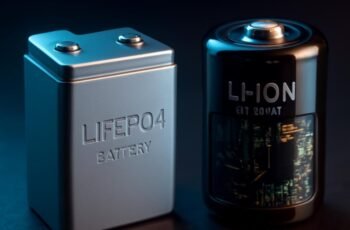
Did you know that LiFePO4 batteries can typically be recharged in as little as 2-4 hours, whereas lead-acid batteries often require 8-12 hours? This difference stems from LiFePO4’s superior charge acceptance and lower internal resistance, enabling faster cycling without damage. Understanding these variations is essential for optimizing system performance and lifespan. Exploring the factors that influence these charging times can help you determine which battery type best suits your specific application.
Key Takeaways
- LiFePO4 batteries typically charge in 2-4 hours, whereas lead-acid batteries take 8-12 hours.
- LiFePO4’s higher charge acceptance rate allows for faster charging cycles.
- Lead-acid batteries experience higher internal resistance, slowing their charging process.
- Faster charging in LiFePO4 is supported by better efficiency and chemical stability.
- Application-specific factors and charger quality influence actual charging times for both types.
How Do LiFePO4 and Lead-Acid Batteries Differ in Charging Speed?
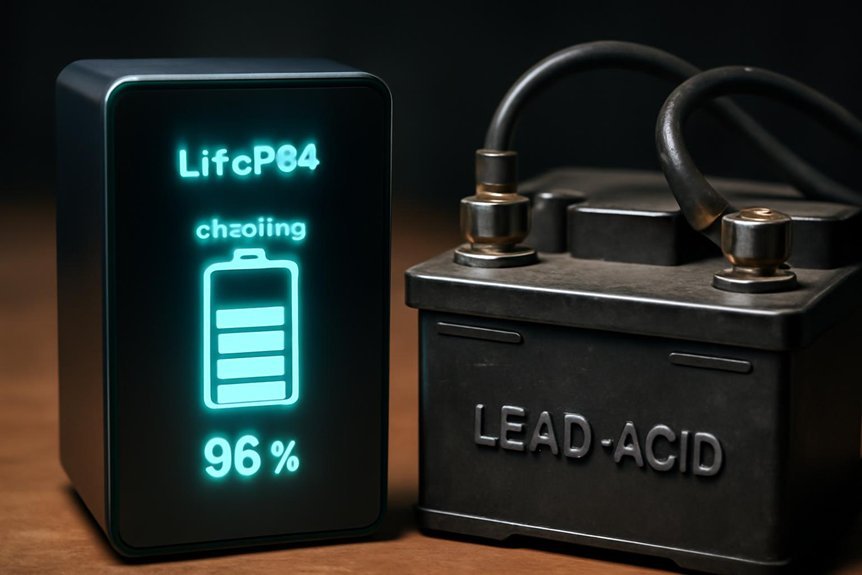
Have you ever wondered why LiFePO4 batteries typically charge faster than traditional lead-acid batteries? The key lies in their charging efficiency, which is directly influenced by battery chemistry. Lithium Iron Phosphate (LiFePO4) cells have a higher charge acceptance rate due to their stable chemistry and minimal internal resistance. This allows for more efficient energy transfer during charging, reducing time and energy loss. In contrast, lead-acid batteries exhibit slower charging speeds because their chemical processes involve sulfation and lead plate reactions, which create higher internal resistance. Consequently, LiFePO4’s superior charging efficiency results in quicker, more effective charging cycles. Understanding these fundamental chemical differences highlights why LiFePO4 batteries outperform lead-acid batteries in charging speed, especially in high-demand applications.
Factors That Influence Charging Times for Both Battery Types
Several key factors directly influence the charging times of both LiFePO4 and lead-acid batteries, affecting efficiency and cycle duration. Charging efficiency plays a critical role, as higher efficiency reduces energy loss during charging, leading to faster replenishment. Voltage levels must be carefully managed; exceeding recommended voltages risks damage, while undershooting prolongs charging times. Temperature effects considerably impact performance—elevated temperatures can accelerate charging but may degrade the battery, whereas low temperatures slow chemical reactions, extending charge duration. Effective battery management systems enhance charging profiles, ensuring safe and efficient operation. They regulate voltage, current, and temperature, preventing overcharging and thermal stress. These interconnected factors collectively determine how quickly each battery type can be replenished, underscoring the importance of precise control for peak performance.
Comparing Real-World Charging Durations: LiFePO4 vs Lead-Acid
When comparing the real-world charging durations of LiFePO4 and lead-acid batteries, it becomes evident that their practical recharge times differ markedly due to inherent chemical and design characteristics. LiFePO4 batteries generally exhibit higher charging efficiency, enabling faster recharge cycles, while lead-acid batteries are slower due to their lower charging efficiency and conservative current limits.
Key differences include:
- Charging speed: LiFePO4 often completes a full charge in 2-4 hours, compared to 8-12 hours for lead-acid.
- Charge acceptance: LiFePO4 tolerates higher charge rates without damage, reducing overall charging time.
- Battery technology: Chemical stability in LiFePO4 allows for more aggressive charging profiles.
- Practical implications: Real-world durations are influenced by charger quality, temperature, and state of health, but LiFePO4’s superior charging efficiency generally results in shorter recharge times.
How Charging Rate Affects Battery Lifespan and Performance
Charging rate plays an essential role in determining both the lifespan and performance of batteries, as higher rates can accelerate degradation while optimizing operational efficiency. Rapid charging often reduces charging efficiency and stresses the battery chemistry, leading to faster capacity loss. Conversely, slower rates promote stable chemical reactions, extending battery life. The table below highlights key interactions:
| Charging Rate | Effect on Battery Chemistry | Impact on Performance |
|---|---|---|
| High | Accelerates degradation | Short-term boost |
| Moderate | Maintains stability | Balanced performance |
| Low | Preserves chemistry | Longer lifespan |
| Excessively Slow | Underutilizes battery | Inefficient charging |
Understanding these dynamics helps optimize charging strategies, minimizing degradation and maximizing both battery longevity and performance.
Which Battery Is Faster to Recharge for Your Specific Application?
Determining which battery type recharges faster depends on specific application requirements and operational conditions. Battery efficiency and advanced charging technology play significant roles in this assessment. Generally, Lifepo4 batteries are designed for rapid charging due to their superior charge acceptance and thermal management, whereas lead acid batteries have limitations in high-rate charging. Consider these factors:
- Charging technology compatibility: Lifepo4 supports high-current fast-charging, reducing downtime.
- Battery efficiency: Lifepo4 maintains high efficiency during fast recharge cycles, unlike lead acid, which can suffer capacity loss.
- Application load profile: Heavy-duty applications benefit from Lifepo4’s quick recharge capabilities.
- Operational temperature: Lifepo4 performs better at varied temperatures, enabling faster recharges in diverse conditions.
Frequently Asked Questions
How Does Temperature Impact Charging Times for Lifepo4 and Lead-Acid Batteries?
Temperature considerably impacts charging times due to battery chemistry differences; higher temperatures accelerate charging but risk thermal runaway, while lower temperatures slow the process. Effective thermal management is essential for optimizing charge rates and maintaining battery safety.
Can Using a Higher Amperage Charger Reduce Overall Charging Time Effectively?
Using a higher amperage charger accelerates fast charging, notably reducing overall charging time. The amperage impact is essential, but we must guarantee the battery’s specifications support higher currents to avoid damage and optimize charging efficiency.
What Safety Considerations Are Associated With Faster Charging of These Batteries?
Fast charging amplifies safety risks, requiring meticulous thermal management to prevent overheating. With LiFePO4’s stable chemistry, risks are lower, but lead acid batteries demand strict monitoring to avoid thermal runaway during rapid charging.
Do Battery Age and Usage History Affect Charging Speed Differences?
Battery age and usage patterns greatly influence charging speeds, as aging batteries often experience reduced lifespan and altered chemistry, which can slow charging efficiency. Consistent usage patterns help maintain ideal charging performance over a battery’s lifespan.
How Do Different Charging Protocols Influence Recharge Times for Each Battery Type?
Different charging protocols notably influence recharge times by optimizing charging efficiency; Lifepo4 batteries respond well to rapid, pulse, or balanced protocols, whereas lead acid batteries benefit from slower, steady charging variations, affecting overall recharge speed and battery longevity.
Conclusion
Basically, LiFePO4 batteries act like a high-speed train, swiftly reaching their destination, while lead-acid batteries resemble a steady freight train, taking longer but delivering reliable power. Understanding these charging dynamics helps us make informed choices based on our needs. By analyzing factors like charge acceptance and internal resistance, we see that LiFePO4’s rapid recharge capability offers a technological advantage, transforming how we power our devices—faster, smarter, and more efficiently.