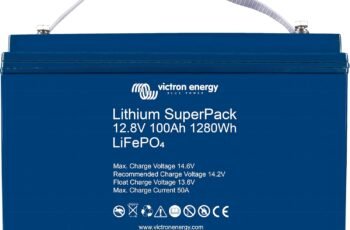
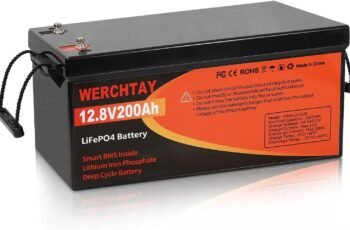
We’ll assess how the ECO-WORTHY 390W solar kit performs as a coordinated motorhome power system, from its bifacial panels and MPPT controller to its 1,280Wh LiFePO4 battery and 1,100W inverter. Its rated output looks promising, but real-world energy depends on sunlight, shading, and appliance demand. We’ll examine the kit’s key features, practical advantages, and limitations—and whether its power budget suits your travel needs.
Key Takeaways
- The kit combines two 195W bifacial panels, a 100Ah LiFePO4 battery, a 40A MPPT controller, and a 1,100W pure sine wave inverter.
- Its 390W array can generate up to 1.56kWh in four hours of full sun, though real-world output varies with conditions.
- The battery stores 1,280Wh, while its built-in management system and the MPPT controller help protect charging.
- The inverter provides 230V AC, with a 1,100W continuous rating and 2,200W peak; high-draw appliances may exceed its capacity.
- It suits modest motorhome power needs, but longer autonomy or demanding appliances may require extra panels, storage, or shore power.
390W Motorhome Solar Kit
For a motorhome power system, the ECO-WORTHY 390W kit combines two 195W bifacial panels with a 100Ah LiFePO4 battery, a 40A MPPT controller, and a 1,100W pure sine wave inverter. This integrated setup delivers 12V storage and converts energy to 230V AC for compatible appliances. With up to 1.56kWh daily generation under four hours of full sunshine, we can assess its potential against your expected loads and sunlight. Motorhome installation requires space for the panels and secure placement for the battery and electronics. The system’s coordinated components support efficient energy use and greater travel autonomy, while actual output varies with conditions.
Detailed features
How do the ECO-WORTHY kit’s components work together? Two 195W panels deliver up to 390W, while the 40A controller regulates charging for the 100Ah LiFePO4 battery. The Bifacial panel design uses transparent backs and 12BB cells to capture reflected light, with up to 23% conversion efficiency and 15% additional energy under suitable conditions. With four peak-sun hours, output can reach 1.56kWh daily.
MPPT battery protection works alongside the battery’s built-in management system to help prevent damage during charging. We can draw stored 12V power through the 1100W pure sine wave inverter, which supplies 230V AC and supports compatible appliances, subject to its continuous and peak ratings.
Pros and Cons
We’ll assess the kit’s efficiency-focused strengths, including its bifacial panels, LiFePO4 storage, and integrated protections. We’ll also weigh limits such as its 390W maximum output and 1,100W inverter rating. This comparison will help you judge whether its performance fits your power needs.
Pros
The ECO-WORTHY 390W kit combines bifacial panels, a long-life LiFePO4 battery, an MPPT controller, and a pure sine wave inverter in one system, reducing the need to source compatible components separately. For motorhome use, this integrated setup streamlines installation and energy management. Bifacial efficiency can add up to 15% more energy than conventional panels, while the 390W array may produce 1.56kWh daily in four hours of full sun. The 1,280Wh battery supports storage, and LiFePO4 longevity exceeds 4,000 deep cycles. A 40A MPPT controller helps protect the battery, while the 1,100W inverter supplies stable AC power for compatible appliances.
Cons
Despite its integrated design, this kit has limits we should weigh before choosing it. Limited capacity is the first constraint: the 1,280Wh battery and 390W array may not sustain several high-draw appliances for long, especially when we rely on an air conditioner or microwave. The 1,100W inverter also limits simultaneous loads, despite its 2,200W peak rating. Weather dependence affects daily yield; clouds, shade, panel angle, and shorter winter days can reduce charging below the ideal 1.56kWh. We should size loads carefully and avoid assuming rated output is continuous. Motorhome users needing longer autonomy may require additional panels, storage, or shore power.
Concluding thoughts
For RVs, campervans, and off-grid spaces, ECO-WORTHY’s 390W kit combines bifacial panels, a 100Ah LiFePO4 battery, a 40A MPPT controller, and a 1100W pure sine wave inverter in one system. We see its strongest value in matched components: the MPPT controller manages charging, while battery protection supports long term reliability. The 1,280Wh battery and 2,200W inverter peak suit modest loads, but won’t cover every appliance simultaneously. With ideal sunlight, 390W can produce up to 1.56kWh daily; real output varies with weather, orientation, and shading. We’d choose this kit for practical off grid flexibility, provided your energy demands fit its capacity.
Frequently Asked Questions
Can the ECO-WORTHY Kit Be Expanded With Additional Solar Panels?
Yes, we can expand it, but the controller isn’t an infinite-sunlight buffet. Check Panel compatibility and Expansion limits against the 40A MPPT controller’s specifications; the provided information doesn’t confirm its maximum solar input or supported panel configurations.
What Mounting Hardware Is Needed to Install the Panels on a Motorhome?
We’ll need roof mounting brackets compatible with your motorhome’s roof and panel frames, plus corrosion-resistant fasteners and wiring glands. For sealant selection, match the roof material and use a waterproof product approved by its manufacturer.
Can the System Charge the Battery While Driving?
Yes, we can charge the battery while driving, but this kit doesn’t list alternator charging or a DC DC charger. Like sunlight coinciding with departure, a compatible DC-DC charger can route alternator power efficiently and protect the LiFePO4 battery.
How Should the Panels Be Cleaned and Maintained?
For Panel cleaning, we should rinse panels with clean water and use a soft cloth, avoiding abrasives and harsh chemicals. Schedule Connection inspection regularly; we’ll check cables, connectors, mounting, and corrosion, tightening loose fittings promptly.
Does the Kit Include a Warranty and Technical Support?
We can’t confirm Warranty coverage or technical support from the provided specifications; they don’t state either. Before purchasing, we recommend checking ECO-WORTHY’s current terms directly, including coverage duration, exclusions, claim procedures, and support availability.
Conclusion
Just as we plan a motorhome stop around the route, this kit asks us to match power use to conditions. Its two bifacial 195W panels, 40A MPPT controller, 1,280Wh LiFePO4 battery and 1,100W pure sine wave inverter form a coordinated system for compatible 230V appliances. In strong sun, generation can reach 1.56kWh over four hours; shade and clouds reduce it. We’d check appliance loads and daily energy needs before relying on it off-grid.