It’s a coincidence that many people overlook the delicate balance required to maintain LiFePO4 battery health, yet understanding this is vital for maximizing lifespan and safety. We recognize that proper management of voltage, temperature, and cycling habits directly impacts performance. By following precise guidelines, we can prevent premature degradation. As we explore these technical details, you’ll see how each factor contributes to the longevity of your batteries—an essential aspect worth mastering for reliable operation.
Key Takeaways
- Keep the voltage between 3.2V and 3.65V per cell to prevent overcharging or undercharging damage.
- Avoid deep discharges, limiting use to around 80% capacity to reduce chemical stress.
- Store batteries in a cool, stable environment at 0°C to 25°C with a partial charge of 50-60%.
- Regularly inspect and clean battery connections to prevent corrosion and ensure optimal conductivity.
- Operate within temperatures of 0°C to 45°C to minimize capacity loss and chemical degradation.
How Do Lifepo4 Batteries Work and Why Is Their Health Important?
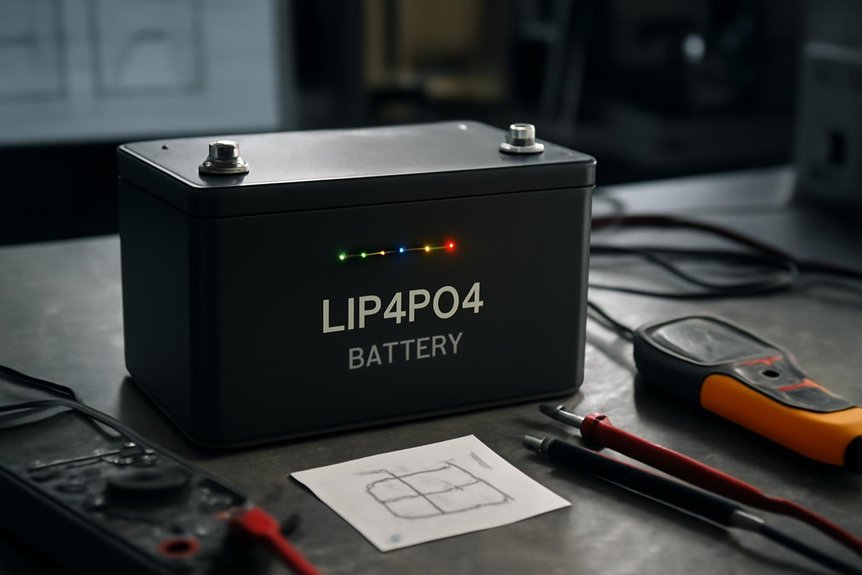
LiFePO4 batteries operate through the movement of lithium ions between the anode and cathode during charge and discharge cycles, utilizing a phosphate-based cathode to provide stable electrochemical reactions. These electrochemical processes involve the transfer of lithium ions, which generate electrons and produce electrical energy. The stability of the phosphate cathode contributes to consistent performance and reduces degradation over time. Maintaining the integrity of these processes is essential for prolonging battery lifespan, as repeated cycling can cause material wear and capacity loss. Proper management of charge rates, temperatures, and discharge cycles helps optimize electrochemical stability. By understanding how these electrochemical processes function, we can better preserve the battery’s health, ensuring reliable operation and maximizing its useful life.
Keep Your Battery Charged Within Optimal Voltage Ranges
Maintaining your battery’s voltage within recommended limits is essential for prolonging its lifespan and guaranteeing peak performance. Effective charge management relies on precise voltage monitoring to prevent overcharging and undercharging, both of which can degrade Lifepo4 cells. Typically, the best voltage range for Lifepo4 batteries is between 3.2V and 3.65V per cell. Staying within these limits minimizes stress on the battery chemistry and reduces capacity loss over time. Consistent voltage monitoring allows us to adjust charging processes proactively, preventing voltage excursions beyond safe thresholds. Implementing smart chargers with built-in voltage regulation further enhances this process. By adhering to proper charge management protocols, we guarantee the battery remains within its ideal voltage window, thereby preserving its health and maximizing its operational lifespan.
Avoid Deep Discharges and Maintain Proper Cycling Habits
Deep discharges can greatly shorten battery lifespan by causing irreversible chemical stress, so it is crucial to avoid fully draining the cells. Lifepo4 batteries are sensitive to discharge limits; exceeding recommended depths can accelerate capacity fade. Maintaining proper cycling habits involves controlling cycling frequency and adhering to discharge limits, typically around 80%. Regular shallow cycles preserve cell integrity better than deep discharges.
| Cycling Frequency | Discharge Limits |
|---|---|
| Moderate | 80% of capacity |
| Low | 50% of capacity |
| High | 90% of capacity |
| Infrequent | 30% of capacity |
| Frequent | 70% of capacity |
Store Your Lifepo4 Battery Correctly When Not in Use
Proper storage of Lifepo4 batteries minimizes capacity loss and extends lifespan. We recommend keeping the batteries in a cool, stable environment and maintaining a charge level around 50% for long-term storage. Using appropriate, sealed containers prevents moisture ingress and mechanical damage during periods of inactivity.
Store in Cool Environment
When storing your LiFePO4 battery for an extended period, keeping it in a cool environment is crucial to prevent capacity loss and degradation. Temperature effects notably influence battery longevity, as high temperatures accelerate chemical reactions leading to capacity fade. For ideal cool storage, consider these guidelines:
- Maintain storage temperatures between 0°C and 25°C, avoiding extremes.
- Use well-ventilated, temperature-controlled spaces to prevent heat buildup.
- Avoid exposure to direct sunlight or heat sources that can elevate internal temperatures.
Controlling temperature effects through cool storage minimizes internal resistance increases and electrolyte decomposition. Proper temperature management guarantees the battery retains its capacity and prolongs overall lifespan, making cool storage a critical factor in preserving LiFePO4 health during inactivity periods.
Keep Charge Level Optimal
Maintaining the ideal charge level during storage is vital to prevent capacity loss and guarantee the longevity of your LiFePO4 battery. We recommend keeping the charge at approximately 50-60% capacity, which maximizes voltage stability and minimizes stress on internal components. Regularly monitoring charge level and adjusting charge frequency guarantees the battery remains within this optimal range. Consistently maintaining a stable voltage prevents deep discharge and overcharging, both of which accelerate capacity degradation. If the battery remains unused for extended periods, recharging it periodically to this ideal level is essential. Proper management of charge cycle intervals preserves cell balance and prevents voltage fluctuations that could damage the battery over time. This disciplined approach guarantees long-term performance and reliability of your LiFePO4 battery.
Use Proper Storage Containers
Using the right storage containers plays a significant role in preserving your LiFePO4 battery’s health during periods of inactivity. Selecting appropriate storage materials and container types minimizes chemical degradation and prevents damage. Important considerations include:
- Insulated, non-conductive containers: Prevent electrical shorts and environmental interference.
- Ventilated containers: Reduce heat buildup and moisture accumulation, which can accelerate capacity loss.
- Temperature-controlled environments: Maintain a stable, moderate temperature to preserve chemical stability.
Avoid metal or airtight containers that trap moisture or cause condensation, and opt for materials that resist corrosion. Proper container choice guarantees minimal exposure to environmental stressors, thereby extending battery lifespan and maintaining peak performance during storage periods.
Monitor and Maintain Temperature Conditions for Longevity
Maintaining Lifepo4 batteries within their ideal temperature range of 0°C to 45°C is critical for preventing capacity loss and extending lifespan. We must also avoid extreme temperature fluctuations that can induce stress and reduce battery stability. Proper temperature monitoring guarantees consistent performance and long-term health of the battery system.
Optimal Temperature Range
Since temperature fluctuations can greatly impact the performance and lifespan of LiFePO4 batteries, it’s essential to monitor and control their operating environment carefully. Maintaining the best temperature range minimizes detrimental temperature effects and enhances thermal management. The ideal operating temperature for LiFePO4 batteries is typically between 0°C and 45°C. Within this range:
- Below 0°C, capacity drops considerably, and charging can cause lithium plating, risking damage.
- Between 20°C and 25°C, batteries operate with maximum efficiency and longevity.
- Above 45°C, thermal effects accelerate chemical degradation, reducing cycle life.
Avoid Extreme Fluctuations
Fluctuations outside the recommended temperature range can cause significant stress on LiFePO4 batteries, accelerating capacity loss and reducing overall lifespan. Effective battery management involves maintaining stable temperature conditions to prevent thermal extremes that can disrupt chemical stability. Extreme temperature fluctuations impact voltage stability, increasing the risk of overvoltage or undervoltage scenarios that damage cells. To guarantee longevity, we recommend consistent monitoring of ambient and internal temperatures, especially during charging and discharging cycles. Proper thermal regulation minimizes stress on battery components and preserves ideal voltage levels. Implementing thermal management systems and avoiding rapid temperature swings are essential strategies. By controlling temperature fluctuations, we maintain voltage stability, safeguard battery health, and extend the functional lifespan of LiFePO4 batteries.
Regularly Check and Maintain Battery Connections and Terminals
Regularly inspecting battery connections and terminals is essential to confirm peak performance and longevity of your Lifepo4 battery. Connection corrosion and loose terminals can greatly impair efficiency and risk failure. To maintain ideal function, we recommend:
- Inspecting terminals for signs of connection corrosion, which can increase resistance and cause overheating.
- Performing regular terminal cleaning with a wire brush or appropriate cleaner to remove oxidation and debris.
- Tightening any loose connections to guarantee consistent electrical contact, preventing voltage drops.
Frequently Asked Questions
How Often Should I Fully Cycle My Lifepo4 Battery?
We recommend fully cycling your LiFePO4 battery every 3 to 6 months, as regular battery cycling helps maintain its ideal lifespan by preventing capacity loss and ensuring consistent performance over time.
Can I Mix Lifepo4 Batteries From Different Brands?
Mixing Lifepo4 batteries from different brands isn’t recommended due to potential brand compatibility issues and performance differences, which can lead to uneven charging, reduced lifespan, and safety risks. For best performance, use matched, brand-compatible batteries only.
What Are the Signs of a Failing Lifepo4 Battery?
We see failing LiFePO4 batteries through exaggerated signs like sudden capacity drops, abnormal heating, and voltage irregularities, which are critical longevity indicators. Recognizing these battery symptoms early guarantees timely maintenance, preventing catastrophic failure and extending overall battery life.
Does Weather Affect Lifepo4 Battery Performance?
Weather greatly impacts Lifepo4 battery performance; temperature fluctuations influence capacity and lifespan, while high humidity can cause corrosion. We recommend maintaining ideal temperature and humidity conditions to guarantee consistent performance and prolong battery longevity effectively.
How Do I Properly Dispose of an Old Lifepo4 Battery?
Did you know 90% of lithium batteries are recyclable? We recommend following disposal guidelines and exploring local recycling options, ensuring safe, environmentally responsible disposal of old LiFePO4 batteries, preventing potential hazards and promoting sustainability.
Conclusion
By following these guidelines, we guarantee our LiFePO4 batteries remain as resilient as a fortress, resisting degradation over time. Just as a well-tuned engine runs smoothly, maintaining ideal voltage, temperature, and connections keeps our batteries performing at peak efficiency. Regular inspections and proper storage are our watchful guardians, preventing unseen corrosion or damage. In safeguarding these essential energy sources, we uphold the promise of reliability and longevity, much like a lighthouse guiding ships safely through treacherous waters.