Proper maintenance of LiFePO4 batteries is essential for peak performance and longevity. However, many overlook key practices, such as regular inspections and correct storage methods, which can lead to performance degradation and potential safety hazards. Understanding common mistakes and their impacts helps prevent costly errors. As we explore these issues, you’ll see how adhering to best practices can greatly extend your battery’s service life and reliability.
Key Takeaways
- Failing to follow proper charging practices, such as overcharging or undercharging, accelerates battery degradation.
- Neglecting regular inspections can allow cell imbalances and corrosion to go unnoticed.
- Storing batteries in extreme temperatures or high humidity speeds up capacity loss.
- Mishandling or dropping batteries can cause internal damage and reduce lifespan.
- Ignoring temperature management leads to thermal stress and rapid capacity fading.
Why Proper Charging Practices Are Crucial for Lifepo4 Batteries
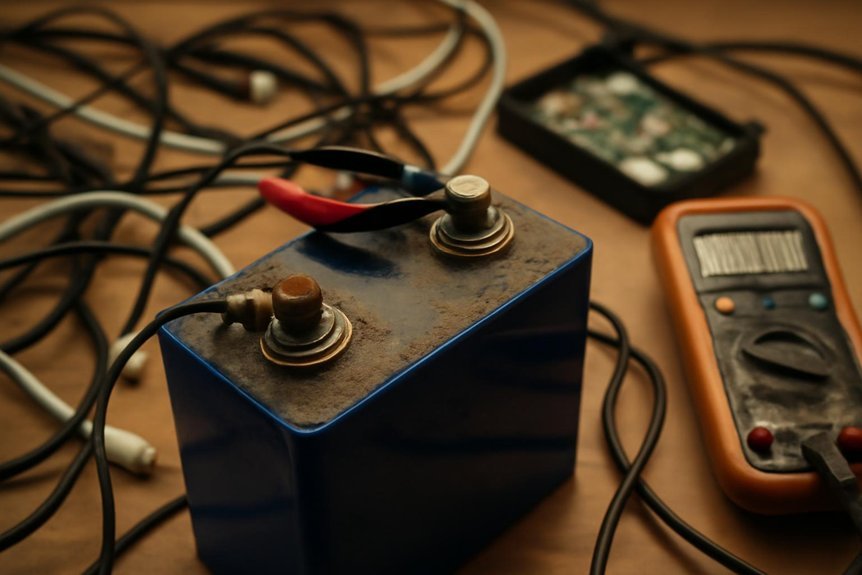
Proper charging practices are crucial for maintaining the longevity and safety of LiFePO4 batteries. Incorrect charging can greatly reduce battery lifespan by increasing the number of harmful charging cycles or causing stress to internal components. Maintaining ideal voltage levels during charging minimizes degradation, as overcharging or undercharging can accelerate capacity loss. Consistent, controlled charging prevents thermal stress, which can compromise cell integrity. By adhering to manufacturer-recommended charging parameters, we guarantee fewer cycle-related failures, directly extending battery longevity. Properly managing charge rates and avoiding deep discharges also reduces strain on the battery, preserving its capacity over time. Ultimately, disciplined charging practices are essential for maximizing performance, safety, and the overall lifecycle of LiFePO4 batteries.
Common Mistakes in Battery Storage and Handling
Improper storage and handling of LiFePO4 batteries can lead to significant performance degradation and safety risks. Poor battery organization can result in accidental short circuits or physical damage, compromising cell integrity. A suboptimal storage environment, characterized by extreme temperatures or high humidity, accelerates capacity loss and increases the risk of thermal events. It’s vital to store batteries in a cool, dry, and well-ventilated space, avoiding direct sunlight or exposure to moisture. Additionally, neglecting proper handling procedures, such as dropping or mishandling batteries, can cause internal damage and reduce lifespan. Maintaining an organized storage system guarantees batteries are protected and easily accessible for maintenance. Correct storage conditions and careful handling are fundamental to preserving battery health and safety over the long term.
How Neglecting Regular Inspection Can Hurt Your Battery’s Performance
Neglecting regular inspections of LiFePO4 batteries allows small issues to develop into serious performance problems over time, accelerating performance degradation and reducing battery lifespan. Without routine checks, issues like electrolyte imbalance or corrosion may go unnoticed, impairing internal connections. Specifically:
Neglecting battery inspections leads to unnoticed issues, faster degradation, and reduced lifespan of LiFePO4 batteries.
- Undetected cell imbalances can cause uneven charge distribution, diminishing overall capacity.
- Corrosion or physical damage can lead to increased internal resistance.
- Loose or corroded terminals impair power transfer, risking unexpected failure.
- Lack of temperature monitoring can overlook overheating risks, harming internal chemistry.
These overlooked problems compound, resulting in premature battery aging and reduced lifespan. Regular inspections are essential to identify and address issues early, ensuring peak performance and longevity of your LiFePO4 batteries.
Overcharging and Undercharging: What to Avoid
Overcharging a Lifepo4 battery can lead to thermal runaway and capacity loss, compromising its safety and longevity. Conversely, undercharging prevents the battery from reaching full capacity, resulting in reduced runtime and inefficient performance. To maintain ideal operation, strict adherence to recommended charge levels is essential.
Risks of Overcharging
Exceeding the recommended voltage limits during charging can considerably compromise the lifespan and safety of a Lifepo4 battery. Overcharging increases the risk of thermal runaway, capacity degradation, and potential safety hazards. To mitigate these risks, it’s essential to adhere to proper safety precautions and monitor charging indicators. Key considerations include:
- Maintaining voltage within specified limits to prevent overvoltage stress.
- Using chargers with automatic shutoff to avoid continuous overcharging.
- Regularly checking charging indicators for abnormal readings or alerts.
- Implementing protective circuitry that disconnects power when voltage thresholds are exceeded.
Dangers of Undercharging
Undercharging a Lifepo4 battery can lead to significant performance issues and reduce its overall lifespan. The undercharging consequences include incomplete chemical reactions within the cells, resulting in decreased capacity and diminished battery efficiency over time. Consistently undercharging prevents the battery from reaching its ideal voltage levels, which hampers energy storage and delivery. This incomplete recharge cycle also accelerates capacity fade and increases internal resistance, further compromising performance. To maintain battery health, it’s essential to avoid undercharging, as it prevents the battery from fully restoring its energy capacity. Proper charging protocols guarantee the cells achieve their full charge, preserving both efficiency and longevity. Neglecting this can cause premature aging, reducing the lifespan and reliability of your Lifepo4 battery system.
The Impact of Using the Wrong Charger or Settings
Using incompatible chargers or incorrect settings can cause overcharging, which greatly increases the risk of thermal runaway and damage. Applying the wrong voltage levels may lead to irreversible cell degradation and capacity loss. Consequently, these issues shorten the battery’s overall lifespan and compromise safety.
Overcharging Risks Increase
When the wrong charger or improper settings are used during charging, the risk of overcharging a LiFePO4 battery considerably increases. Overcharging symptoms, such as excessive heat, swelling, or voltage irregularities, signal potential damage. To prevent these issues, protective measures are essential.
- Use chargers specifically designed for LiFePO4 chemistry, with correct voltage and current limits.
- Enable automatic cut-off or float charging modes to prevent voltage overshoot.
- Regularly monitor voltage and temperature during charging cycles.
- Implement compatible battery management systems (BMS) to regulate charge and safeguard against overcharge conditions.
Adhering to these measures minimizes overcharging risks and preserves battery health over time.
Incorrect Voltage Damage
Incorrect voltage settings or the use of incompatible chargers pose a significant risk to LiFePO4 batteries, as they can cause immediate and irreversible damage. Voltage fluctuations beyond the manufacturer’s specified limits can lead to overvoltage or undervoltage conditions, which compromise cell integrity and safety. Using chargers with incorrect voltage output or settings can induce rapid capacity loss and thermal stress, increasing the likelihood of catastrophic failure. Proper damage prevention relies on selecting chargers that match the recommended voltage and current specifications for LiFePO4 batteries. Consistent adherence to these parameters minimizes the risk of voltage-related damage, ensuring stable operation and extending battery lifespan. Recognizing and controlling voltage fluctuations is essential to maintaining battery health and avoiding costly repairs.
Reduced Battery Lifespan
Employing chargers with incorrect voltage settings or incompatible specifications accelerates the degradation of LiFePO4 batteries, considerably reducing their overall lifespan. This directly impacts battery health and amplifies lifespan factors negatively. Misconfigured chargers can cause:
- Overvoltage stress, leading to capacity fade.
- Undercharging, resulting in incomplete cell balancing.
- Excessive heat generation, damaging internal components.
- Increased cycle life degradation, shortening usable lifespan.
Using improper chargers or settings disrupts the delicate balance of charge and discharge cycles, stressing the battery’s chemistry. These factors hasten capacity loss and diminish overall battery health. To enhance lifespan, always select chargers designed specifically for LiFePO4 chemistry and verify proper voltage and current settings are used. Accurate charging practices are essential for preserving lifespan factors and maintaining peak performance.
Ignoring Temperature Guidelines and Its Effects
Ignoring temperature guidelines can greatly impair the performance and lifespan of LiFePO4 batteries. Exposure to temperature extremes hampers chemical stability, reduces capacity, and accelerates degradation. Proper thermal management is essential to maintain ideal operating conditions.
| Temperature Range | Effect on Battery | Recommended Action |
|---|---|---|
| Below 0°C | Reduced capacity, risk of freezing | Use insulation or heating systems |
| 0°C to 45°C | Ideal performance | Maintain within this range |
| Above 45°C | Accelerated aging, capacity loss | Implement cooling solutions |
Neglecting these guidelines causes thermal stress, leading to rapid capacity fade. Managing operating temperatures guarantees chemical integrity and prolongs battery life, preventing costly failures.
Failing to Follow Manufacturer’s Maintenance Recommendations
Neglecting to follow the manufacturer’s maintenance recommendations can considerably compromise the performance and longevity of LiFePO4 batteries. Ignoring these guidelines impacts battery care, operational efficiency, and safety protocols. To guarantee peak performance, consider these key points:
- Adhere strictly to the recommended maintenance schedule to prevent capacity loss.
- Follow manufacturer guidelines for voltage and temperature limits to maintain performance consistency.
- Implement proper safety protocols during maintenance to reduce risk of damage or hazards.
- Adjust usage habits based on longevity tips provided by the manufacturer to maximize lifespan.
Frequently Asked Questions
How Often Should I Perform Maintenance on My Lifepo4 Battery?
We recommend performing maintenance checks at least once every three to six months, following a regular maintenance schedule. This guarantees ideal battery performance tips, prevents issues, and prolongs lifespan by monitoring voltage, electrolyte levels, and guaranteeing proper charging practices.
Can External Factors Like Humidity Affect Battery Lifespan?
Humidity effects can dramatically shorten our LiFePO4 battery lifespan, causing rust and corrosion that severely impact performance. We must control moisture exposure, as high humidity accelerates degradation, leading to unpredictable power output and reduced overall battery longevity.
What Are Signs of a Failing Lifepo4 Battery?
We observe failing Lifepo4 batteries through declining battery performance indicators, such as reduced capacity and increased voltage drop signs, indicating internal degradation or cell imbalance, which warrants immediate inspection and potential replacement to prevent further system issues.
Is It Safe to Use Third-Party Chargers With Lifepo4 Batteries?
Using third-party chargers can be extremely risky, risking severe damage due to incompatible charger compatibility and reduced charging efficiency. Always opt for manufacturer-approved chargers to guarantee safe, ideal performance and longevity of your Lifepo4 batteries.
How Do Temperature Fluctuations Impact Battery Capacity Over Time?
Temperature fluctuations, especially temperature extremes, can degrade Lifepo4 battery capacity over time. Effective thermal management minimizes this impact by maintaining ideal operating temperatures, ensuring longevity and consistent performance despite environmental changes.
Conclusion
Just as a master craftsman cares for their tools, we must diligently maintain our LiFePO4 batteries. Neglecting proper practices risks performance decline, much like a neglected engine falters. By adhering to recommended charging, storage, and inspection routines, we preserve the battery’s integrity and longevity. Let’s remember that consistent care reflects our commitment to reliability and efficiency—qualities that guarantee our energy solutions remain robust, echoing the timeless wisdom that true craftsmanship endures through attentive stewardship.